
Senate Committee Advances Post‑election Audit Bill After Debate Over Selection and Costs
Get AI-powered insights, summaries, and transcripts
Subscribe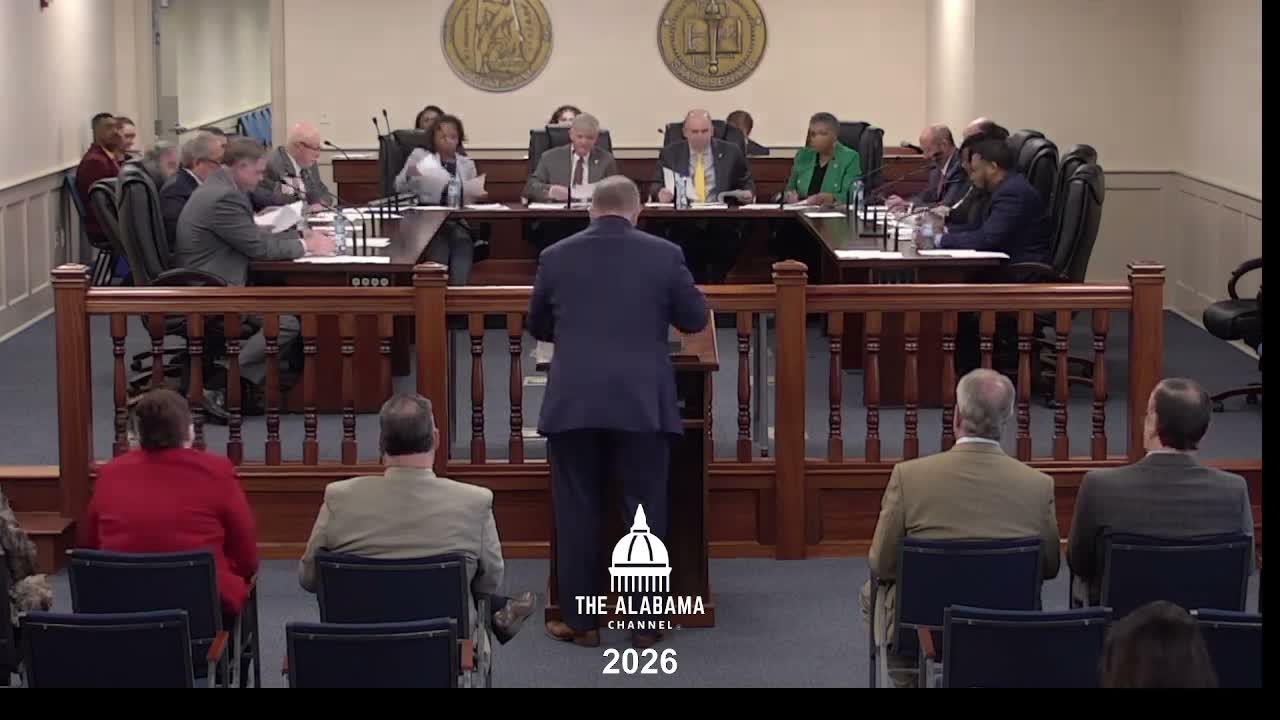
Summary
A Senate committee voted 9‑5 to give HB 95 a favorable report as amended. The bill requires post‑election audits of at least one randomly selected precinct (excluding absentee and provisional ballots); members debated how randomness and inspectors will be documented and who bears costs.
A Senate committee on Wednesday advanced HB 95, a bill to require post‑election audits of general election precincts, by a 9‑5 vote after members debated how audit targets would be chosen and who would perform and pay for the work.
Representative Leppard, the bill’s sponsor, said the audits are designed as a technical check of voting machines, not a means to change election results. “This would not change the result of any election,” Leppard said, adding the process would help “restore confidence in our election system.” The amendment adopted in committee restricts auditors to staff already on payroll so no new hires would be required.
Under the bill as explained on the floor, county canvassing boards would randomly select at least one precinct — excluding absentee and provisional ballots — for a post‑election audit, and the probate judge in each county would oversee the process. Audits would occur no earlier than 31 days after a statewide general election. Ballot containers would be delivered unopened to inspectors, and the audit would use a different machine to re‑run ballots and compare counts to the original machine’s totals.
Members pressed sponsors about safeguards for the random selection process and oversight. One senator questioned whether local canvassing boards—made up of elected officials such as the sheriff, probate judge and circuit clerk—would actually select precincts where misconduct might be occurring. Leppard replied that canvassing boards are elected and therefore accountable, and that the secretary of state’s rules govern many aspects of the audit and would receive the committee’s report.
The committee also discussed cost. A fiscal estimate cited during debate put aggregate statewide costs at $35,000; sponsors said the figure is cumulative statewide and that counties could seek reimbursement through existing secretary of state procedures and payment by the state comptroller.
Opponents argued the audit is unlikely to detect problems in municipal elections — where, they said, most irregularities appear to occur — because HB 95 covers general elections. Proponents countered that the measure is a modest, narrowly drawn check on machine accuracy and noted a prior pilot in one precinct unearthed and fixed an issue.
The committee adopted an amendment allowing probate judges to use existing election staff as inspectors and then voted to give the bill a favorable report as amended, 9‑5. The bill will move to the next stage of the legislative process.