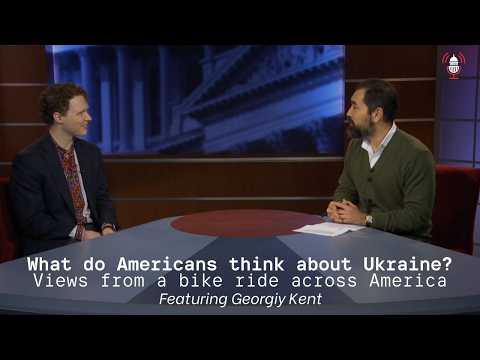
Guest on Helsinki Commission podcast: claims that Ukraine persecutes Christians reflect Russian instrumentalization of religion
Loading...
Summary
On the Commission’s Transatlantic podcast, Georgi Kent argued that narratives claiming Ukraine arrests or persecutes Christians are often rooted in Russian state influence over the Russian Orthodox Church and in actions in occupied territories, not a systemic Ukrainian policy.
During an interview on the Transatlantic podcast produced by the Commission on Security and Cooperation in Europe, host Bakhtanyushano asked Georgi Kent about narratives circulating on Capitol Hill that claim Ukraine is arresting or harassing Orthodox Christians.
Kent responded that understanding the history of state‑church relations is essential. "You have to take that whole history into account when looking at actions against, not the Orthodox church in general, but specifically the institution, following the Moscow patriarch," he said, arguing the Russian state has long used the Russian Orthodox Church as an instrument of influence.
He added that there are examples of the Russian Orthodox Church acting on behalf of the Russian government in ways that pressured or influenced populations in Crimea and eastern Ukraine after 2014. Kent cautioned against treating isolated incidents or narratives promoted by Russian actors as evidence that Ukraine is engaged in systemic persecution of Christians across the country.
Host Bakhtanyushano framed the response firmly: "So these narratives out there that somehow Ukraine is harassing or arresting Christians is simply not true," reflecting the interviewer's skeptical reading of the claim. Kent noted, however, that actions by occupying forces and Russian‑aligned clergy in occupied territories have included documented abuses and intimidation.
Kent emphasized religious coexistence in Ukraine, noting the country's religiously diverse leadership and civil society activity. He urged close scrutiny of sources that present the allegation of Ukrainian persecution as a broad, nationwide policy rather than as specific cases or as disinformation advanced by the Kremlin.
The interview provides Kent's analysis; the podcast did not present independent evidence to substantiate broader claims or a systematic study of the allegation. Reporters seeking to verify specific abuse claims should consult primary investigative reporting and human‑rights documentation.