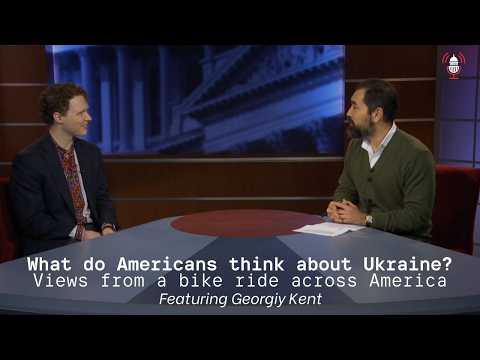
Georgi Kent cycled 4,400 miles and raised $103,000 to outfit four vehicles for Ukrainian units
Loading...
Summary
Georgi Kent and his parents biked 4,400 miles from Astoria, Ore., to Washington, D.C., raising $103,000 that funded the refurbishment and delivery of four vehicles (about $23,000 each) sent to Ukrainian frontline units via an Estonia‑based civil society partner.
Georgi Kent, a former Helsinki Commission policy fellow and associate at Political Alpha, said he and his parents cycled 4,400 miles across the United States this summer to raise money and public awareness for Ukraine. "We started in Astoria, Oregon, and finished here in Washington, DC," Kent said, adding the ride took about 80 days.
Kent told the Commission on Security and Cooperation in Europe podcast that the family campaign raised $103,000 over three months. "This blew away our expectations," he said, and the funds paid to refurbish and outfit four vehicles — three trucks and a van — for delivery to Ukrainian frontline units. Kent said one vehicle costs about $23,000 to outfit and transport; with the money raised they were able to fund roughly four vehicles.
Kent described working with an Estonia‑based civil society organization to convert and equip used trucks with modifications such as anti‑drone countermeasures and specialized tires, then deliver them by convoy to units in Ukraine. Two vehicles were sent during the trip; the remaining two were delivered the following November, and Kent said his parents joined a convoy from Tallinn to Kyiv to meet the receiving unit.
The trip combined fundraising with in‑person outreach, Kent said, because "talking to people who often aren't exposed to international affairs" gave the campaign a chance to explain where money would go. He described hundreds of on‑the‑road encounters — in rest stops, gas stations and motel breakfast areas — and said the direct exchanges helped build trust and spur donations. "They'd trust us and say, you know, we support the people in Ukraine," Kent said.
Kent said the campaign partnered with a named group in Estonia (identified in the transcript) so donors could see a concrete deliverable. He emphasized that being able to point to the unit, its call sign and the truck the unit would use made the appeal more credible to potential donors.
Kent also described logistical challenges of the ride — averaging about 57 miles per day and burning thousands of calories — and said those stops for food and water provided natural opportunities for conversation in communities across the country.
The episode on the Commission's Transatlantic podcast did not provide independent verification of the Estonia‑based partner beyond Kent's account, and the partner label in the transcript appears garbled; the transcript names the organization as "NAFO 60 ninth Sniffing Brigade," which may reflect a verbal transcription issue. Kent said the vehicles were delivered and that donors were shown photographs and unit identifiers to verify delivery.
Kent framed the ride as both a personal family goal and a way to move public conversation beyond coastal policy circles. "Americans on an individual basis across the country are still plugged in on the issue," he said, adding that in‑person conversations often produced donations and substantive questions about aid flow and logistics.
The Commission episode closed with Kent expressing guarded optimism: while he saw distrust of media and politics, he said direct human engagement produced empathy and willingness to help.