Lifetime Citizen Portal Access — AI Briefings, Alerts & Unlimited Follows
House member opposes Rotor Act, urges broader, technology‑agnostic Alert Act after NTSB report
Loading...
Summary
A member of Congress opposed the Rotor Act on the House floor, saying it addresses just two of 50 NTSB recommendations after the Jan. 29, 2025 collision and urged passage of a broader, performance‑based Bipartisan Alert Act instead.
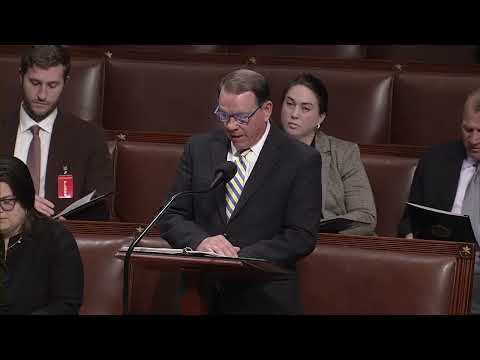
A member of Congress spoke on the House floor to oppose the Rotor Act and urged lawmakers to adopt a broader, technology‑agnostic package of reforms after the National Transportation Safety Board released its final report on the Jan. 29, 2025 collision.
The lawmaker recounted that an Army helicopter collided with an American Airlines flight on final approach to Ronald Reagan Washington National Airport on Jan. 29, 2025, an accident that "claimed the lives of all 67 passengers and crew in both aircraft." The NTSB’s final report, released last week, included findings, a probable cause determination and 50 recommendations, the speaker said.
"The NTSB carried out over the last year one of the most impressive and comprehensive investigations that I have seen," the member said, thanking the board and federal partners for their work. Quoting the NTSB, the lawmaker said, "while we laud ADS‑B systems as an emerging technology in commercially, fixed wing, and rotorcraft aviation that could have prevented this accident, it is still exactly that, an emerging technology." The member said technological barriers remain to implementing ADS‑B across the commercial fleet.
The speaker said the Rotor Act under consideration would address only two of the NTSB’s 50 recommendations and criticized the bill for "provid[ing] an overly prescriptive approach to mandating a specific technology, which is still largely under development," a step the member said could be burdensome to some operators and hinder scalable adoption.
Recalling earlier congressional action, the lawmaker noted that Congress had mandated similar technology in 2012, but "due to the lack of maturity of the technology and scalable applications ... the mandate proved to be so unworkable that the body had to repeal that mandate in 2018." For that reason, the member argued, Congress should avoid a narrowly prescriptive mandate this session.
Instead, the speaker urged support for the Bipartisan Alert Act, which they described as a comprehensive package designed to address all 50 NTSB recommendations and to use a performance‑based, technology‑agnostic approach so aircraft can be equipped with "the appropriate collision mitigation system" without being limited to one technology. "I unequivocally support the adoption of safety enhancement technologies," the member said, "and I want to get this right."
The member also referenced the FAA Reauthorization Act of 2024 as recent, significant legislation improving aviation safety and said House consideration of the Bipartisan Alert Act would follow to ensure all NTSB recommendations are addressed. The member reserved the balance of their time.
The speech did not include a named sponsor of the Rotor Act on the floor or any formal motion or recorded vote in this segment.