
Witnesses call for standardized, public data on data center energy and water use
Get AI-powered insights, summaries, and transcripts
Subscribe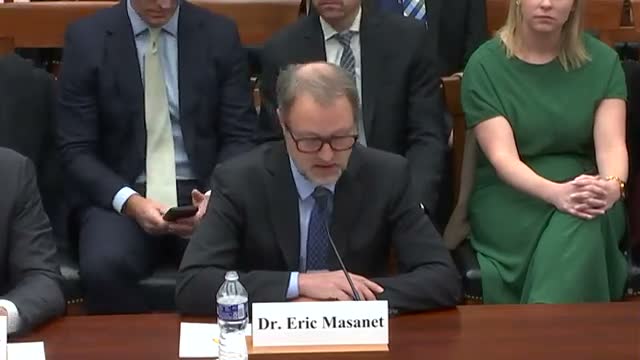
Summary
Researchers and the industry urged standardized federal data collection on data center energy and water consumption so analysts and communities can assess impacts; witnesses recommended agencies such as the EIA lead efforts.
At a House Science subcommittee hearing on data center infrastructure, academic and industry witnesses emphasized large gaps in public data about data center energy and water use and urged federal data collection and standards.
Dr. Eric Massenet, a professor at the University of California, Santa Barbara, told the panel that "there is no hotter topic these days than the growing infrastructure requirements of US data centers" and that analysts face "major blind spots" because operators rarely disclose detailed energy or water use for specific facilities. "As the old adage goes, you can't manage what you don't measure," Massenet said, recommending that the Energy Information Administration and the Census Bureau could play leading roles in designing surveys and protecting confidential information.
Members said the lack of timely, standardized data makes it difficult for utilities, regulators and communities to plan. Rep. Lofgren asked why the sector lacks data; Massenet said data centers were historically small relative to other sectors but "post AI boom" facilities are much larger in power capacity, and companies often keep project details under nondisclosure agreements.
Industry witnesses described some voluntary transparency and company-specific frameworks. Marcin Hanna of Google said the company is partnering with a range of energy technology developers (naming Commonwealth Fusion, Kairos Power and Fervo Energy) and that when Google reports it aims to structure contracts so incremental infrastructure costs are covered. Google also argued that grid-connected data centers, when properly integrated, can help pay for more robust systems that benefit residential customers.
Members pressed for concrete next steps. Several lawmakers pointed to models in other sectors and said the EIA's long experience conducting energy surveys makes it well placed to lead efforts to standardize and publish sector-level data. Witnesses agreed to follow up with additional information and promised to provide more detailed numbers where available. The hearing record was left open for 10 days for written submissions.