
Senate committee hears testimony on bill to bar appliance surcharges; owner warns of housing loss
Get AI-powered insights, summaries, and transcripts
Subscribe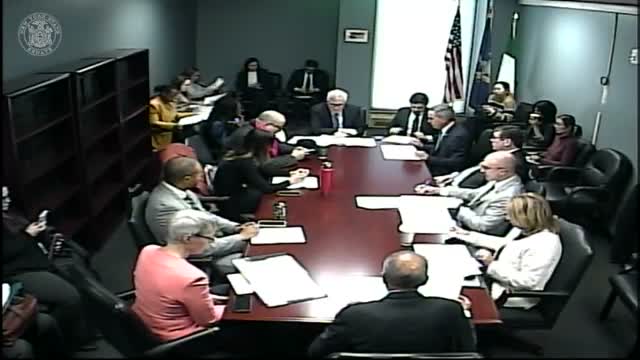
Summary
The Senate Housing Committee heard invited testimony on S.6718-B, which would eliminate monthly surcharges landlords may charge tenants who install appliances. A property owner warned the committee that squeezing small landlords risks creating more vacant "warehouse" apartments. The committee reported the bill to the floor.
State Senator Brian Kavanaugh, chair of the New York State Senate Committee on Housing, Construction, and Community Development, convened a Feb. 25 committee meeting to take up a package of housing bills and hear invited testimony on S.6718-B, a bill sponsored by Senator Jackson that would bar landlords from charging monthly surcharges for certain tenant-installed appliances.
The committee heard a 10-minute presentation from Alberto Lopez, an owner and manager of multiple residential properties, who told the committee that owners are being “nickeled and dimed” and that policy changes limiting their ability to recover improvement costs risk pushing buildings off the market. “You’re squeezing the hell out of the landlords,” Lopez said, warning that some owners may instead take units off the market and create more vacant, so-called “warehouse” apartments.
Chair Kavanaugh framed the bill’s effect in technical terms: under current rules set by the state’s housing agency (HCR), owners may charge set monthly amounts when tenants install appliances with owner approval. Kavanaugh cited those amounts on the committee record: $9.71 per month for an electric dryer when the owner pays utilities (and $3.07 for a gas dryer); dishwashers $13.08 or $8.85 depending on who pays utilities; and washing machines $23.38 or $20.86. “This bill would eliminate the ability to make these charges,” Kavanaugh said, noting the charges are tied to HCR rulemaking and to wear-and-tear and building maintenance costs.
Committee members asked technical questions about the bill’s definitions and scope, including whether water- or plumbing-related costs are accommodated in the existing charges and whether appliances require landlord approval for installation. A Syracuse resident who spoke during the Q&A said, “We don’t have this kind of apartment,” and asked why a surcharge that effectively transfers costs to renters “seems pretty boldly just taking money from the renter.” Lopez responded that landlords often do not receive a return on rehabilitation investments and must weigh long payback periods against rising taxes and operating costs.
Kavanaugh and other members emphasized that the bill would not change the basic rule that tenants may install appliances only with landlord approval; rather, it would remove the statutory ability to impose the specified monthly surcharges. The committee completed its discussion and, following procedure, reported the bill out of committee to the floor for further consideration.
Next steps: S.6718-B was reported out of the committee for floor consideration; the bill will be scheduled for further debate and any technical clarifications during subsequent floor or committee sessions.