
NERC tells FERC long-term assessment shows rising energy adequacy risk; commissioners call for faster interconnection and planning
Get AI-powered insights, summaries, and transcripts
Subscribe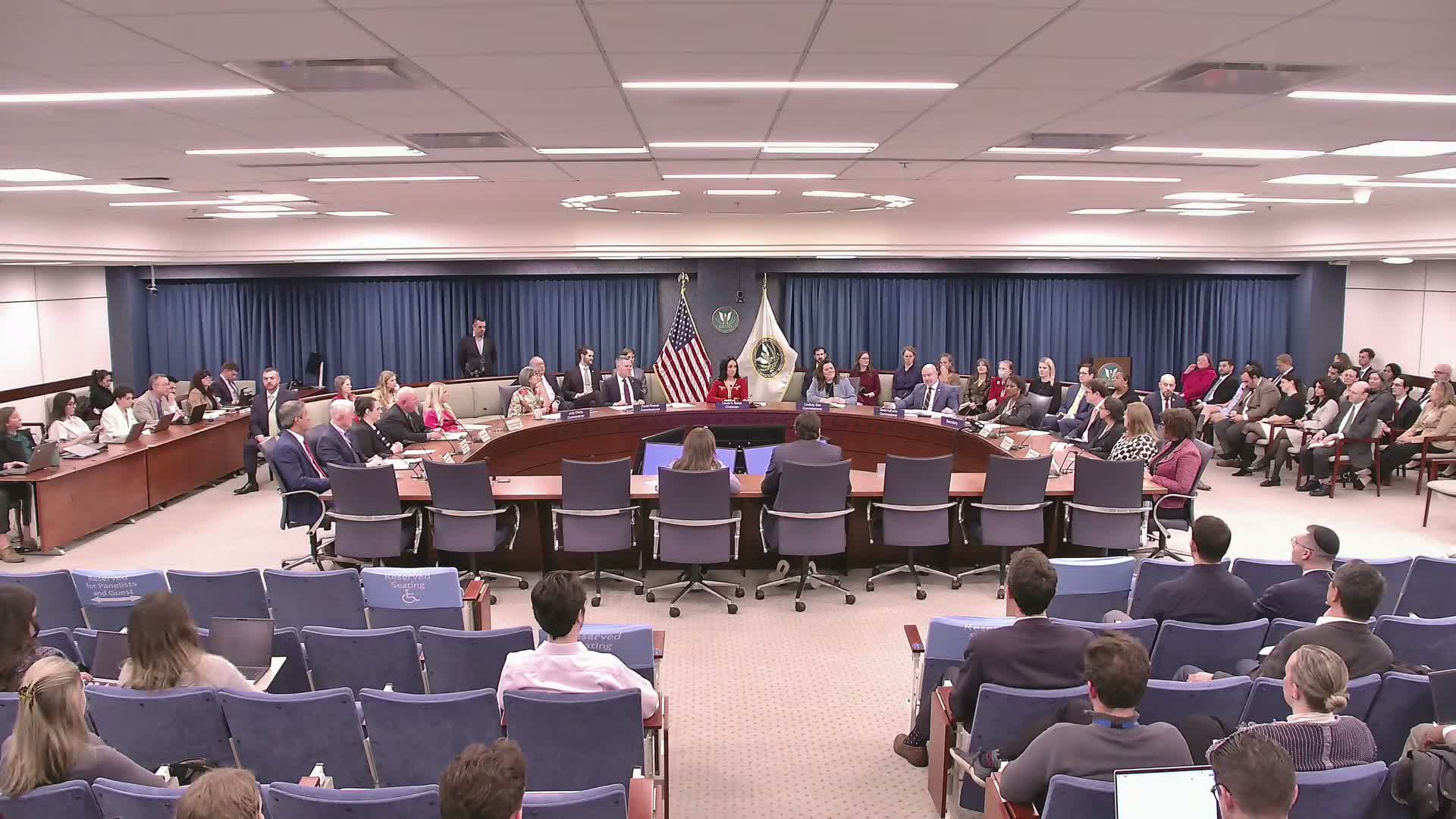
Summary
NERC's long-term reliability assessment presented to FERC found increasing energy adequacy exposures across North America driven by rapid load growth, large industrial loads and a shifting resource mix; commissioners pressed for faster interconnection, integrated planning and steps to address timing and deliverability constraints.
The North American Electric Reliability Corporation presented its 10-year Long-Term Reliability Assessment to the Federal Energy Regulatory Commission, warning that energy adequacy risk is growing across the bulk power system and urging coordinated actions on interconnection, transmission and fuel deliverability.
John Mora of NERC emphasized that the assessment is a risk analysis, not a prediction of outages. The report, based on data submitted around mid-2025, found that 13 of 23 assessment areas show energy adequacy challenges under plausible stress scenarios, and that risk is driven by accelerating demand growth, changing resource mixes and timing problems related to permitting, supply chains and siting. Mora told commissioners the assessment uses probabilistic measures such as loss-of-load expectation (LoLE), expected unserved energy (EUE) and loss-of-load hour (LOLH) to capture energy adequacy beyond simple reserve margins.
Mora and the commission highlighted that rapid growth of non-traditional, concentrated loads (for example, data centers) is adding scale and volatility, and that while many new resources are solar, battery and hybrid projects, thermal retirements remain large. The assessment also flagged winter conditions as a particular vulnerability: resources that perform well in summer may not be effective during cold-weather peaks.
Mark Hegherly (Office of Electric Reliability) and NERC officials discussed steps to improve modeling and reduce uncertainty. NERC described plans to synchronize regional models into a single interconnection model for next year's assessment, to apply milestone-based tiering for load and resource certainty, and to improve energy-deliverability modeling so that projects approved in fast-track processes are evaluated in energy and transmission deliverability contexts.
Commissioners pressed for more frequent or targeted updates. Commissioner Rosner called the assessment "an alarm," said "we need more electrons of all types," and urged faster queue reforms and automation to reduce interconnection timelines; he asked NERC to run modeling scenarios now that capture expedited projects to understand near-term implications for regions such as MISO. Several commissioners commended the report and asked for follow-up analysis and coordination with states and federal partners.
NERC and FERC staff agreed on recommended actions including: accelerated and coordinated interconnection processes, integrated generation-transmission-gas planning, improvements in generator winterization and operational performance, and better national coordination on large shopping loads. The assessment concluded with a call to action: the trajectory of risk is increasing, but with coordinated planning and investment there is still time to act.
Next steps: NERC will continue to refine modeling (including synchronized interconnection-level models) and FERC commissioners signaled interest in continuing dialogue on the implications for interconnection reform and reliability planning.