Livingston Parish moves toward final draft of hazard mitigation plan update
Loading...
Summary
At a public meeting, planners reviewed identified hazards, prioritization criteria and forms for mitigation actions, and urged communities to submit status updates; local officials described drainage projects, warning systems and outreach initiatives tied to CRS scoring.
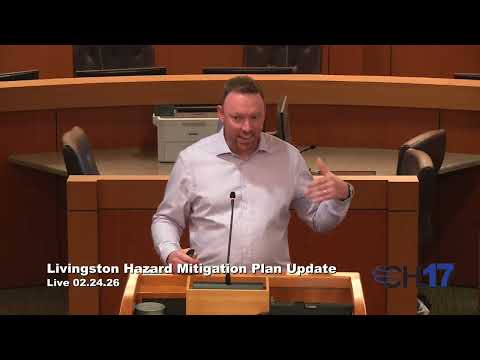
Meeting facilitator opened the second-to-last public meeting in Livingston Parish’s hazard mitigation plan update and asked community representatives to update mitigation action forms so a draft plan can be assembled and circulated for public review.
"This is the second to last meeting associated with your hazard mitigation plan update process," the facilitator said, urging participants to return worksheets and action forms with status updates. The facilitator reported 115 survey responses to date and said flooding, hurricanes and thunderstorms ranked highest among resident concerns.
Rick Foster, building official and floodplain administrator for the city of Denham Springs, described local mitigation priorities including a drainage-plan review, a proposed "zero net fill" ordinance for future development and ongoing work to maintain and improve the city’s Community Rating System (CRS) standing. "We subscribe to 4 Runner, which is a flood plain management software," Foster said, describing software, notice-of-violation tools and a blighted-properties strategy tied to managing substantial-damage rebuilds.
An unnamed city representative described three recently started projects: grant-funded new manholes to reduce sewer backups, a 20-acre study for a potential detention area for Dumplin Creek runoff, and installation of five stream monitors for water elevation and rainfall data.
The facilitator walked attendees through the mitigation action forms and the prioritization approach used in the update. Communities were instructed to update existing projects with a status (not started, in progress, completed, deleted), identify at least one responsible agency and list potential funding sources (or mark unknown). The facilitator emphasized that every identified hazard must have at least one associated activity and encouraged communities to consider the plan a flexible "wish list" that can be refined for funding applications.
The meeting also covered the difference between HMP activity types and CRS categories, noting that careful alignment with CRS activity types affects scoring: "Step 7 is really a critical junction," the facilitator said, explaining that evaluation-period choices (annual versus quarterly) carry different CRS point values.
Next steps outlined at the meeting include returning updated worksheets, assembling the draft plan, circulating it to committee members for comment and opening it for public review at the final meeting. The facilitator provided contact information for staff assistance and closed the session.