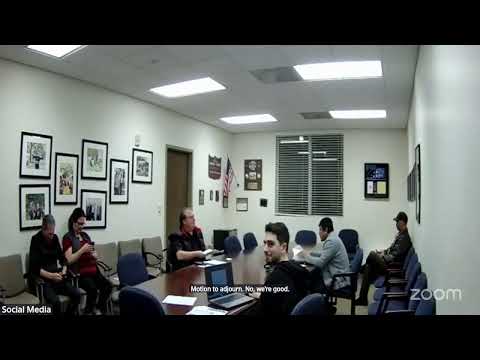
Miami Lakes advisory board cites pilot data, calls for lower blast threshold as Fabrizio bill stalls
Loading...
Summary
The Miami Lakes Blasting Advisory Board reviewed pilot monitoring showing higher complaint rates at higher PPV readings, urged clearer public reporting, and discussed stalled state legislation (Fabrizio’s bill) and a parallel private lawsuit that may be mooted if legislation passes.
The Miami Lakes Blasting Advisory Board reviewed pilot monitoring data on community complaints tied to ground vibration from nearby limestone blasting and urged clearer public reporting and lower allowable blast thresholds.
The committee chair (Speaker 1) said the pilot program’s analysis shows a higher average PPV in blasts that generated complaints and recommended changing public labels to make the data easier to read, saying the town should present results on the Miami Lakes website. "A threshold when the complaints begin to engage the program" was the framing used by the presenter, who described visualizations separating "blast with complaint" and "blast without complaint." Noah agreed to circulate the underlying attachments to members for review.
Why it matters: committee members said the discrepancy between pilot readings and state-reported PPV records undermines trust. "There were pilot readings at 0.7 and the official blast record was 0.3," Speaker 1 said, arguing the gaps are "very damning" for the way the state applies monitoring data.
The board linked data discussion to an ongoing legislative effort. Speaker 1 and others said State Rep. Fabricio’s proposal would reduce the legal PPV limit from the widely cited 0.5 to 0.15. "Fabricio’s bill is putting forward… the onus on the state because they are the number 1 consumer of the product," Speaker 1 said, adding that lowering the limit was intended to protect residents while minimizing disruption to nonoffending operations.
Legal context: Dr. David Bennett told members that municipalities have limited legal standing to sue the state; "The town doesn't have standing," he said, explaining that the current statutory and constitutional framework channels disputes into administrative remedies rather than typical courtroom litigation. The committee also discussed a private lawsuit filed by residents and experts; Speaker 1 noted attorneys worried a town-filed case would likely be dismissed because the statute "has removed the ability to sue in court."
Industry and procurement: The group debated leverage points beyond litigation, including whether major buyers such as the Florida Department of Transportation (FDOT) have purchasing power to influence company behavior. Members discussed White Rock and the mining association and whether procurement choices could pressure changes in blasting technique.
Next steps: the board asked staff to publish clearer labels for the pilot visualizations ("complaint made" vs. "not made"), circulate the underlying data files, and bring an example blast that residents experienced but that lacked a matching official report to the next meeting. Speaker 2 said he would "choose 1 blast as an example" to illustrate the discrepancy.
The committee is preparing a formal report for the town council and plans a special-call meeting to approve the presentation before it is submitted.