Get Full Government Meeting Transcripts, Videos, & Alerts Forever!
Get email alerts on the Community Services topic
No spam. Unsubscribe anytime.
Local providers and advocates update McHenry County Mental Health Board on recovery supports, prevention and services
Summary
During public comment and reports, family members and nonprofit providers described a new recovery scholarship and fundraiser, expanded youth prevention and SMART Recovery meetings, outreach and shelter operations, and invited the board to upcoming events and conferences.
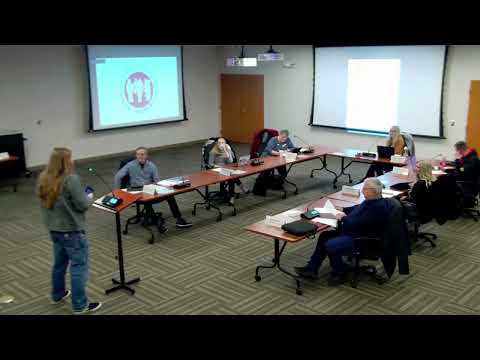
Multiple community providers and family advocates used the Feb. 24 meeting to update the McHenry County Mental Health Board on programming, fundraising and service changes.
Diane Hodges, who said she lost two adult daughters to substance use, described a new 501(c)(3) named the "Kate and Jess Hodges Recovering Attic Scholarship" and announced a fundraising event set for Saturday, March 21 at Kingston Lanes to support scholarships for recovery services. Diane said the foundation aims to “help other people” and introduced Chanel White to explain mission and outreach.
Chanel White, who described herself as having lived in sober living with one of Hodges' daughters, framed the work as lived‑experience outreach: “What does it look like to be in recovery? What does it look like to get a second chance at life?” She said the foundation is coordinating with local AA clubs and Willow Creek Community Church to connect scholarship recipients with training and supportive services.
Darby Carbone, program manager at Autism Resource Center Options and Advocacy, reported increased attendance in a Spanish caregiver support group after adding a supervised room for children and invited the board to a caregiver conference on March 14 at MCC, hosted with the Mental Health Board and several community partners.
Charlie Sullivan, director of programs for Live for Lolly, described school‑based fentanyl education reaching more than 1,000 students across 11 county schools in the past six months and recounted outreach via SMART Recovery peer‑support meetings and a recent collaboration with Warp Corp to provide wraparound services.
Other presenters included Bobby Gatone, who proposed a clinician‑designed peer‑support mobile app to reduce social isolation and collect outcomes data; Clay Mudert of Warped Core, who reported continued street outreach and temporary office hours provided by a partner agency and said his prevention programming served more than 600 youth clients in 2025; and Sonia Richardson, new director at McHenry for AID, who detailed building upgrades and asked for connections for accessible outdoor activities for clients with mobility limitations.
Board members later highlighted a site visit to Pioneer Center in McHenry, which provides developmental disabilities, behavioral health and a 24/7 homeless shelter; member Tom reported Pioneer Center serves about 600 people in its developmental disabilities program and roughly 85 shelter clients annually.
The board did not take formal action on the items presented but accepted flyers/information offered by presenters and asked staff to include program notices and event details in board communications.