Sen. Wyler briefs Bountiful on bills touching housing, water rates, homelessness and schools
Loading...
Summary
Visiting Sen. Todd Wyler and local officials updated the council on a slate of bills affecting land use, property tax rules, a proposed homelessness mitigation-fund increase, a water-rate eligibility bill (HB 501), liability reform (SP 211) and education measures including a bell-to-bell cell-phone ban.
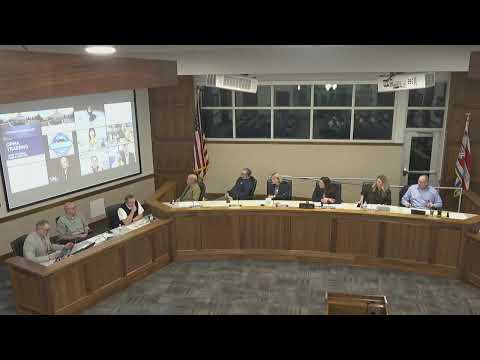
Sen. Todd Wyler and city officials used Bountiful’s Feb. 24 work session to brief the council on several bills at the state Capitol that could affect the city’s planning, finances and services.
City Manager Gary and the mayor described land-use proposals they consider preemptive, including a bill identified in the meeting as HB 81 84 that would create a state “preferred land use” and an expedited approval process that could override local zoning. Gary said the League of Cities and Towns has been working to protect local decision-making and that Mayor Bradshaw testified in committee against aspects of the proposal.
Why it matters: Several bills under consideration could change how municipalities regulate land use, raise or limit property-tax revenue, or change eligibility requirements for state infrastructure funds — each of which could affect local budgets and services.
On property taxes, council members were warned of proposals to cap increases or require voter approval, which Gary said could limit a small city’s ability to generate revenue for essentials such as police hiring. He described work with Rep. Karen Peterson to draft language that would improve transparency in truth-in-taxation processes and provide department-level description of how additional revenue would be used.
The mayor and staff discussed a homelessness bill as introduced that would increase non-shelter cities’ contributions to the mitigation fund by roughly 15 percent. The mayor said Bountiful currently contributes about $175,000; a 15% increase would raise the city’s contribution to nearly $200,000, an amount he noted could fund roughly one police officer (salary, car and equipment) that the city might otherwise hire.
The council discussed HB 501, a water-rate-related bill that had been significantly amended earlier the same day. The mayor said a substitute removed the most concerning forced-rate provisions; the substitute still conditions eligibility for a state infrastructure revolving loan fund on meeting certain rate-benchmark criteria tied to median adjusted gross income but is substantially less punitive than the original introduction, according to the mayor.
Sen. Wyler discussed Senate Bill 211, which he described as an attempt to restore the legal status quo in personal-injury litigation after the Utah Supreme Court’s Gardner v. Norman decision. He said the court ruling produced substantial benefits for insurance companies and that SB 211 is intended to return to pre-Gardner norms.
Wyler also described education bills moving through the Legislature: one would allow teachers to discuss historical religious motivations when teaching history (he emphasized this is not legislation to permit proselytizing), and another would establish a statewide “bell-to-bell” cell-phone ban by default while preserving the right of local school boards to opt out.
The senator offered to be available for follow-up and left his contact information with council members. The council recessed its work session to prepare for the regular council meeting; no formal votes on state legislation were taken by the city council during the work session.