Get Full Government Meeting Transcripts, Videos, & Alerts Forever!
Get email alerts on the State Legislation topic
No spam. Unsubscribe anytime.
Oregon House passes package of bills on Guard deployment, housing, schools and public safety
Summary
On Feb. 19, 2026, the Oregon House approved a set of measures addressing National Guard deployment limits, a 90-day pause on large investor purchases of single-family homes, a governor's recourse for withheld federal funds, school cardiac-response plans, criminal-justice clarifications, immigrant-protection measures, tougher swatting penalties, trafficking evidentiary reforms, and smoke-free multifamily housing rules.
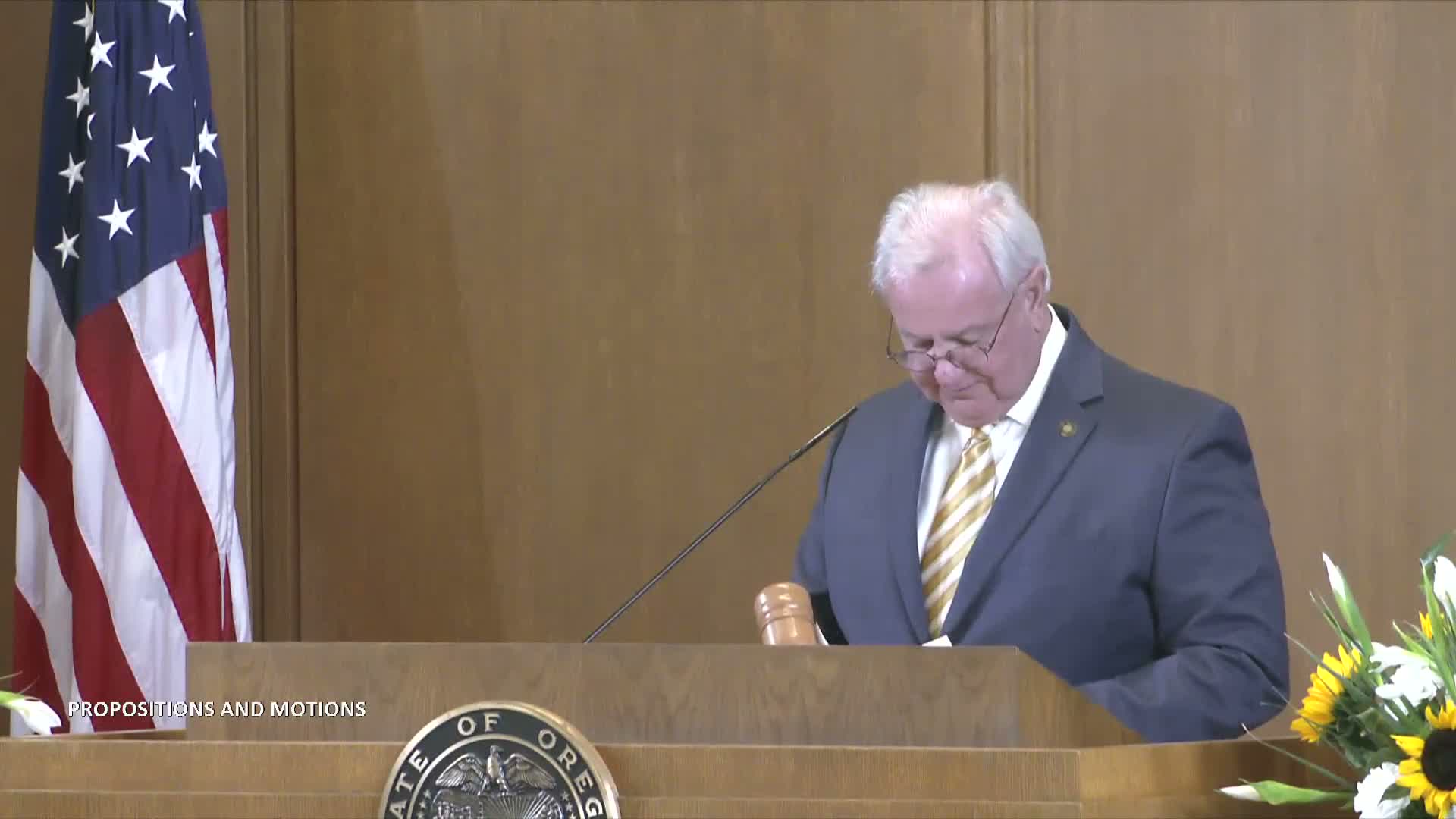
SALEM, Ore. — The Oregon House of Representatives on Feb. 19 passed a broad group of bills covering emergency response and the National Guard, housing limits on large investors, a mechanism to hold federal funds in escrow, school cardiac-emergency plans, criminal-justice clarifications, immigrant-protection measures, stiffer penalties for so-called “swatting,” evidentiary changes for human-trafficking cases, and a pathway for landlords to adopt smoke-free multifamily policies.
Representative Isidore, sponsor of the National Guard bill (House Bill 40 91), said the measure "is about readiness" and would clarify responsibilities so the Guard remains available for state emergencies when possible. Opponents warned the measure raises constitutional questions about states attempting to constrain federal activation; Representative Yunker said the bill "tries to place state-level restrictions on how the Oregon National Guard may be mobilized when operating under federal authority." The House declared HB 40 91 passed on final reading.
Representative Bowman, sponsor of the Buyers Not Billionaires Act (House Bill 41 28), described a 90-day waiting period on purchases by the largest institutional investors, saying, "Oregon homes should be available to Oregonians first." Supporters framed the change as a limited, narrow pause that preserves exemptions for local landlords, nonprofits and housing already held as rentals. The House approved HB 41 28.
Lawmakers also approved the Recourse Act (House Bill 41 43), described by Representative Chilton as a tool to protect Oregon communities when federal funds lawfully owed to the state are withheld. Chilton said the bill would let the governor, with the attorney general and treasurer, place certain outgoing payments into a transparent holding account until obligations are resolved. Critics called the idea risky and said it strains federal-state relations; nonetheless, the bill passed.
On school safety, Representative Juncker urged lawmakers to back House Bill 41 60, which requires schools to adopt cardiac emergency response plans, maintain and train on automated external defibrillators (AEDs) and coordinate with local emergency services. When asked, Juncker said there are "8 AEDs in the building" as an example of accessibility; the House passed the measure.
A multi-part public-safety package (House Bill 40 41) that adjusts theft thresholds for inflation, tightens felony elude penalties, creates procedures for clarifying ambiguous written judgments and sets a retroactive clarification date of July 10, 2025, drew prolonged debate. Sponsors said the bill remedies confusion around credit-for-time-served calculations and provides judicial procedures; critics called the retroactive elements constitutionally and practically troubling. The House declared the measure passed after the roll call.
Other measures approved included: - HB 41 11, which strengthens anti-discrimination protections for immigrants in civil proceedings, workplace anti-retaliation provisions and limits profiling based on perceived immigration status; supporters called it part of an "Immigrant Justice Package." - HB 41 51, which increases penalties for initiating false emergency reports (swatting) to a felony in the most severe cases when an enhanced law-enforcement response leads to serious injury or death. Sponsors pointed to multiple swatting incidents affecting schools and small communities. - HB 41 57, creating a narrowly tailored hearsay exception for certain human-trafficking statements when recorded or made to trained professionals and the court finds indicia of reliability, intended to help prosecutors when survivors are unavailable to testify. Supporters said judicial safeguards remain in place. - HB 41 20, allowing landlords to adopt smoke-free policies for multifamily housing with protections such as at least 180 days' notice and grandfathering fixed-term leases; backers cited public-health and fire-safety benefits.
Throughout the floor session lawmakers also honored survivors of World War II-era Japanese American incarceration and held remonstrances marking the anniversary of Executive Order 9066. The House referred proposed House Rules amendments to the Rules Committee and adjourned until 10 a.m. on Friday, Feb. 20, 2026.
The measures now proceed where required to the Senate or to implementation steps specified in law.