
Residents urge council to address contamination, overdevelopment and affordability
Get AI-powered insights, summaries, and transcripts
Subscribe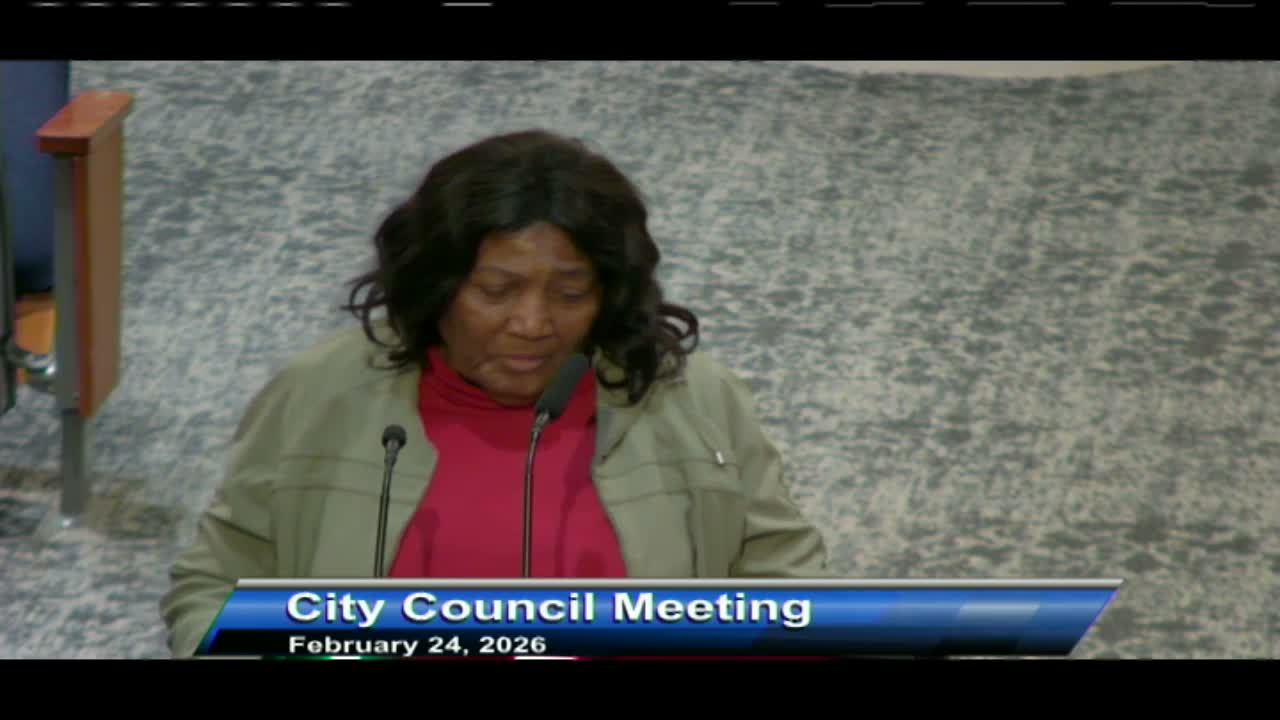
Summary
Public speakers at the Feb. 24 meeting urged the council to tackle contaminated waste sites, overdevelopment, and lack of enforceable affordable housing measures, and called for a neighborhood bill of rights and independent investigations into alleged conflicts.
A broad swath of residents used the council's public comment period on Feb. 24 to press the City Council on three recurring themes: environmental contamination in historically marginalized neighborhoods, rapid and potentially unregulated development, and the need for enforceable affordable-housing protections.
Sally Barnes described alleged contamination she attributes to Ashley Chemical Company, saying she found records indicating ongoing waste sites draining through neighborhoods and linking the contamination to a family tragedy. "My daughter died of a mysterious illness...They take two inches of soil out. That's not enough," Barnes told the council, and she urged officials to stop contaminated drainage into McCoy's Creek and surrounding communities.
Multiple speakers raised concerns about overdevelopment and rezoning that, they said, favors narrow, market-rate housing over affordable, mixed-use redevelopment. Samantha Ceres urged strict adherence to the city's 2045 comprehensive plan and criticized small-lot, high-priced homes that she said do not produce affordability. Jamie Travis Leonard urged that new residential approvals include enforceable affordability measures and cited Census figures on housing cost burdens.
Several speakers, including Kathleen Prayer, called for the council to codify a neighborhood bill of rights to prevent last-minute amendments that limit public review and to give neighborhood voices more formal weight in land-use decisions. Public commenters also urged independent audits and third-party investigations into overlapping allegations of misconduct and conflicts of interest; Addison Liberty Patrick specifically suggested an independent auditor rather than an internal review to restore public trust.
Council members received the comments and recorded several continuations of hearings and motions to address technical amendments; some items were postponed to March 10 for further public hearings and staff follow-up. The council did not adopt a new neighborhood bill of rights or an independent audit on Feb. 24, but multiple speakers asked that the council prioritize these items in future agendas.