Lawmakers hear pitch to allow high‑voltage transmission lines in highway rights of way
Loading...
Summary
At an informational Feb. 19 meeting, Next Gen Highways urged the House Climate Energy and Environment Committee to allow strategic colocation of high‑voltage transmission lines in interstate and controlled‑access highway rights of way to speed grid expansion, reduce private land impacts and lower project costs.
At an informational meeting of the House Climate Energy and Environment Committee on Feb. 19, Randy Satterfield, executive director of Next Gen Highways, urged Oregon lawmakers to revise Oregon Department of Transportation policy to permit strategically placed high‑voltage transmission lines in interstate and other controlled‑access highway rights of way. Satterfield said the change could speed development of new transmission needed to meet rising electricity demand.
Satterfield told the committee that studies project large increases in transmission capacity needs: "NREL ... concluded that we need to double the size of existing capacity on the grid by 2050," and a Westech consortium study, he said, identifies more than 12,000 miles of new transmission needed across the western United States. He argued that siting new lines in already disturbed highway corridors would reduce environmental impacts and affect far fewer private landowners than greenfield routes.
Satterfield cited operational examples from other states. He said Wisconsin’s 2003 Act 89 prompted WisDOT to change its policy, secure FHWA approval and allow multiple projects to use highway rights of way — including more than 100 miles on the I‑90 corridor. He described a Portland General project (Tonquin) that, he said, could have used I‑5 and I‑205 rights of way but did not because of current DOT restrictions, calling it a "missed opportunity" to lessen private landowner impacts.
On cost, Satterfield gave an illustrative comparison: a 345 kV line typically requires about a 150‑foot right of way (roughly 18.5 acres per mile). Using an example land value of $10,000 per acre, he said a private easement could cost about $180,000 per mile, while Wisconsin’s fee structure for colocating on state highway rights of way he described as $12,000 per mile for a 20‑year term (renewable once), suggesting the potential for material project cost savings from colocation.
Committee members pressed on potential limits and risks. Representative Osborne praised the idea as "one of the top three most common‑sense ... ideas I have ever heard" but asked whether corridors would be limited to serving "green" energy and how utilities would be affected if state rules require new users (such as data centers) to take a high share of clean energy. Satterfield responded that "the grid is the grid," distinguishing these transmission lines from generation tie lines and noting that transmission carries whatever energy is on the system; he said permitting language should allow DOT and utilities to assess feasibility on a corridor‑by‑corridor basis.
Members also raised safety, maintenance and land‑use questions. On vegetation and clearance Satterfield said utilities negotiate easement terms and compensate adjacent landowners for required trimming or removal. On the question of placing infrastructure under lines or running light rail, he said dwellings are not allowed beneath transmission lines but sheds, certain vegetation and vehicle travel can coexist where safe; he cautioned that if DOT plans future roadway expansion a corridor might be excluded after early DOT‑utility coordination.
The committee discussed undergrounding for scenic corridors such as the Columbia River Gorge. Satterfield noted that underground HVDC projects exist in other regions but said undergrounding alternating‑current lines is substantially more expensive — "on the low end, folks say 5x and some might say even as much as 10x" — and that his group is agnostic about overhead versus underground if DOT and a utility determine it feasible.
Several members suggested building a local coalition similar to the groups that worked in Minnesota and Colorado. Satterfield said Next Gen Highways convened supportive coalitions before moving policy in other states and is pursuing the same in Oregon; he also described ongoing collaboration with the Colorado Electric Transmission Authority and Minnesota regulatory bodies to study highway corridors for colocation.
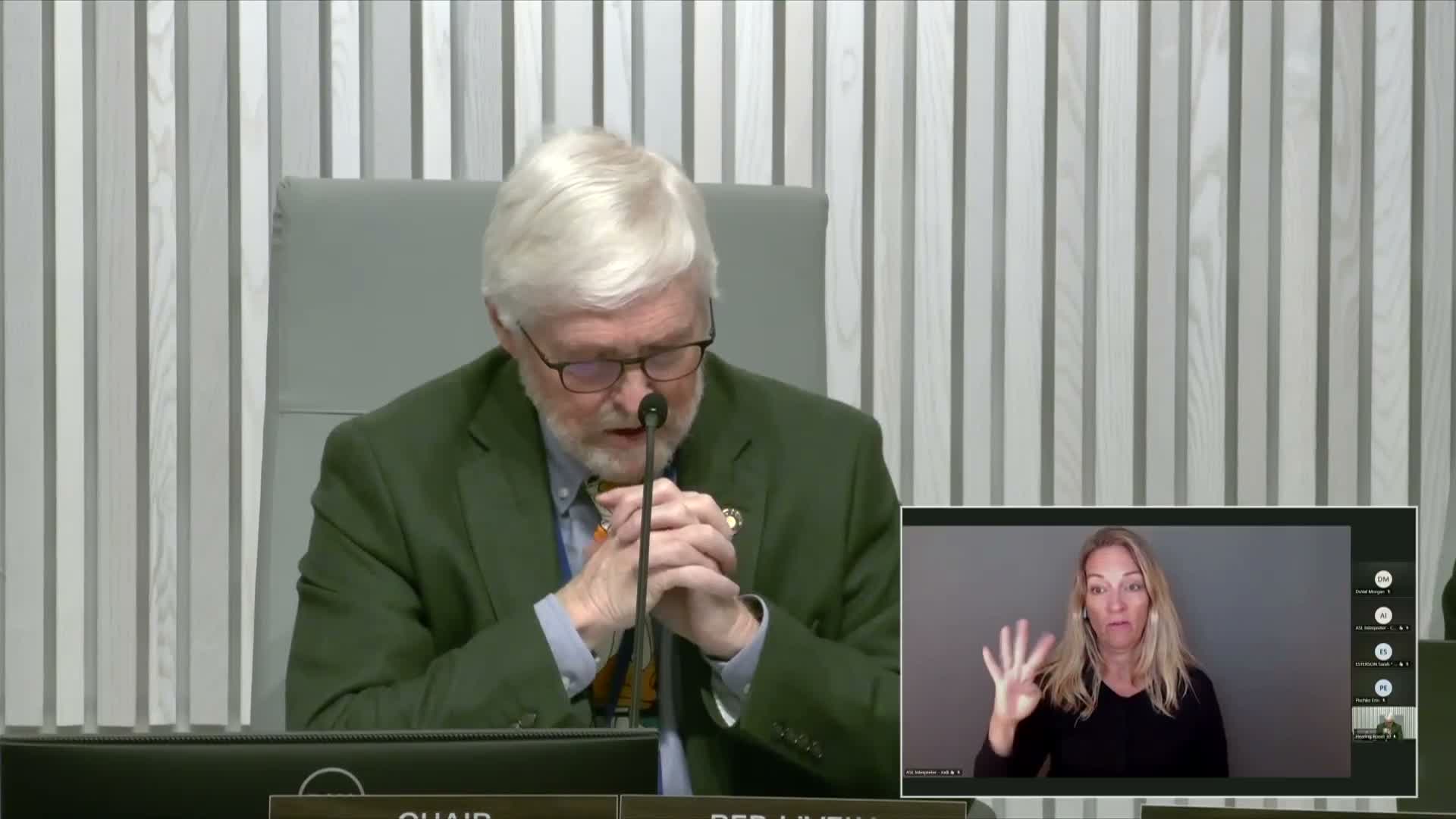
Chairman Lively closed by thanking presenters and announcing follow‑up informational sessions on clean fuels and facility siting with DEQ and ODE expected to attend. Committee members discussed forming a work group and possible bill drafts; as of the meeting no formal legislation or votes on the matter were recorded.
The committee did not take formal action at this session. It scheduled further informational meetings and signaled interest in additional briefings on the Westech study and related corridor assessments.