
Oregon House committee hears personal and agency accounts of rising EBT skimming; advocates push for chip cards
Get AI-powered insights, summaries, and transcripts
Subscribe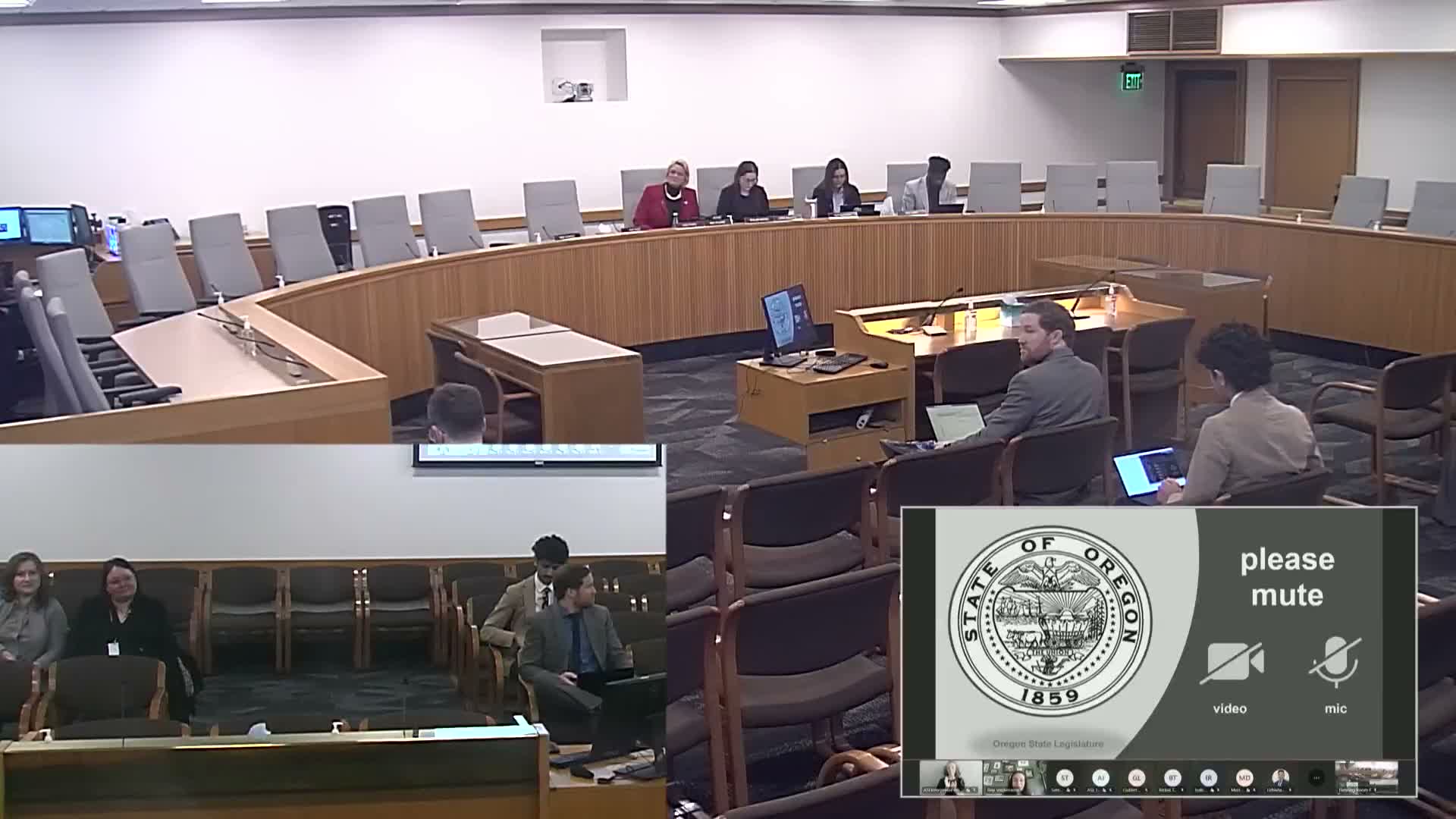
Summary
At an informational hearing Feb. 19, state officials and advocates described a spike in Electronic Benefit Transfer (EBT) 'skimming' that has left SNAP recipients without food, cited roughly 10,700 validated thefts and about $4 million lost, and urged the legislature to fund chip‑and‑tap EBT modernization before a federal match changes.
Representative Andrea Valderrama opened an informational hearing of the House Committee on Early Childhood and Human Services on Feb. 19, laying out concerns about a national rise in Electronic Benefit Transfer theft that has affected Oregon SNAP recipients and other low‑income households.
Valderrama said roughly one in six Oregonians rely on SNAP and told the committee her office has tracked thousands of incidents of electronic benefit theft. "When these funds are stolen, victims can't get their money back," she said, describing a bill concept that would direct the Oregon Department of Human Services (ODHS) to restore EBT funds taken by skimming so affected families would not go without food.
Heather Miles, ODHS's SNAP and food program administrator, told the committee the agency has seen a sharp uptick in organized electronic theft since 2021 and has stood up an EBT fraud response team that works with retailers and law enforcement. Miles said Congress temporarily authorized states to replace some skimmed EBT cards following the 2021 national surge; that federal authority expired on Dec. 20, 2024, and "since that date we've not been able to replace any of those SNAP cards lost due to electronic theft."
Miles described the technology and tactics used by criminals — glued‑on skimming overlays, tiny cameras and Bluetooth‑enabled devices that transmit card data — and said ODHS removed 25 skimming devices from retail outlets between July and December during targeted enforcement. She also said the department has sometimes canceled cards preemptively to prevent imminent loss and acknowledged the disruption that cancellation causes for families when replacement is not available.
Committee members asked whether cardholders can receive purchase alerts; Miles said cardholders can perform balance checks and can freeze or unfreeze cards through ODHS's EBT Edge web app, but real‑time transaction alerts are not currently available. On prosecutions, Miles said local and federal law enforcement have apprehended individuals and at least one federal case is active.
Alex Agdi of the Oregon Hunger Task Force urged the legislature to fund chip‑enabled EBT cards, saying chip cards generate transaction codes that make fraud easier to detect and citing California's experience of an approximately 83% reduction in electronic benefit theft after adopting chip technology. Agdi warned the legislature about an upcoming change under federal HR 1 that would shift administrative costs for SNAP modernization from an even 50/50 match toward a 75/25 state‑share split, creating urgency to act while the federal match remains more favorable.
Sammie Thio, public policy advocate for the Oregon Food Bank, emphasized the human toll: compromised PINs can expose additional financial accounts, and losing a month's benefits can force families to skip meals or miss other essential payments. Thio noted that federal authority to replace skimmed benefits was available through 2024 and that its expiration has left low‑income households with fewer options.
A Spanish‑language witness, Maria, described having her SNAP balance stolen in October 2025, being issued a new card but told she would not receive reimbursement because funds were not available, and visiting multiple food distribution sites where she found limited options for her diabetes‑appropriate diet. Maria asked the committee to pursue a solution to reimburse victims and prevent future theft.
The hearing produced no formal vote or immediate policy action; presenters and witnesses urged the committee to consider investing in EBT modernization, expand public education about card security, and continue coordination with retailers and law enforcement. Vice Chair Scharf closed the informational session and the committee adjourned.