Get Full Government Meeting Transcripts, Videos, & Alerts Forever!
Get email alerts on the Healthcare Policy topic
No spam. Unsubscribe anytime.
House Rules committee backs seven-year health-care vision, sends HCR 202 to the floor
Summary
The House Committee on Rules adopted amendments to House Concurrent Resolution 202, endorsing a seven-year vision to stabilize Oregon's health-care system by 2033 and voted to send the resolution to the floor after testimony from former Governor John Kitzhaber, health-system leaders and clinicians.
Chair Bowman opened a public hearing on House Concurrent Resolution 202, a resolution that sets a state policy goal for 2033 to expand access to affordable, navigable health care and stabilize provider finances. Witnesses urged the committee to endorse the resolution as a long-term "North Star" to guide multi-biennial policy choices.
Former Governor John Kitzhaber urged support for the resolution, saying Oregon faces a long-building crisis exacerbated by projected federal Medicaid funding losses and that HCR 202 provides a needed long-term objective. "We're past the gradual part and things are about to get sudden," Kitzhaber said, pressing the committee to move the resolution forward.
Sen. Lisa Reynolds, a pediatrician, told the committee that the resolution should emphasize primary care, workforce stabilization and administrative simplification; she supported pausing a cost-growth target program for two years as a short-term measure. Dr. Brian Dutti, president of the Oregon Medical Association, listed priorities the association favors, including protecting core services such as primary care and behavioral health and pursuing predictable financing.
Representatives and clinicians raised workforce concerns spanning EMS, paramedics, nursing and primary care, and urged inclusive stakeholder processes. Betsy Boyd Flynn (Oregon Academy of Family Physicians) and Helen Belonka (family physician; chair of the Universal Health Plan Governance Board) described long waits, rising out-of-pocket costs and clinician retirements as evidence the system needs a guiding framework.
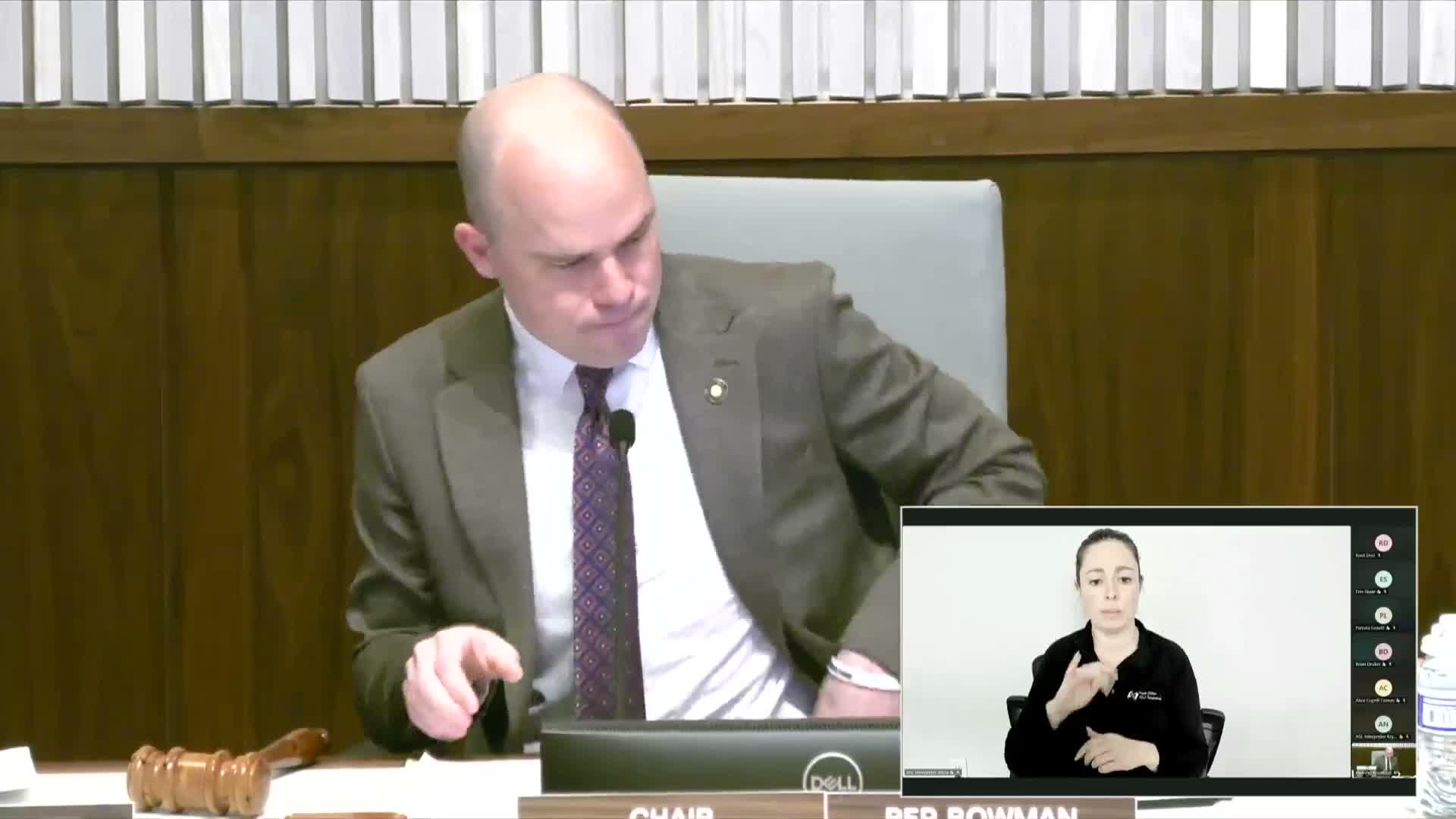
In the work session the committee adopted the dash-1 amendment to HCR 202 and then voted to send HCR 202 to the House floor with a "do pass" recommendation. The committee's roll-call recorded affirmative votes from Representatives Graber, Krepp, Carlatos, Wallen, Vice Chair Elmer, Vice Chair Pham and Chair Bowman; the amendments were adopted and the motion to move the measure passed. Chair Bowman assigned himself as carrier for the floor.
The resolution is nonbinding policy guidance intended to shape legislative priorities and does not in itself appropriate funds. The committee said additional work sessions and subsequent bills will address implementation details, financing and workforce strategies.