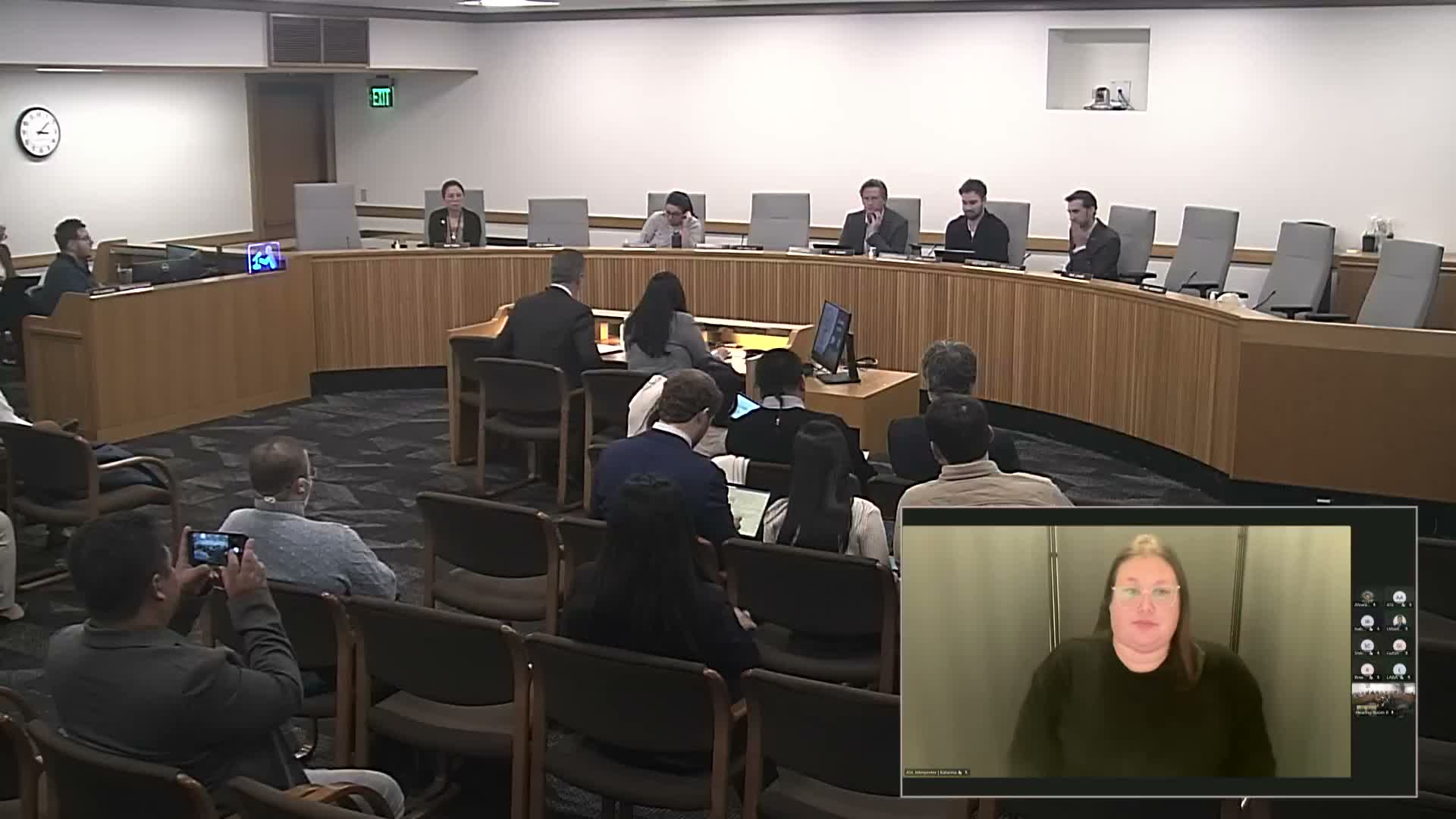
Lawmakers and advocates press Oregon House Judiciary for $10 million to shore up universal representation fund
Loading...
Summary
Lawmakers, legal-aid groups and residents urged the House Judiciary Committee to fund HB 4117 with a $10 million appropriation to sustain Oregon's Universal Representation Fund and a Children's Economic Stability Fund, saying current resources will be exhausted amid a surge in federal immigration enforcement.
Lawmakers and immigrant-rights advocates told the Oregon House Judiciary Committee that the state should approve a $10 million appropriation to sustain the Universal Representation Fund and a Children's Economic Stability Fund, arguing the programs are necessary to keep families housed and protect due process.
Representative Andrea Valderrama, who introduced the request, said the legislature previously reinvested $15,000,000 in the universal representation program and that it has served more than 20,000 people since 2022. "This funding responds to a real crisis playing out in our communities today," Valderrama said, describing family separation, lost income and long-term trauma after detentions.
Advocates described rising enforcement and sharp increases in demand for legal services. Isa Peña of Innovation Law Lab said the program has been a "lifeline," reported program outputs including hundreds of attorneys and community workshops, and asked lawmakers for a $10,000,000 appropriation to sustain services through the biennium. Peña also alleged dramatic enforcement spikes tied to federal operations, saying in testimony that certain detentions had climbed sharply; those figures were presented by advocates as program context and were not independently verified in the hearing.
Other witnesses recounted personal experiences and local impacts. Cynthia Ramirez of Pecun, Oregon's Farmworker Union, said at least 31 people were detained in one day in Woodburn in 2025 and urged the child-stability fund to prevent eviction and hunger for affected families. Rigoberto Hernandez, a Keizer wildland firefighter, described being detained while on duty and said, "Being able to talk to my attorney and discuss with them the legal pathways I had and having them fight for me is why I'm here." Several speakers credited the Equity Corps of Oregon (ECHO) and related legal navigators with winning emergency court interventions that halted deportations.
Speakers linked the request to broader economic and civil-rights arguments. Remy Drabkin, a wine-industry business owner and former McMinnville mayor, noted the industry's $8.1 billion economic footprint and warned that workforce removals have measurable local costs. Ximena Van Dyke of Unidos Bridging Community framed representation as a civil-rights issue, saying legal counsel prevents people from being treated as "guilty first and human second."
Representative Leslie Munoz, speaking as cochair of the legislative BIPOC caucus, emphasized the humanitarian and stabilizing role of the Children's Economic Stability Fund and urged committee support for incorporation of the program into ongoing service levels.
The hearing was informational; no committee vote or formal action on HB 4117 was recorded. Chair Kropf closed the session and said the committee would return to the floor.
What’s next: advocates requested the $10 million appropriation and that funding be incorporated into baseline service levels; the committee did not take a formal vote during the informational hearing.