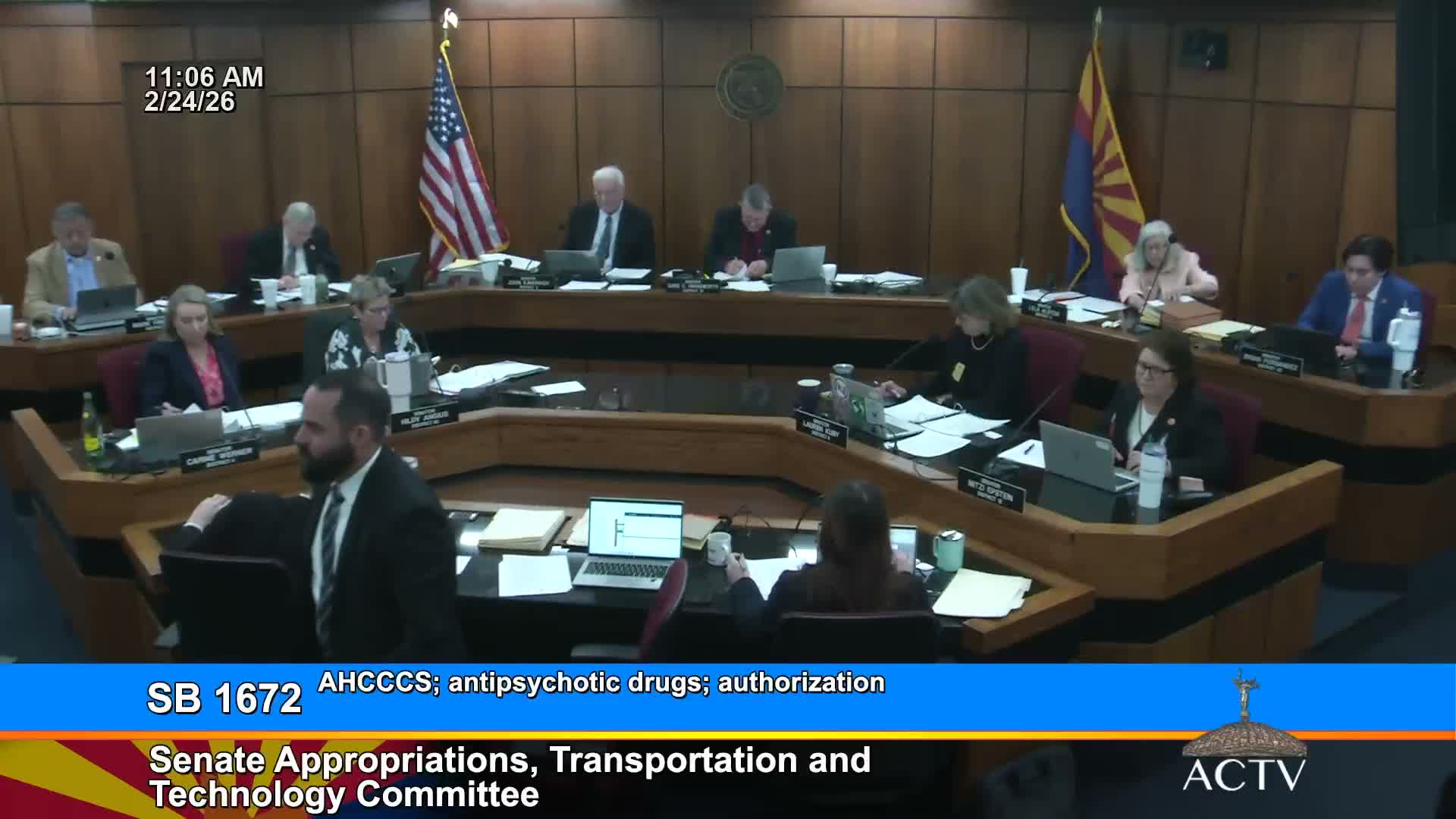
Senate panel advances bill to limit prior authorization for antipsychotics for SMI patients amid fiscal dispute
Loading...
Summary
SB16-72 would restrict prior authorization and step-therapy barriers for FDA-approved antipsychotic medications for AHCCCS members designated as having serious mental illness. Mental-health advocates supported removing administrative delays; AHCCCS and health-plan representatives warned of large increases to pharmacy spending and disputed fiscal assumptions in the bill's note. The committee advanced the measure after adopting the sponsor's amendment.
Senate Bill 16-72 (sponsor: a committee member) seeks to reduce administrative barriers that delay access to FDA‑approved antipsychotic medications for Medicaid members designated as having serious mental illness (SMI). The bill limits prior authorization and step-therapy protocols to a maximum of two required trials and requires electronic, real-time adjudication. It also includes language allowing members to bypass step therapy with clinical documentation of prior trials.
Mental-health advocates, including Christina Sveda of the National Alliance on Mental Illness (NAMI), told the committee that short medication delays can destabilize people with severe psychiatric disorders, increasing hospitalizations and crisis episodes. "For individuals living with SMI, timely access to medication is not optional," Sveda said.
Pharmaceutical representatives and manufacturers supported codifying a shorter administrative pathway. Jeremy Browning (a manufacturer representative) argued the fiscal note underestimates rebate impacts and cited out-of-state comparisons showing lower per‑member spend without steps.
Health-plan contractors and AHCCCS testified in caution. Damien Carpenter (AHCCCS) described that most antipsychotics already do not require prior authorization and said only a small subset require step therapy. Access produced an estimate that removing existing prior authorization denials would increase annual total-fund pharmacy costs by tens of millions and cited a lower- and higher-end range for utilization shifts; AHCCCS and plans disputed whether the fiscal note accounted properly for federal rebates and real-world generic utilization rates.
Committee members debated the tradeoffs between prompt clinical access and potential increases in pharmacy spending; several members asked about rebate flows and whether the fiscal estimate properly modeled net costs after rebates. The sponsor and some advocates signaled willingness to refine statutory language to ensure the bill codifies current practice rather than locking in net price effects that could eliminate rebate arrangements.
The committee adopted a sponsor amendment and voted to advance SB16-72 with a due-pass recommendation (9 ayes, 1 no). The bill will proceed to further floor consideration where fiscal questions about net costs and rebate accounting are likely to be raised again.
What happens next: The bill moves to the Senate floor; AHCCCS, plans, and the sponsor indicated follow-up on fiscal modeling and possible technical fixes to the statute would be part of next-stage negotiations.