Heated committee debate over public-safety pension changes highlights tradeoffs between recruitment and fiscal risk
Loading...
Summary
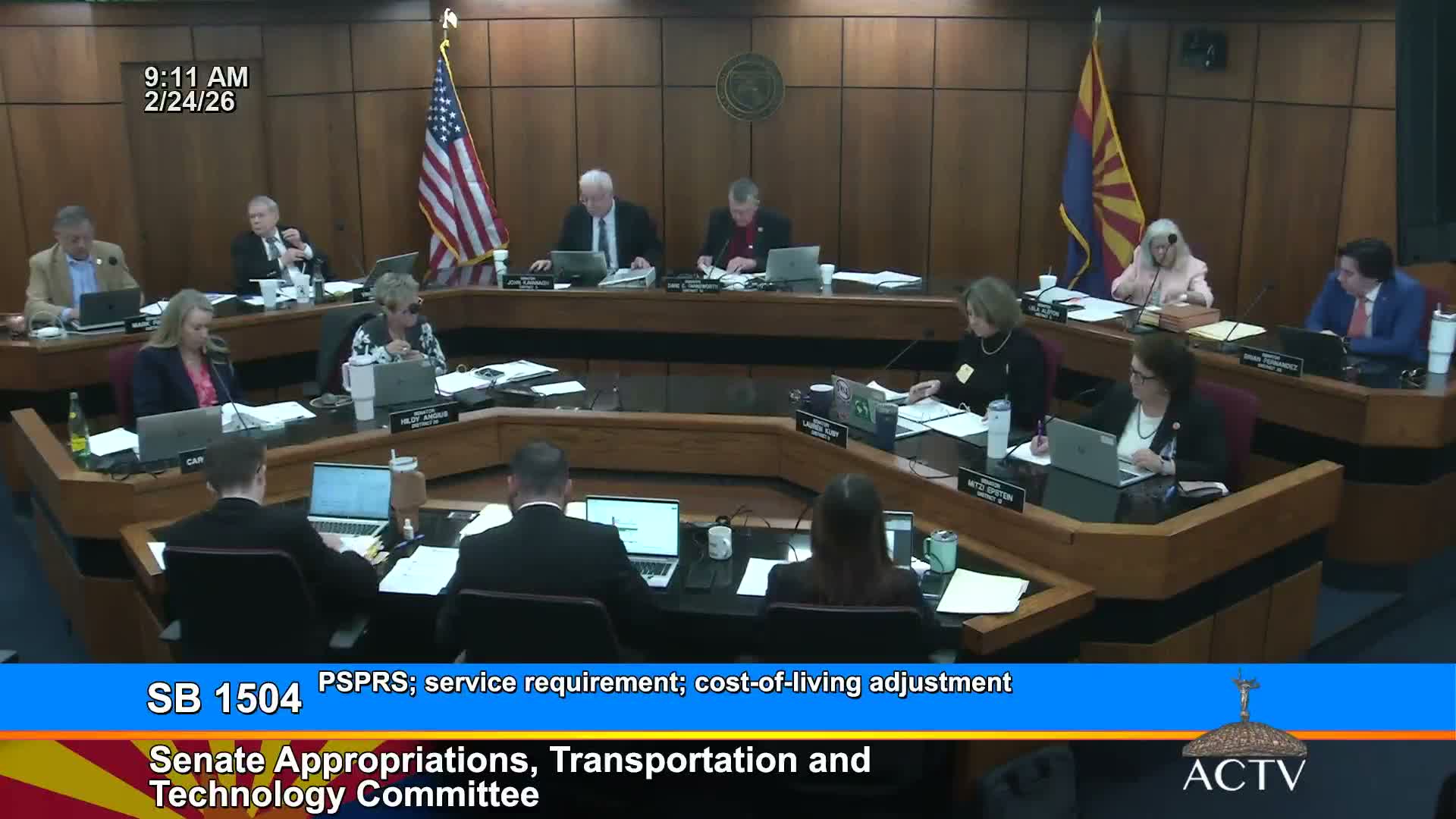
Senate Bill 15-04 drew lengthy testimony from municipalities, unions, actuaries and pension experts. Proponents argued adjustments would improve recruitment and retention for police and fire, while opponents warned the changes would add hundreds of millions in unfunded liabilities and shift large risk to local taxpayers. The amendment exempting prefunding was adopted but the bill failed in committee.
Senate Bill 15-04, a package of changes to public-safety retirement rules for Tier 2 and Tier 3 members, produced one of the longest and most contested hearings of the day.
Supporters from law-enforcement and firefighter organizations urged the committee to move the bill forward to address recruitment and retention problems. "If we don't act then we will continue to have fewer police officers on patrol," said Lieutenant Brian Thatcher of the Phoenix Police Sergeants and Lieutenants Association, describing a multiyear staffing shortfall in Phoenix. Police and firefighter unions said the measure would allow earlier access to defined benefits that match the physical demands of the jobs and argued that a 10-year amortization approach would spread costs.
Opponents — including municipal employers and the League of Arizona Cities and Towns, county supervisors and the Arizona Tax Research Association — said the pension system remains underfunded despite recent injections and bonding; they warned the bill would create large new liabilities. Nick Ponder, speaking for the League of Arizona Cities and Towns, warned of $525 million in added unfunded liability and argued the prefunding requirement existed to protect taxpayers. County supervisors said the plan’s cost could crowd out local services.
Actuarial witnesses presented competing figures. Diane McAllister of PSPRS said a true-valuation estimate would increase annual contributions over time but noted prefunding requirements would impose very large one-time sums (for example, hundreds of millions if Tier 3 changes were prefunded immediately). Stakeholder modeling suggested that amortizing cost increases over ten years would produce smaller annual increases but raise total long-term cost.
The committee considered and adopted a 12-page amendment that exempted the changes from the statutory prefunding requirement (a 'notwithstanding' provision) and would amortize the cost over 10 years. That narrower amendment passed, but when the full bill was put to a committee vote it failed to advance by roll call (3 ayes, 7 nays). Members in favor said the bill deserved further floor debate; members opposed cited unresolved fiscal risk and the need for clearer guardrails.
What happens next: The measure failed in committee and will not move to the full Senate in this form. Sponsors and stakeholders signaled they may continue negotiations or consider narrower approaches.