Lifetime Citizen Portal Access — AI Briefings, Alerts & Unlimited Follows
Arizona House Democratic Caucus reviews consent calendar, pulls several bills for floor strategy
Loading...
Summary
At a floor‑strategy caucus, Arizona House Democrats reviewed the consent and third‑read calendars, removed several items from consent for floor debate and flagged contentious proposals including a payroll‑withholding ballot trigger, Interstate 11 expansion, and rules on expired opioid antagonists and teacher strikes.
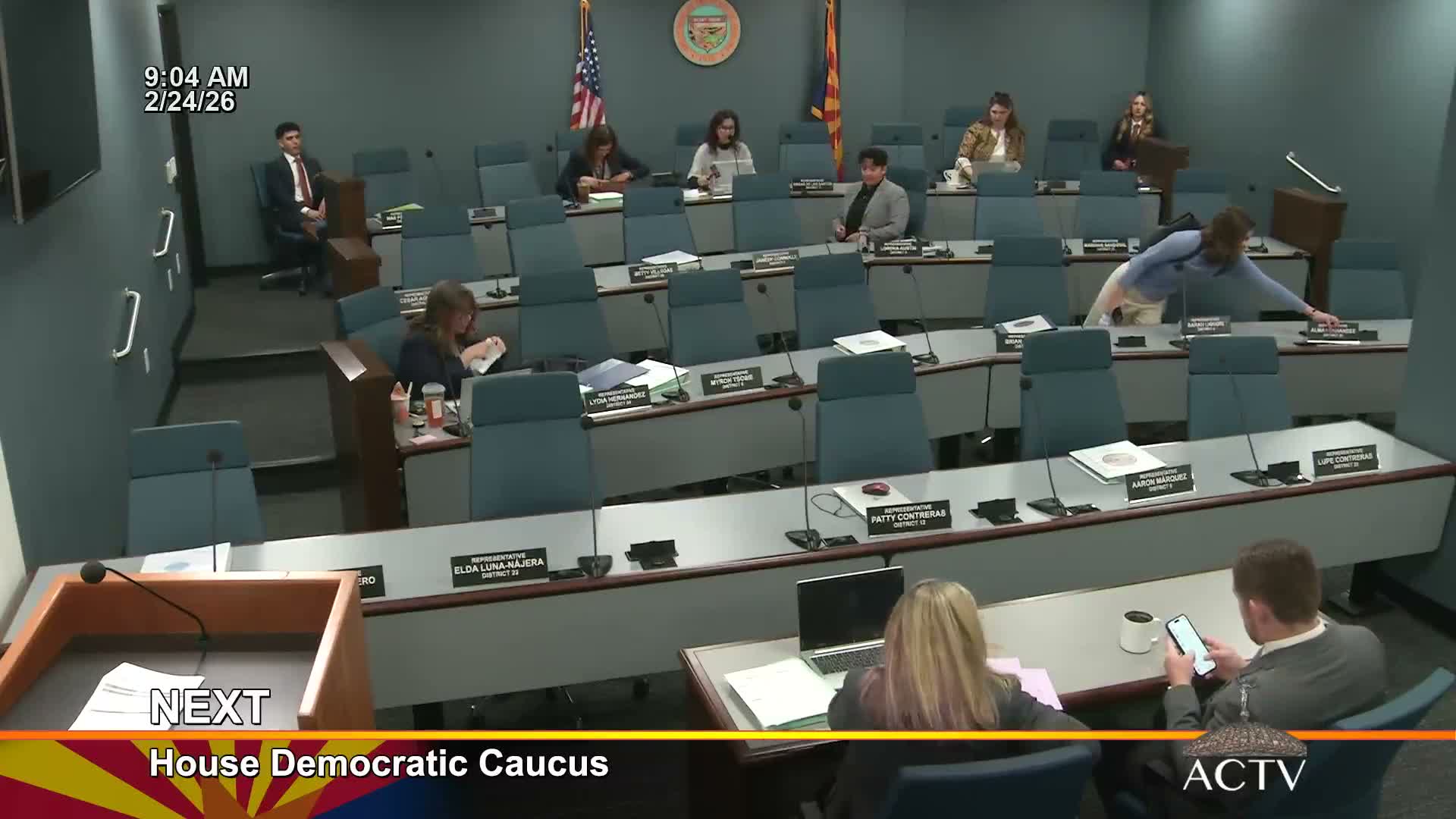
Arizona House Democratic members met in a floor‑strategy caucus to review the minority caucus consent and third‑read calendars and to decide which items to leave on consent and which to pull for fuller floor debate. The chair directed staff to mark unanimous consent items by bill and short title to speed consideration and invited members to request pulls.
Members removed several measures from the consent calendar for additional scrutiny. A noticed pull involved HCR 20‑48, a proposed ballot measure that would withhold salaries for elective state officeholders if the general appropriation bill is not signed by April 30; a caucus member asked to remove the resolution from consent and the chair complied. Another removal was HB 2601, directing ADOT to seek federal approval for splitting and siting Interstate 11; one member said, "I do not want Interstate 11 cutting through our gorgeous desert," and urged alternatives such as expanded mass transit.
Health‑care and public‑safety bills drew particular attention. Sponsors explained HB 26‑97 would permit expired opioid antagonists to be dispensed and used for persons at risk of an opioid‑related overdose and said committee language sets a three‑year post‑expiration allowance. Members questioned pharmacist liability and public‑safety risks and pulled the measure from consent for further discussion. Similarly, HB 4001 (alternative nicotine product regulation) and related proposals were flagged after public‑health groups raised objections and members discussed enforcement, taxation, and tribal‑sovereignty implications.
Education measures also prompted debate. A strike‑prohibition amendment to HB 23‑13 drew objections from caucus members who argued Arizona is a right‑to‑work state and that the bill responds to recent teacher demonstrations; the item was removed from consent for additional consideration. Several bills tied to school safety, superintendent duties, and school district authority were presented and identified for follow‑up questioning.
Sponsors repeatedly noted fiscal impacts or committee outcomes: HB 22‑40 (a tuition waiver scholarship for dependents of disabled veterans) included JLBC and ABOR revenue estimates; many reauthorization/continuation bills for licensing boards were presented as multi‑year continuations with their respective sunset years noted. Housing policy (HB 2999 establishing state housing affordability districts) was described as creating taxing districts to fund housing projects, but members flagged the absence of affordability targets and water‑supply language.
Caucus leaders closed by scheduling floor strategy work upstairs and announcing upcoming briefings, including a March 12 breakfast briefing with ADWR director Brenda Berman for a Colorado River update. The chair adjourned the caucus after members confirmed next steps on pulled items.