
Senate approves bill requiring institutional emails, vacancy timelines and student representatives for community college boards
Get AI-powered insights, summaries, and transcripts
Subscribe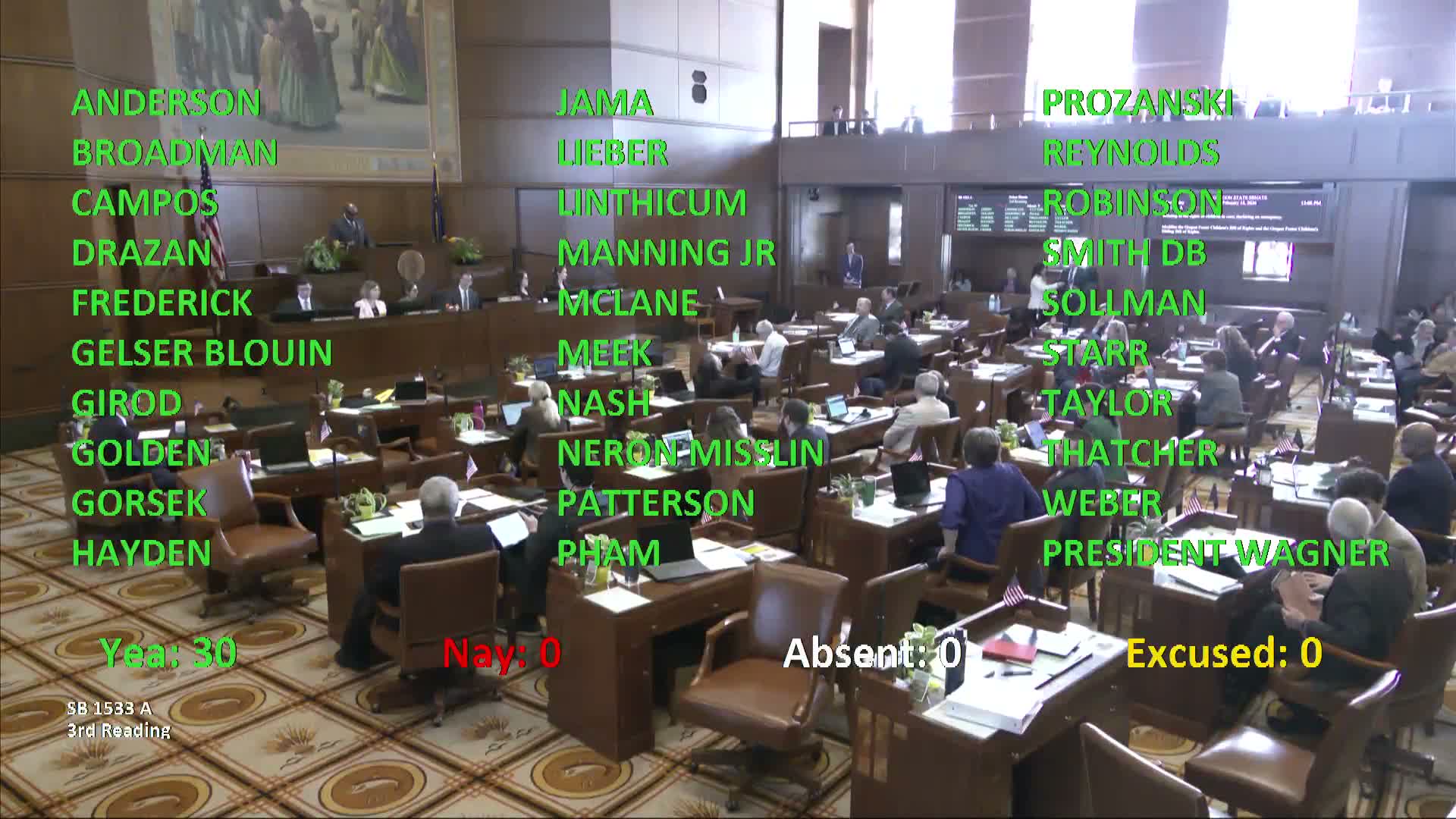
Summary
SB 15-37 requires community college board members to have institutional email addresses posted online, gives boards 90 days to fill vacancies or cedes appointment to county commissioners, and creates a non-voting student representative selected by student governments; the measure passed on final reading.
The Oregon Senate on Feb. 18 passed Senate Bill 15-37, a measure aimed at strengthening governance and public access for community college boards.
Senator Frederick presented the bill and said it accomplishes three basic reforms: requiring colleges to provide institutional email addresses for board members that are posted on the college website; clarifying the board process and timeline for filling vacancies (90 days, with county commission appointment if the board fails to act); and establishing a non-voting student representative chosen by the college’s student government, with participation in executive sessions governed by board policy.
Floor debate highlighted the bill’s focus on access and oversight. The sponsor noted that when a previous version was introduced only six of Oregon’s 17 community colleges provided board-member institutional emails; that number has since risen to 11, leaving six that still do not. The sponsor said the change is “a simple matter of accessibilities to these elected officials.”
Opponents on the floor raised concerns about local control and the effect of having a student representative on board deliberations. Senator Robinson argued the change interfered with local decisionmaking and warned that a student’s presence could constrain private deliberations on matters such as labor negotiations. Other senators cited budget pressures and the timing of imposing new responsibilities on cash-strapped institutions. Supporters responded that the student position is non-voting and that local boards retain discretion over executive-session participation according to policy.
The Senate took a roll-call vote on final passage and the clerk recorded a constitutional majority; the presiding officer declared SB 15-37 passed on third reading.
Vote: The bill passed on final reading and will be enrolled and transmitted for further executive consideration.