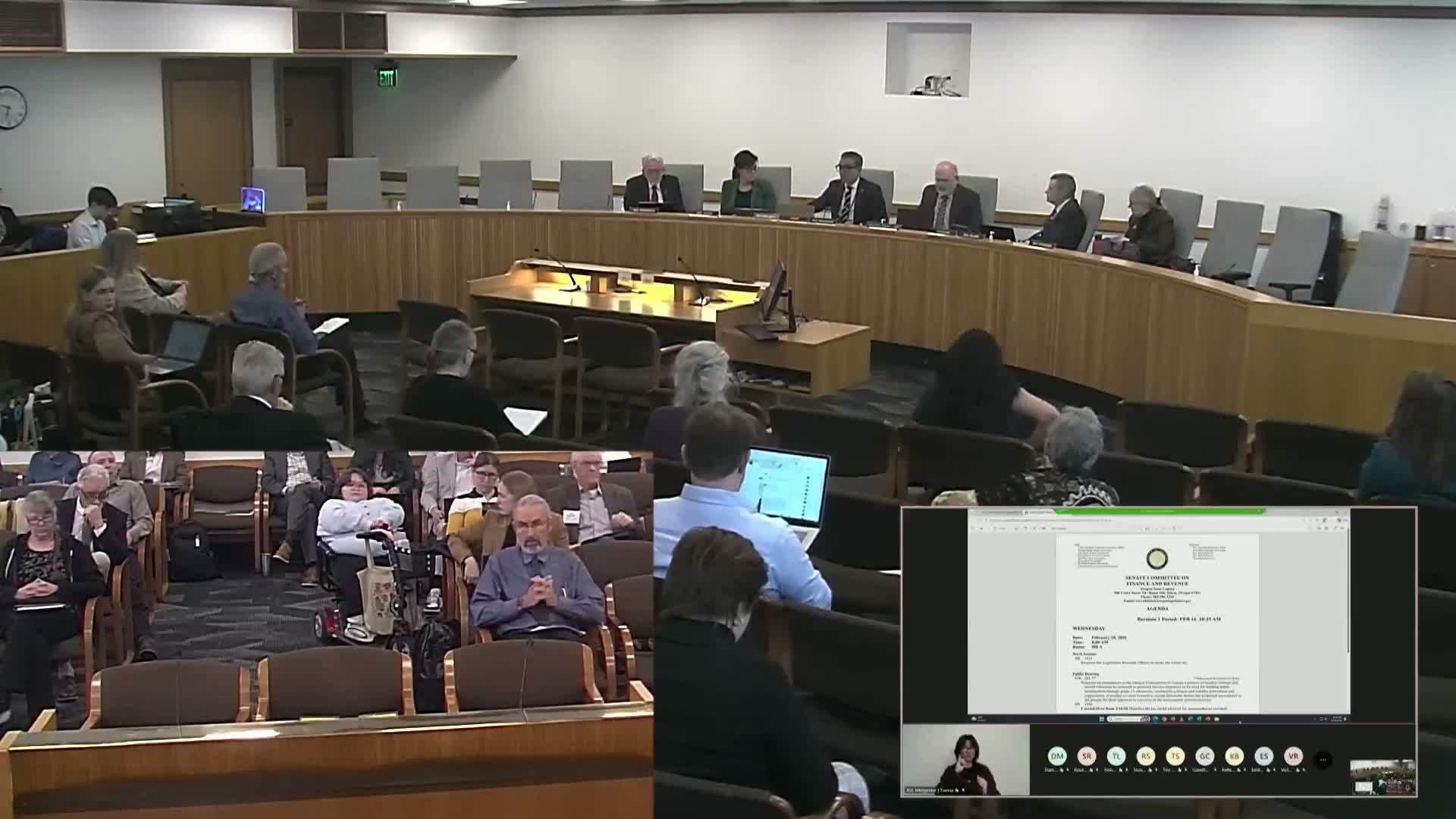
Senate committee hears mixed public testimony on ballot referral to change kicker distribution
Loading...
Summary
Senator Pruzanski proposed SJR 201 to send voters a change to the 'kicker': if surplus exceeds $300 million the excess would be split 50/50 between taxpayer rebates and funds for education and wildfire suppression; business groups and taxpayers opposed while higher‑education and union groups supported the referral with amendments.
Senator Pruzanski presented Senate Joint Resolution 201 to the Committee on Finance and Revenue on Feb. 16, seeking voter approval to change how Oregon’s surplus 'kicker' is distributed. Under the plan he outlined, the first $300 million of a kicker event would continue to return to taxpayers as now; any amount above that would be split, with half returned to taxpayers and half placed into two state funds for education (K‑12 and, in dash‑1, higher education/community colleges) and for wildfire suppression and prevention.
Proponents including Victor Reyes of AAUP Oregon said redirecting some surplus would provide stable funding for higher education and wildfire programs and reduce what they called the regressive distribution pattern of returning large sums disproportionately to higher‑income taxpayers. Opponents — ranging from Oregon Business & Industry to the Taxpayers Association and several individual taxpayers — argued the kicker is a popular constitutional check on government growth and that the money rightly belongs to taxpayers.
Members of the public offered a broad range of perspectives in a lengthy public comment period. The committee closed the public hearing; no committee vote on the joint resolution occurred that day.
Ending: The hearing on SJR 201 is complete and the record is closed; any future action will follow the committee’s scheduling and floor consideration if the measure is advanced.