
Senate panel reopens hearings on Oregon Jobs Act bill that would expand R&D credits and reclassify North Hillsboro land
Get AI-powered insights, summaries, and transcripts
Subscribe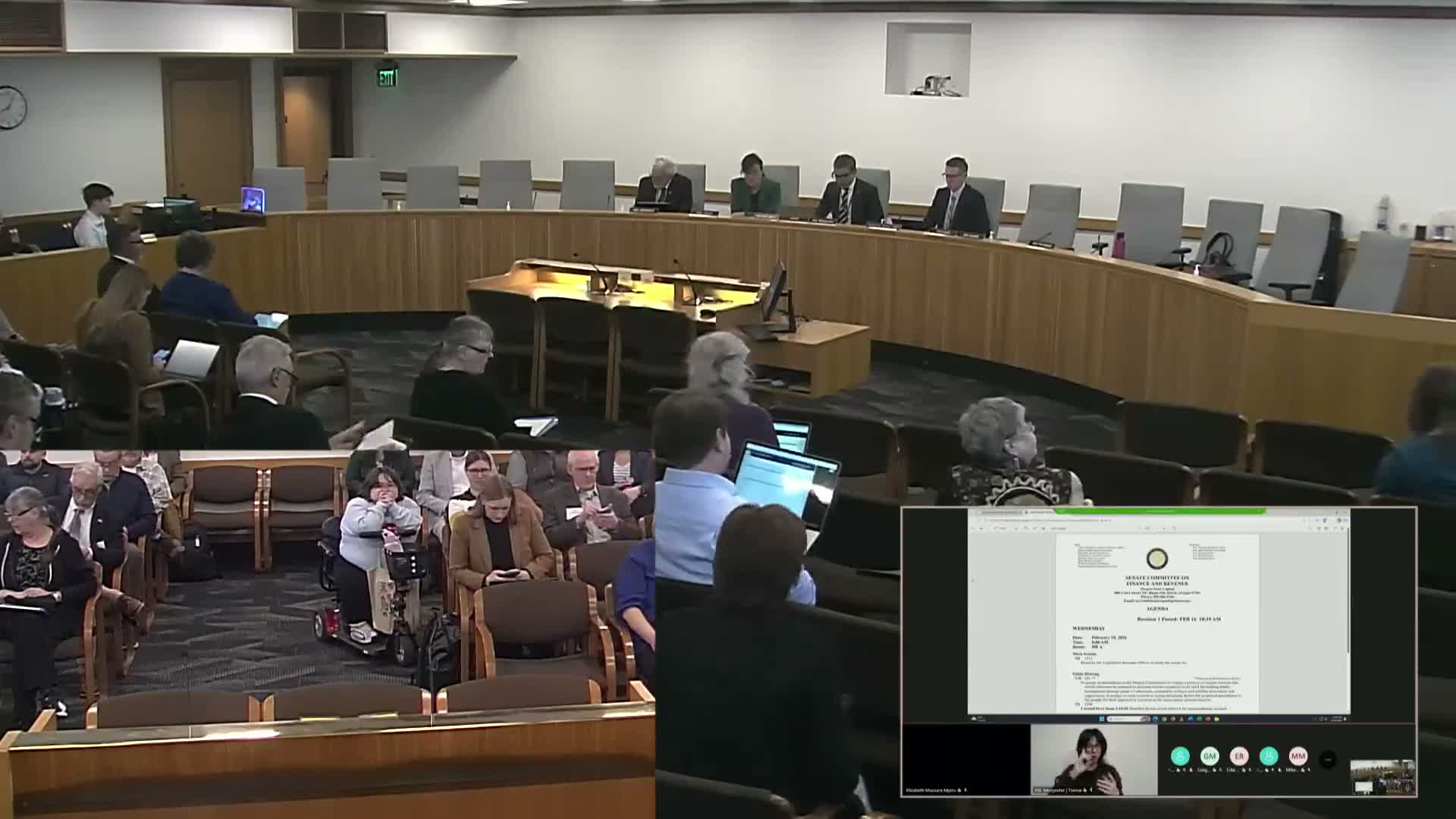
Summary
Lawmakers heard hours of testimony pro and con on SB 15 86, which would mirror the semiconductor R&D credit for advanced manufacturing and bring roughly 1,700 acres near Hillsboro into urban designations; supporters cited jobs and competitiveness, opponents warned of lost farmland, data‑center risks and revenue impacts.
Chair Broadman reopened the public hearing on Senate Bill 15 86 on Feb. 16, bringing panels and more than a dozen public commenters to discuss an Oregon Jobs Act package that would expand a research-and-development (R&D) tax credit to advanced manufacturing and change land‑use designations for acreage north of Hillsboro.
State Senator Janine Salmon, who introduced the package, said the JOBS Act combines incentives, permitting reforms and industrial‑land planning to “create middle class jobs” and build on the semiconductor package enacted in 2023. Salmon told the committee that the proposal has statewide and bipartisan support and listed cities, universities and business groups as partners backing the measure.
Michael Held, regional services manager at Business Oregon, told the committee Business Oregon has no formal position on the bill but is prepared to administer a parallel advanced‑manufacturing R&D credit, separate from the semiconductor credit. Held said the bill’s certification mechanics largely mirror the existing semiconductor program and that modest administrative adjustments and stakeholder engagement in rulemaking would be needed to define firm eligibility and excluded activities.
Andrew Desmond of the Oregon Business Council described the advanced‑manufacturing credit as designed like the semiconductor credit: a tiered refundability structure and an incremental R&D calculation aligned with IRC 41, with the bill’s drafters seeking separate administration to avoid “double tipping” for firms that already receive the semiconductor credit. Desmond said the structure addressed problems that had plagued earlier R&D credits, such as low caps and lack of refundability.
Ariel Nelson (City of Hillsboro) and Annalisa Curler (Metro) explained the land‑use component and the dash‑4 compromise. As presented to the committee, SB 15 86 would bring about 373 acres into the urban growth boundary for immediate industrial planning, with roughly 1,400 additional acres designated as urban reserve; the dash‑4 language adds mapping precision and sideboards that require planning and zoning for high‑technology manufacturing and forbid standalone data centers while allowing accessory data processing tied to manufacturing uses.
Supporters — including Washington County Commissioner Pam Treese, Representative Bobby Levy and industry witnesses such as Mark Blythe of Kokusai Electric — argued the combination of land and incentives is necessary to attract major semiconductor and advanced manufacturing investment and to strengthen the statewide tax base. Levy urged revising the Regionally Significant Industrial Site (RSIS) definition so cumulative jobs at a multi‑employer site qualify for incentives, citing the Pendleton UAS Range as an example where many small employers together support hundreds of jobs.
Opponents included farm and conservation groups, environmental organizations and local residents. Testimony from Ag for Oregon, the Sierra Club Oregon chapter, and farmers emphasized that the sites in question include high‑quality farmland (testimony referenced “Class 1 prime farmland” and long‑term agricultural value), that converting rural reserve land is irreversible, and that data centers and related uses can consume significant water and power while delivering relatively few onsite jobs. Several speakers warned about the fiscal impact of expanded tax incentives and the loss of revenue that supports local schools and services.
Other speakers raised planning process and transparency concerns; Metro and city staff replied that the land has been debated for years at regional and local levels and that future permits and incentive agreements would involve public processes. Committee members asked Hillsboro and Metro staff to provide documentation describing public outreach and the sequence of local deliberations.
The committee recessed the SB 15 86 public hearing and carried remaining testimony to the next scheduled meeting. No final committee action on SB 15 86 occurred on Feb. 16; the committee stated it would continue public testimony and deliberations on Monday.
Ending: The hearing on SB 15 86 was carried over; the committee asked Metro and Hillsboro to supply a record of local public‑process meetings and indicated additional testimony will be heard at the next session.