Get Full Government Meeting Transcripts, Videos, & Alerts Forever!
Get email alerts on the Fleet Maintenance topic
No spam. Unsubscribe anytime.
Takara board flags fleet safety issues, approves new buses and oversight as VIA prepares to take over
Summary
The Takara board reviewed a VIA maintenance inspection that identified safety items and several vehicles nearing end of life, approved purchases of replacement buses (including a trial wheelchair securement system), and authorized oversight measures as VIA assumes operations.
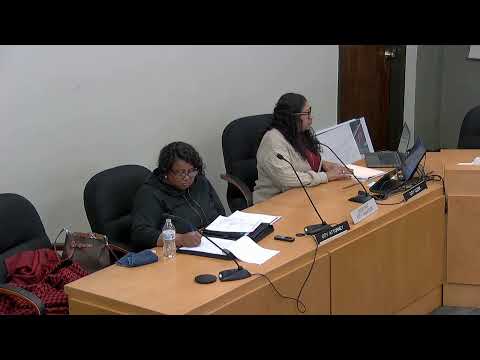
The Takara board reviewed a VIA maintenance inspection and moved to accelerate fleet work and replacements on Feb. 17, 2026, approving two purchase orders for replacement buses and authorizing the deputy director to execute the contracts.
Board members heard that VIA’s on-site inspection found a mix of low-cost fixes—missing or improperly mounted fire extinguishers, safety triangles and first-aid kits—and deeper mechanical problems in several vehicles. ‘‘This is not pretty,’’ staff said, and singled out vehicle 35 as ‘‘the worst vehicle we had in our fleet’’ and suggested some vehicles may be uneconomical to repair.
The board discussed immediate options: prioritize and complete low-cost safety installations so VIA can assume insurance and operations, and consider disposing of vehicles that are not worth repairing. Staff clarified the fleet data lists odometer readings (not purchase dates) and that many vehicles—especially those from a 2018 purchase—are at the end of their usable life. Several vehicles have high mileage (vehicle 35 just under ~200,000 miles; vehicle 36 about ~146,000), and staff recommended planning six months for replacement vehicles even though manufacturers currently quote three to four months.
Trustees pressed staff on where repairs would be done and how vendors will be vetted. Staff said the agency lacks in-house capacity for major repairs and currently relies on an as-needed contractor (Ryan). Trustees emphasized using local shops where feasible but also noted lead-time constraints and local vendor capacity issues.
On procurement, the board approved two purchase-order options: the standard slide-and-click wheelchair securement system (one set of vehicles) and a purple-highlighted option that includes a partially electric securement system as an experiment. Staff said the securement experiment is funded from vehicle-allocated dollars and requires no local match because VIA is installing cameras; that freed funds permit trying the more expensive securement hardware.
The board also accepted an offer from a local individual, Jack, to help train staff on external vehicle inspections and preventive checks; trustees voted to accept the offer and to have Jack assist with inspections and training.
The board directed staff to prioritize repairs needed for safety and for VIA to inherit a manageable set of vehicles, and to return with updated maintenance oversight metrics. The vote to authorize bus purchases and to let the deputy director execute the contracts passed unanimously.
Next steps: staff will proceed with the approved purchase orders, prioritize safety fixes to enable VIA to assume operations, and update the board on repair progress and on the maintenance oversight framework to be enforced under the VIA contract.