Norwalk City Council raises FY27 spending cap to $486.2 million after amendment to boost school funding
Loading...
Summary
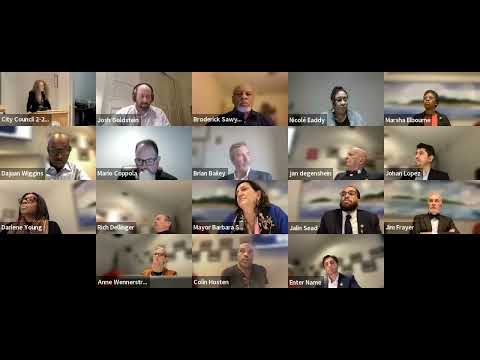
After a night of public comments from parents and educators, the Norwalk City Council unanimously voted to raise the fiscal-year 2027 maximum appropriation to $486,218,642, a change the council said will allow a larger share of funds for the Board of Education than the mayor’s 4% proposal.
The Norwalk City Council unanimously approved an amended spending cap for fiscal year 2027 on Feb. 24, increasing the maximum appropriation to $486,218,642 after council members agreed an adjustment would protect student-facing programs.
The amendment — proposed during debate on a council resolution to set a maximum limit on total appropriations — was framed by its sponsor as a compromise that would direct more money toward the Board of Education than the administration’s proposed 4% increase. The amended cap passed on a roll-call vote after extended council discussion and technical clarification from city finance staff.
Why it mattered: Public comment at the start of the meeting was dominated by parents, teachers and board of education members urging the council to fully fund the BOE’s 6.5% request. "It is impossible to reconcile that 6,500,000 difference without impacting student facing programs and positions," said Ashley Golias, BOE secretary and parent, during public participation. Speakers warned past cuts led to program losses and staff reductions and said further shortfalls would disproportionately affect vulnerable students.
What council said: Supporters of the amendment argued the change would limit disruptive cuts to classrooms while remaining fiscally defensible. Council members highlighted health-care costs and contract obligations as major cost drivers. One council member noted an $11.4 million increase in healthcare premiums affecting both city and school budgets. The CFO, Jared Smith, told the council the city is building a multiyear fiscal plan: "Our goal is by the end of the summer to have a really solid, 5 year projection of the operating budget," he said.
School finance context: Linda Asmani, the board of education’s finance officer, explained why school budgets are sensitive to reductions: "75 to 80% of our budget is personnel," she said, adding that reductions typically translate into staffing losses. Council members discussed how additional dollars would reduce the gap parents and BOE members had identified between the mayor’s proposal and the BOE’s request.
Vote and next steps: The amendment to raise the cap to $486,218,642 passed unanimously on a roll-call vote; the council then approved the resolution as amended by roll call. The measure sets a maximum appropriation and sends the tentative figures to the Board of Estimate and Taxation (BET) and to department-level budget review. The BET is scheduled to meet with departments and hold a public hearing before final action on the tentative budget.
What remains unresolved: Council members repeatedly cautioned that a higher cap is not a permanent fix. Several members said 7.5%–plus increases are not sustainable year to year and urged development of longer-term revenue and cost strategies — including better coordination on shared services, exploring new revenue streams and continued advocacy for increased state education funding. The council also asked staff to provide additional reconciling detail to show how dollars would translate into preserved positions or programs.
The council left the cap matter in place and moved the tentative budget to the next stage of review; the BET will hold a public hearing on March 25 and vote tentatively on April 6 before returning its recommendation to the council.