
House passes a wide package on Feb. 17: search‑warrant timing, campaign security, health‑care and housing bills
Get AI-powered insights, summaries, and transcripts
Sign Up Free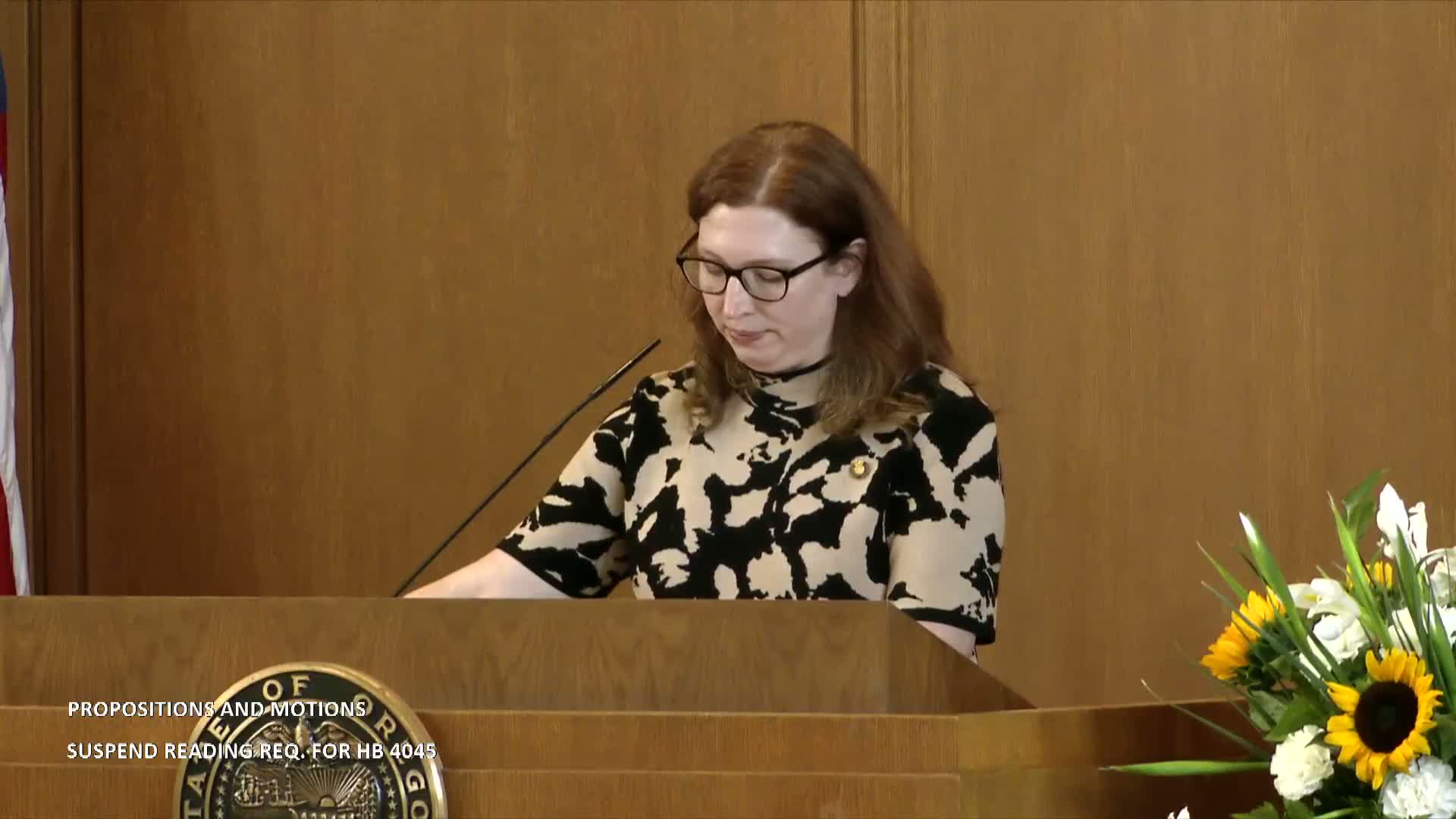
Summary
On a busy floor day the House passed a slate of bills on final reading, including Christiel's Law (search‑warrant response times), campaign‑fund security expense clarifications, coordinated care organization rate‑process changes, childcare information alignment, and housing and tenant‑privacy measures.
The Oregon House passed multiple bills on final reading Feb. 17. Several measures were debated at length; others were advanced after unanimous consent or brief discussion. Key actions declared passed by the clerk during the floor session include:
- House Bill 4,045 A ("Christiel's Law"): establishes expedited response times for communications companies responding to certain warrants in stalking and domestic‑violence investigations; sponsor argued the change will improve prevention.
- House Bill 4,017 A: clarifies allowable uses of campaign funds for reasonable security expenses for candidates and officeholders, with reporting/disclosure requirements.
- House Bill 4,039 A: changes to the coordinated care organization (CCO) rate development process to increase transparency between the Oregon Health Authority and CCOs, require reconciliations of base data, and require 90‑day notices for fee‑for‑service schedule changes.
- House Bill 4,057 A: standardizes information provided to families applying for employment‑related daycare subsidies so applicants receive consistent descriptions of publicly funded child‑care options; sponsors said the bill aligns existing programs without expanding eligibility or spending.
- House Bill 4,060 A: delays the fluorescent lamp ban compliance deadline for large facilities and public universities (to align conversion time and costs), passed after supporters argued large conversions are complex and costly.
- House Bill 4,065 A: clarifies slow‑pay/no‑pay protections for grass seed producers, standardizes ODA notices and payment timelines (30 days), and updates interest and fee provisions.
- House Bill 4,069 A: requires behavioral health employers to adopt written, accessible site safety plans for lone workers and makes the requirements effective on contract renewal dates for providers; sponsors called the bill a common‑sense worker safety measure.
- House Bill 4,082 A: governor‑backed measure allowing a one‑time urban‑growth‑boundary expansion focused on senior housing and manufactured housing with acreage limits and affordability requirements.
- House Bill 4,123 A: defines landlords' prohibitions on disclosing tenants' confidential information (date of birth, SSN, immigration status, medical records, banking and financial information) with specified exemptions and a statutory penalty for knowing disclosures.
Most bills on the list were declared "having received the constitutional majority" and passed on third reading; exact vote tallies were not published in the floor transcript for each measure. Several bills included reporting or implementation deadlines and cross‑agency responsibilities (for example, HECC for HB 4,079 and ODA for HB 4,065). Where floor debate was recorded, proponents emphasized protecting consumers, tenants, or workers and increasing transparency; opponents raised concerns about local control, litigation risk, or access to services.