Get Full Government Meeting Transcripts, Videos, & Alerts Forever!
Get email alerts on the Consumer Protection topic
No spam. Unsubscribe anytime.
Oregon House votes to tighten consumer finance rules, targeting high‑cost online loans
Summary
After floor debate over access to credit and predatory online lending, the House passed HB 4,116 A to limit the federal preemption used by some out‑of‑state lenders and assert Oregon's interest‑rate and licensing requirements for loans to Oregonians.
The Oregon House passed House Bill 4,116 A on Feb. 17, a measure intended to prevent online lenders and out‑of‑state banks from using federal loopholes to charge Oregonians extremely high annual percentage rates.
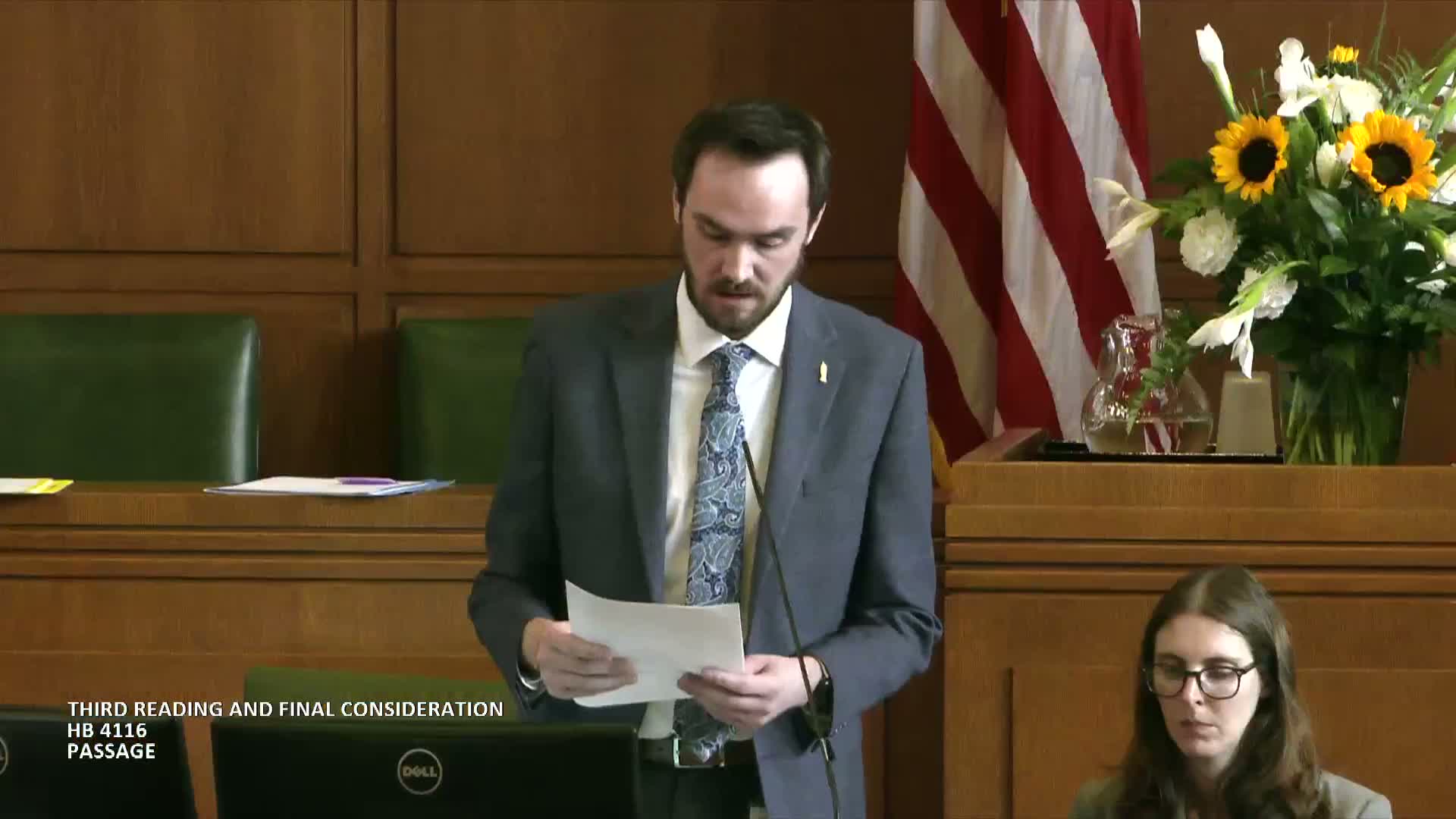
Representative Sosa, speaking for the bill, said the measure "is an effort to stop this practice by closing the federal loophole that has allowed these out‑of‑state lenders to violate the spirit, if not the letter, of our law." Sosa told colleagues the practice has produced loans at "73% to over 200%" APR and described a licensed‑consumer finance marketplace where Oregonians are exposed to rates that can multiply repayment costs dramatically.
Opponents warned the bill could restrict access to credit for subprime borrowers. Representative Osborne argued the partnerships between community banks and fintech firms provide a lending option for borrowers who otherwise lack alternatives and cautioned the bill might push people toward riskier avenues. "We are taking away an option," Osborne said during floor debate.
Members discussed competing priorities: protecting consumers from excessively costly loans versus preserving lawful access to short‑term credit for borrowers with limited options. Supporters, including Representative Wise and Representative Gomberg, cited data on the cost to consumers — an example given on the floor compared a $3,000 loan at 124% interest costing more than $11,000 over three years versus roughly $5,000 at a 36% APR — and urged protecting Oregon's 36% statutory cap and consumers.
The bill clarifies when Oregon consumer finance statutes apply to loans negotiated with Oregonians and repaid through Oregon financial accounts and asserts the state does not want preemption under section 521 of the Depository Institutions Deregulatory and Monetary Control Act of 1980 to override state consumer protections. On passage the clerk declared House Bill 4,116 A "having received the constitutional majority" and the bill was declared passed.
Floor debate included motions to substitute the committee report with a minority report (a motion to refer to a study task force), which failed; supporters argued the minority report was simply a proposal to study the issue further while proponents said immediate action was needed to stop predatory practices. The House advanced HB 4,116 A to immediate third reading and final consideration and ultimately passed it on the floor.