Get Full Government Meeting Transcripts, Videos, & Alerts Forever!
Get email alerts on the Public Memorials topic
No spam. Unsubscribe anytime.
Council adopts ordinance limiting long-term memorials on public rights-of-way with amended language
Summary
On second reading the council approved a revised ordinance (Chapter 8.72) restricting private displays on public property and rights-of-way; the amendment removed duplicative 'advertising' language and council asked staff to consider fine structures and alternatives.
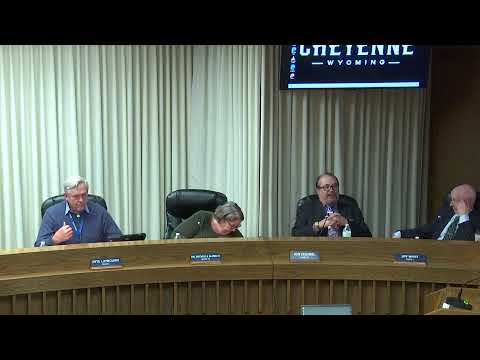
The Cheyenne City Council voted on Feb. 23 to approve on second reading a revised ordinance creating Chapter 8.72 of the municipal code to limit private displays and memorials on public property and rights-of-way.
Public comment included Cheryl Gerrish, who said a long-standing roadside memorial on Nationway is inappropriate on public land: "I feel that it is inappropriate for this to be on public property for long term," she told the council. Steven Love, a Ward 1 resident, opposed the ordinance because of potential fees and urged striking the $750 maximum fine in favor of a cap linked to city removal costs. Council members noted alternatives such as the Wyoming Department of Transportation memorial sign program, which was described as free for families and allowing signs to remain for up to 10 years with a $50 replacement fee.
Council adopted a sponsor substitution (dated Feb. 13) before voting on the main motion. The substitution removed the term "advertising" to avoid redundancy with other city code provisions and explicitly addressed placement in the public right-of-way. The substitute passed on a voice vote; the main motion as amended passed on second reading with several members recorded as opposed.
Council and staff discussed enforcement and penalties. City Attorney John Brody explained state statute sets municipal misdemeanor penalties up to six months in jail and/or a $750 fine, but noted that in his experience municipal courts rarely issue the maximum fine. Some council members asked staff to consider alternatives such as restitution for city removal costs and a lower cap if the ordinance proceeds to final reading.
Next steps: sponsors said they would work with committee and staff to refine fee language and enforcement details ahead of third reading and implementation.
Vote: substitute adopted; ordinance passed on second reading as amended.