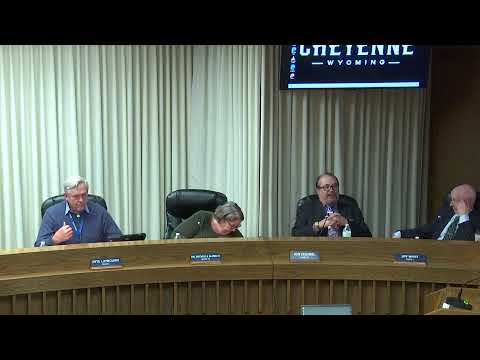
Cheyenne council approves annexation including Y Fresh farm after heated public debate
Loading...
Summary
After three hours of public testimony and multiple amendment votes, Cheyenne's council approved second-reading annexation of several county pockets — including parcels tied to Y Fresh farm — while promising further committee work on urban-farm rules and answers to resident questions.
The Cheyenne City Council voted Feb. 23 to approve second reading of an ordinance annexing several county pockets that are entirely surrounded by city limits, a step that will bring dozens of parcels under Cheyenne regulation despite sustained public opposition from residents connected to Y Fresh farm.
The annexation drew repeated public comment and detailed questions from residents and property owners who said the proposed timeline and code changes could disrupt farm operations. "I do not support this annexation," said Steven Love, a Ward 1 resident, urging the council to cap fines and tie any penalties to the city's costs rather than an up-to-$750 misdemeanor fine the ordinance referenced. Several speakers, including Tommy Nicely and Richard Nicely, asked the council to postpone action or remove specific parcels from the proposal to preserve agricultural uses and allow time to codify an "urban farm" designation.
Council members debated several amendments on the floor. Councilman Moody moved to remove Parcels 4 and 7 entirely from the annexation so the properties could remain county islands while the city worked on a new urban-farm definition; that amendment failed. A separate motion to postpone the annexation for two weeks likewise failed. Supporters of moving forward said the annexation process is consistent with previous pocket annexations and argued that parcel-by-parcel delay would leave the larger annexation incomplete.
Council members repeatedly referenced a packet of resident questions staff had received — described in the meeting as roughly 143 questions — and said staff would work to answer them as part of the implementation and committee follow-up. Council members proposing compromise also said they would seek a "date certain" or other mechanism to delay the effective date for certain parcels, while not blocking the broader annexation vote that night.
Planning staff described the practical effects of removing parcels from the ordinance: new maps, new legal notices and another three months of processing if the council later pursued a separate pocket-annexation for those parcels. Connor White, planning and development department, told the council the mapping and noticing work for a new or revised annexation could add months and an approximate $8,500 mapping cost.
The ordinance passed on second reading. Mayor Collins announced the result, noting two recorded 'no' votes from council members Mister Esquivel and Mister Moody. After the vote, the council approved zoning classifications for the newly annexed area (AG, MR, CB and LI), also on second reading.
What happens next: council members said staff would answer outstanding questions and committee meetings would consider codifying an "urban farm" category and other clarifications before third reading and final effectiveness. Some council members urged prompt work to avoid repeated public contention; others signaled willingness to adopt a delayed effective date for particular parcels as a compromise.
Vote and procedural note: the council treated the annexation as a multi-parcel ordinance (second reading). Several procedural motions were made and defeated on the record: a motion to postpone for two weeks failed, and an amendment to remove the two contested parcels failed. The annexation and subsequent zoning ordinance were adopted on second reading that night.