Committee hears bill to lock Oregon child labor rules to Jan.1, 2026 federal baseline
Loading...
Summary
House Bill 4,013 would prevent Oregon rules on total hours a minor may work from being less protective than the Federal Fair Labor Standards Act as of Jan. 1, 2026; sponsors framed it as preserving current protections while allowing rulemaking that increases protections, but some senators said the measure is political and premature.
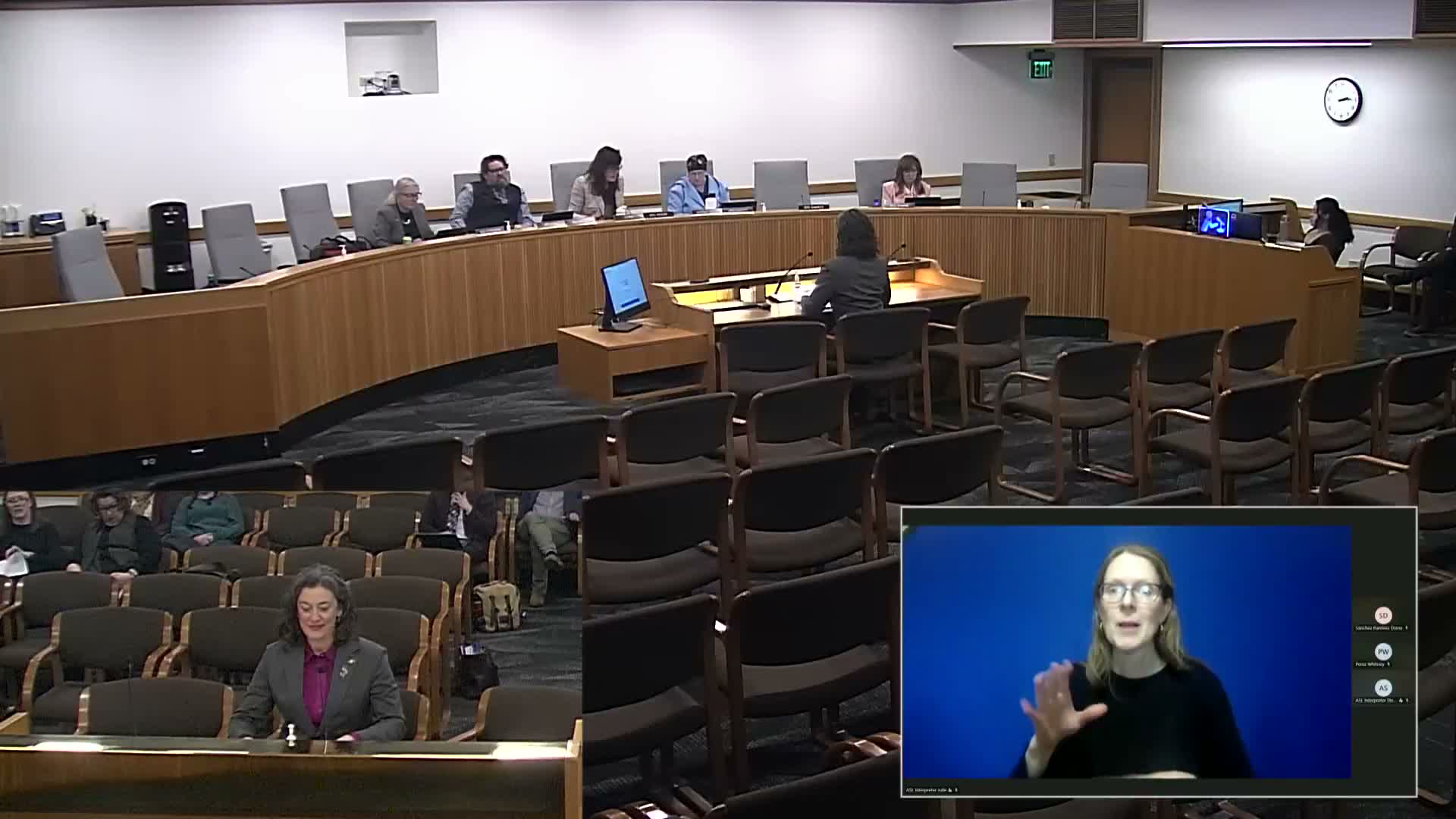
The Senate Committee on Labor and Business took testimony Feb. 16 on House Bill 4,013, a measure sponsored by Representative Dacia Graber that would establish a floor for Oregon's child labor protections: Oregon rules on total hours a minor may work could not be less restrictive than the Federal Fair Labor Standards Act (FLSA) as in effect on Jan. 1, 2026, and the Bureau of Labor and Industries (BOLI) would be permitted to adopt rules to conform to federal changes that increase protections.
Graber said the bill is intended to preserve protective standards in Oregon and allow the state to align with federal improvements: "If this bill passes, nothing about Oregon's regulatory environment changes for employers. This will simply freeze the lower boundary of these protections to where they are right now," she said. She noted the national landscape shows some states relaxing child-labor protections and said Oregon should guard against rollbacks.
Committee members probed the bill's text and practical effect. Vice Chair Hayden and Senator Dreisen asked whether the bill precludes BOLI from adopting rules that would be less protective or otherwise change hour limits without legislative input. Josh Nalaspian of BOLI explained the committee-intended reading: the bill creates "a hard floor with an adjustable ceiling" — BOLI cannot adopt rules that make Oregon less protective than the 01/01/2026 FLSA baseline, but it could adopt rules that are more protective should federal changes increase protections. Nalaspian said lines in the bill limit BOLI regarding "total hours" and that the text allows adoption of rules to conform to federal increases in protection.
Not all members agreed on the political framing and timing. Senator Dreisen criticized spending session time on a preemptive measure aimed at hypothetical federal action, calling it politically motivated and worrying about diverting attention from immediate state problems. Concerns were also raised about how the bill would treat agricultural exemptions for 14–15-year-old workers; BOLI staff agreed to provide precise legal answers at the Wednesday work session.
Paloma Sparks of Oregon Business and Industry testified in support, saying employers want consistency and that the bill captures a point in time for alignment with federal law. Whitney (committee staff) reminded members the bill came over from the House with a 36–22–2 vote. The committee closed the public hearing and scheduled HB 4,013 for a work session Wednesday; no committee vote occurred on Feb. 16.
The bill's next step is the committee's work session, where members requested additional technical clarification from BOLI on how the bill would operate in specific hour- and industry-exemption contexts.