Get Full Government Meeting Transcripts, Videos, & Alerts Forever!
Get email alerts on the Forest Management topic
No spam. Unsubscribe anytime.
Committee advances HB 4,105 to Ways and Means after public testimony on timber‑revenue predictability
Summary
After public testimony from a forester, a school superintendent and an environmental group, the committee voted to forward HB 4,105 to Ways and Means; debate focused on judicial review provisions and whether mandatory minimum harvests would weaken safeguards.
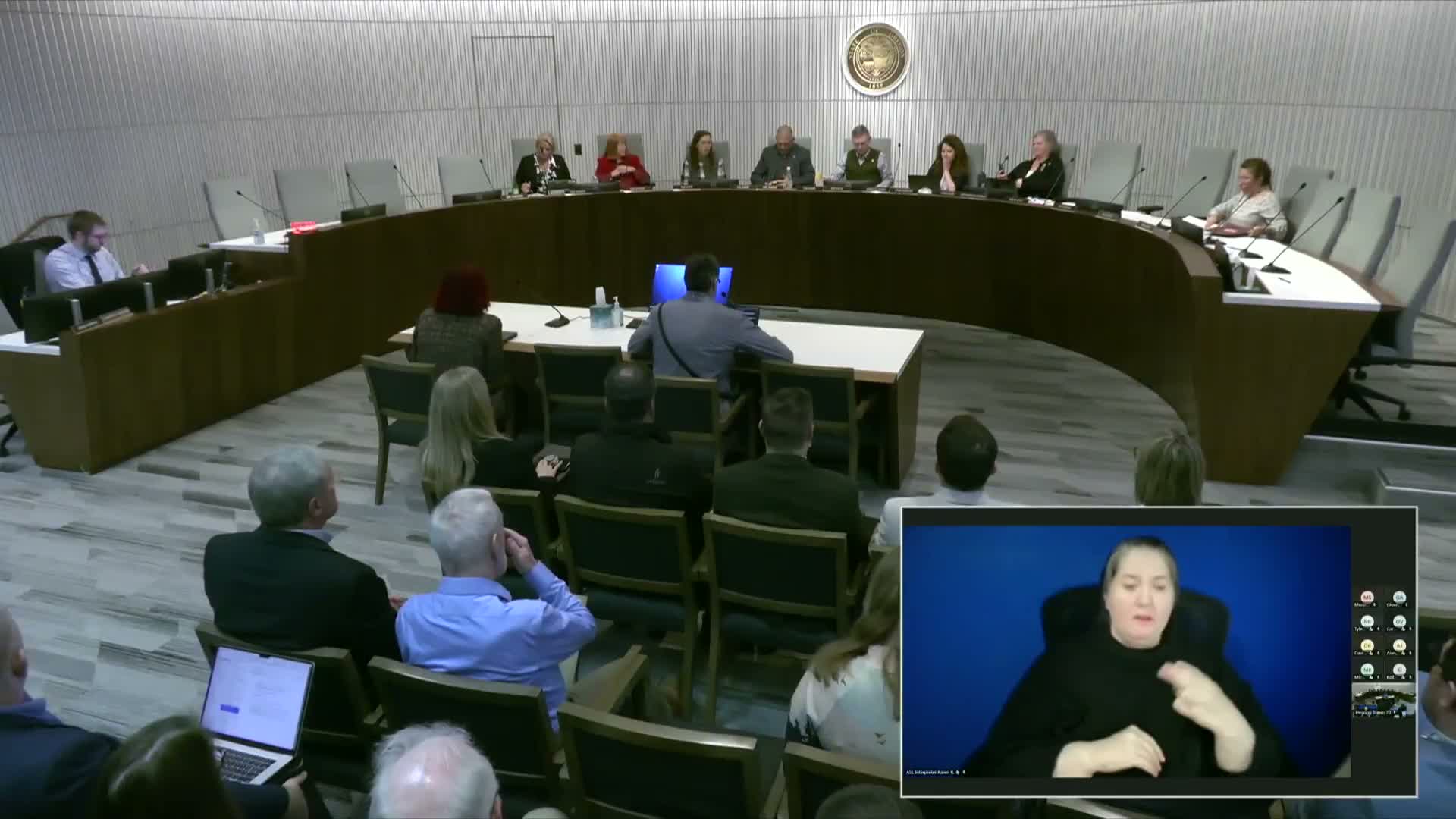
The House committee voted to advance House Bill 4,105 to the Joint Committee on Ways and Means after reopening the public hearing and taking testimony from multiple stakeholders.
Alex Wick, who identified himself as a master forester, former wildland firefighter and climate scientist, offered a testimony that framed public policy as stewardship: "I stand before you as someone who once ran towards danger for a living…And now I live with a disability," he said, urging investment in education, science and forest stewardship as part of resilient community policy.
Tyler Reed, identified in the transcript as superintendent of the "Nea County school district," told lawmakers his district depends on timber‑harvest receipts for roughly 20 percent of operating revenue and described large swings in receipts across recent years (transcript: ~65% of projection in 2021–22; 140% in 2022–23; 61% in 2023–24; 90% in 2024–25). Reed said the unpredictability undermines school budgeting and urged long‑term certainty around sustainable harvest levels.
Michelle Emmons, Co‑Executive Director of Willamette Riverkeeper, testified in strong opposition to HB 4,105. She said the bill "undermines that balance by elevating logging above all other forest values," argued it would weaken safeguards by preventing meaningful implementation of the Oregon Department of Forestry's Climate Change and Carbon Plan and Habitat Conservation Plan, and cited an estimated implementation cost of $1,100,000. Emmons also raised concerns about potential conflicts of interest among some bill sponsors with ties to the commercial timber industry.
Sponsor Co‑Chair Owens described the bill as a "good governance" measure that would require the Oregon Department of Forestry to publish harvest numbers and put them up for sale so local governments and industry can plan. He acknowledged ongoing disagreement about judicial review language — a central point of contention — and staff told the committee that judicial review was limited to whether ODF put the promised volumes up for sale.
Representative Marsh said she would not support the bill because of the judicial review provision and warned that opening the state to court action was not advisable. The committee nonetheless approved the motion to move HB 4,105 to the floor with a due‑pass recommendation and referral to Ways and Means.
What happens next: HB 4,105 will undergo fiscal review in Ways and Means; sponsors indicated they expect a significant fiscal note and that the bill may still face further changes.