
Canutillo ISD projects modest FY27 surplus amid enrollment decline and one-time land sale
Get AI-powered insights, summaries, and transcripts
Subscribe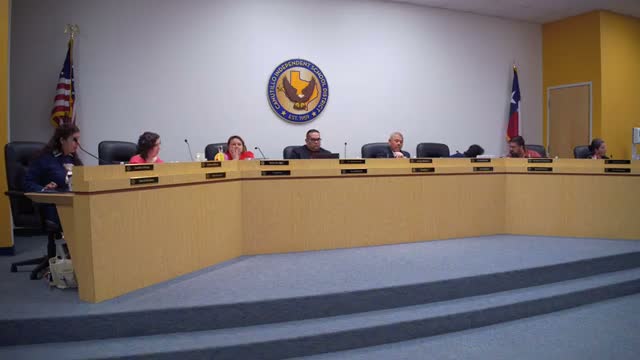
Summary
Canutillo ISD budget presenters told the board the district faces declining enrollment (about 87 students projected) that reduces state funding but expects roughly $2 million in additional revenue this year from state 'hold harmless' adjustments and a one-time land sale; FY27 currently forecasts a modest $250,000 surplus under conservative assumptions.
Canutillo ISD trustees heard a budget workshop Feb. 16 in which district finance staff presented updated revenue forecasts, enrollment projections and assumptions that underpin the FY2026–27 budget planning.
Presenter Cristy Pulley told trustees the district’s two principal revenue sources are state funding (driven by student enrollment) and local property taxes. The district’s enrollment-projection method rolls current students up a grade, and staff estimate a net loss of about 87 students next year; Pulley said the decline has contributed to an estimated $3.3 million reduction in basic-allotment funding over recent years.
At the same time, Pulley said local property values have risen—she cited a projected 12–13% increase in assessed values for planning purposes—which increases local revenue but can reduce state aid under the state’s recapture formulas. Using preliminary comptroller values released in January and factoring state homestead exemptions (including changes affecting homeowners 65 and older), the administration estimated roughly $2.0 million in additional revenue for the current year attributable to the hold-harmless adjustments and other valuation updates. In the presentation staff also referenced a transcribed net figure that they read as approximately $2,362,360 in additional revenues; staff characterized that as the working forecast subject to final comptroller values in August.
Pulley said the district is using conservative planning assumptions for FY27: a 94% attendance rate (current attendance near 95%), a 13% property-value increase, no employee raises currently built into the baseline, a $90,000 addition for next year’s board election, and a $750,000 set-aside for a technology refresh to support the district’s 1:1 student-device program. Under those assumptions the draft FY27 forecast showed about a $250,000 surplus.
Board members asked detailed questions about the reliability of preliminary comptroller figures. Pulley said final numbers typically arrive in August and tend to be a reliable gauge, though hold-harmless computations and exemptions can make precise forecasting difficult until final values are released. Trustees requested a campus-by-campus report on student withdrawals and reasons for any departures; administration said that report would be provided this week.
Trustees also debated the district’s target for unassigned fund balance. Pulley’s presentation showed recent fund-balance days of 84 in FY22 and a low of 52 in the most recent fiscal year; staff forecast about 64 days at the end of the current school year and about 61 days for FY27 under the presented assumptions. Several trustees urged maintaining or returning to the district policy goal of 90 days, while others proposed intermediate targets (75–80 days) as an aspirational step.
The administration emphasized the forecast remains a work in progress: final valuations and any future board decisions will affect the adopted budget. The board will receive additional budget workshops through June, DAC feedback, a compensation proposal in April and a formal budget adoption vote in June.