
ODHS reports 61% drop in long‑term non‑budgeted positions, outlines control process
Get AI-powered insights, summaries, and transcripts
Subscribe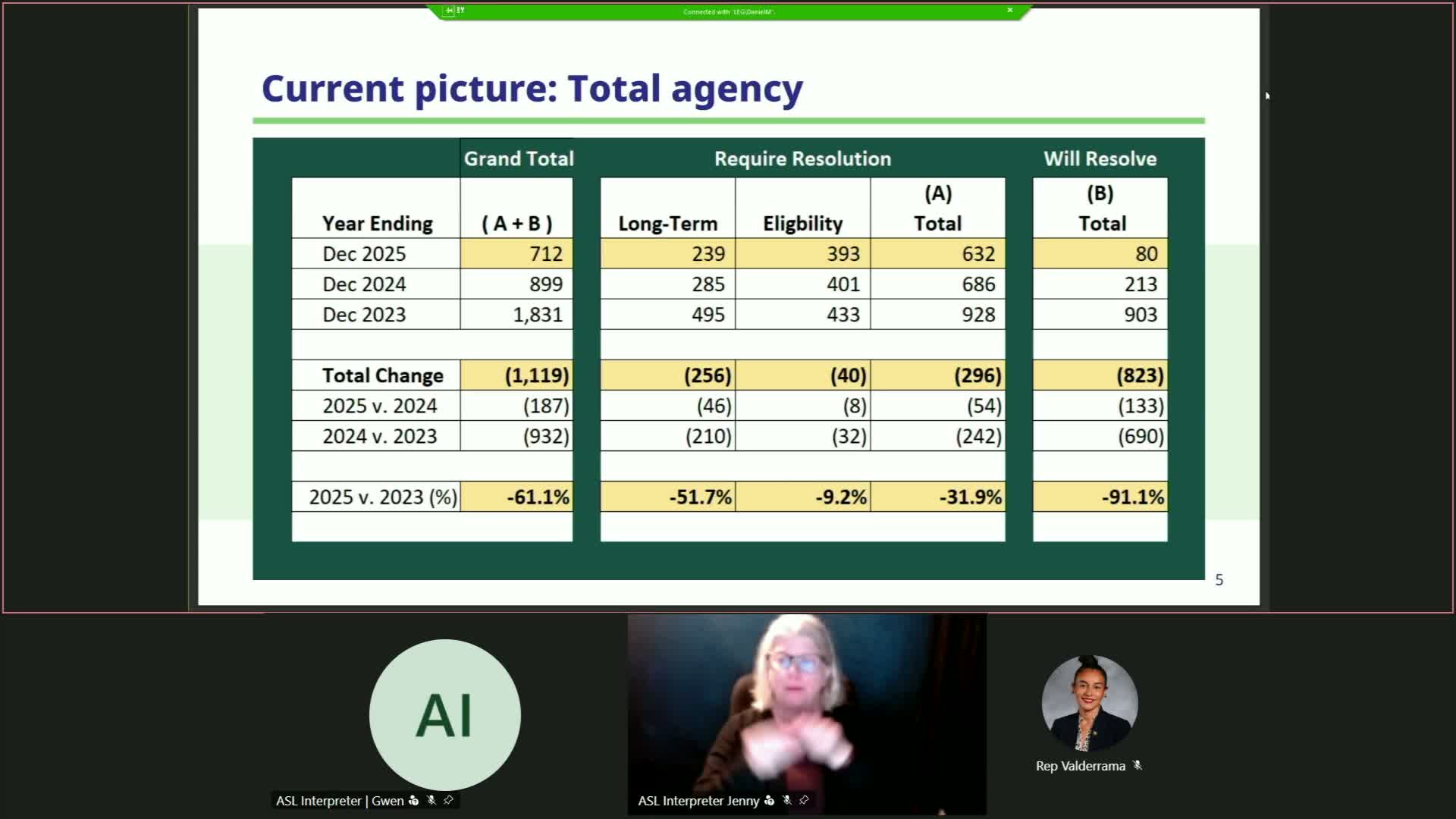
Summary
ODHS officials told the Ways and Means Human Services Subcommittee that long‑term non‑budgeted positions have fallen to 712, a 61.1% reduction from the 2023 baseline, and described a formal business‑case review process for resolving remaining positions.
At a Feb. 16 Ways and Means Human Services Subcommittee informational meeting, Oregon Department of Human Services Chief Financial Officer Rob Cordiri and Agency Position Manager Robert Quintanilla said the department has reduced long‑term, non‑budgeted positions to 712 and is tracking remaining positions through a formal review process.
Quintanilla said the three‑year comparison shows a net reduction of more than 1,100 non‑budgeted positions — about a 61.1% decline from the 2023 baseline. "We are down to 712 non‑budgeted positions total for a net reduction of over 1,100 non‑budgeted positions or 61.1% reduction with the 2023 baseline," he said.
The officials defined non‑budgeted positions (sometimes called "double fills") as long‑term roles without a dedicated funding source that were created for emergency needs, critical hiring support and to meet legislative or executive workload demands. Cordiri described a business‑case process for new or continuing non‑budgeted requests: program managers submit supporting data and funding options; requests are cross‑checked against the budget; the agency tracks timelines and either resolves the position, identifies temporary funding or seeks permanent funding.
Quintanilla and Cordiri said eligibility work accounts for the largest share of remaining non‑budgeted positions. According to the presentation, 393 of the 712 positions are tied to eligibility functions. The presenters showed summary figures that included a category labeled "eligibility positions" and cited a reduction in a total reported on a slide from "$9.28" to "$6.32"; the presentation did not specify the units for those dollar figures on the slide.
Cordiri emphasized the operational tradeoffs the agency considers when reviewing requests. "We try to balance between what's really needed and the financial controls and accountability that goes with it," he said, adding that some non‑budgeted roles are critical to operations even when they lack long‑term funding.
The presentation did not include any committee votes or formal actions. The agency said revised figures and any updates to its December funding request would be provided to the committee in follow‑up materials.
The subcommittee did not take action and adjourned at the conclusion of the informational meeting.