Get Full Government Meeting Transcripts, Videos, & Alerts Forever!
Get email alerts on the Data Centers topic
No spam. Unsubscribe anytime.
Residents press council to block hyper‑scale data centers amid environmental and surveillance concerns
Summary
At a Prince George's County listening tour, residents and activist groups urged the council to continue a moratorium on large data centers, arguing projects strain utilities, harm the environment and risk enabling AI surveillance tied to immigration enforcement; council leaders said they oppose the Landover proposal and will keep studying policy and oversight options.
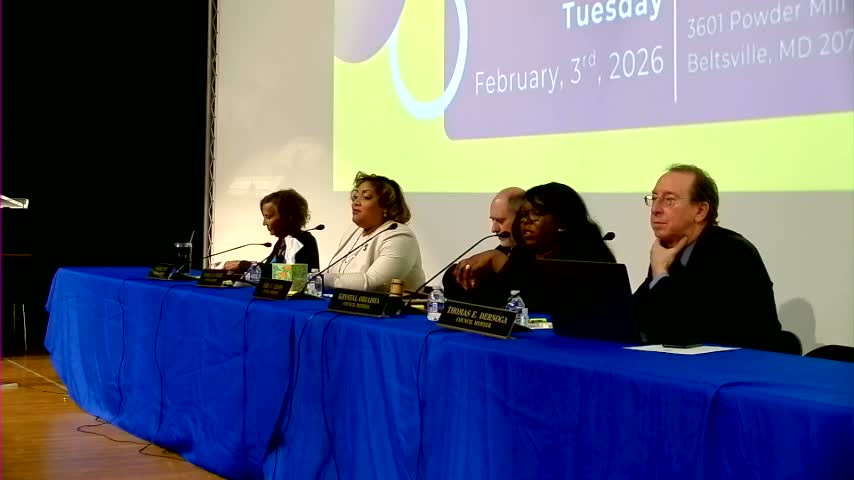
Prince George's County residents and organized groups pressed the County Council on the environmental, fiscal and civil‑liberties risks of large data centers during a listening tour at High Point High School.
Speakers representing local coalitions told the council that hyper‑scale data centers consume large amounts of electricity and water, worsen regional utility costs and contribute nothing like the promised local benefits. Taylor Frazier McCollum of the No Land Over Data Center Movement said the facilities "promise to flood the area with jobs and revenue, but we will never see the resources." Michael Lavinia of the Party for Socialism and Liberation told the council data centers also help develop AI surveillance technology used by federal immigration enforcement.
Council leaders said they share residents' concerns. "I want to thank the county executive for her executive order, creating a moratorium," Council Chair Crystal Oriada said, noting the council also passed related legislation to pause projects while policy and oversight are reviewed. Vice Chair Eric Olson said the council is "in unison on this council...on the data centers and being critical of the data centers, electricity rates and water usage." Councilmember Tom DiNoga said that a Park and Planning bill that would facilitate data centers was not initiated by the council and that any zoning‑level cases will follow public hearing processes.
Speakers requested clearer county rules on how energy costs and infrastructure impacts would be allocated. Chair Oriada said the council is pursuing legislation to repeal a prior measure that allowed some data centers to skip council review and urged residents to keep advocating: "I am one vote. I've made myself very clear. I don't want to speak for my colleagues." She said policy staff are analyzing regional utility impacts and planning additional public discussion before the council considers any new rezoning or approvals.
Next steps: the council said it will use public input gathered at the listening tours and a county moratorium to inform any future legislation, while Park and Planning and the council continue outreach and formal hearings for any site‑specific proposals.