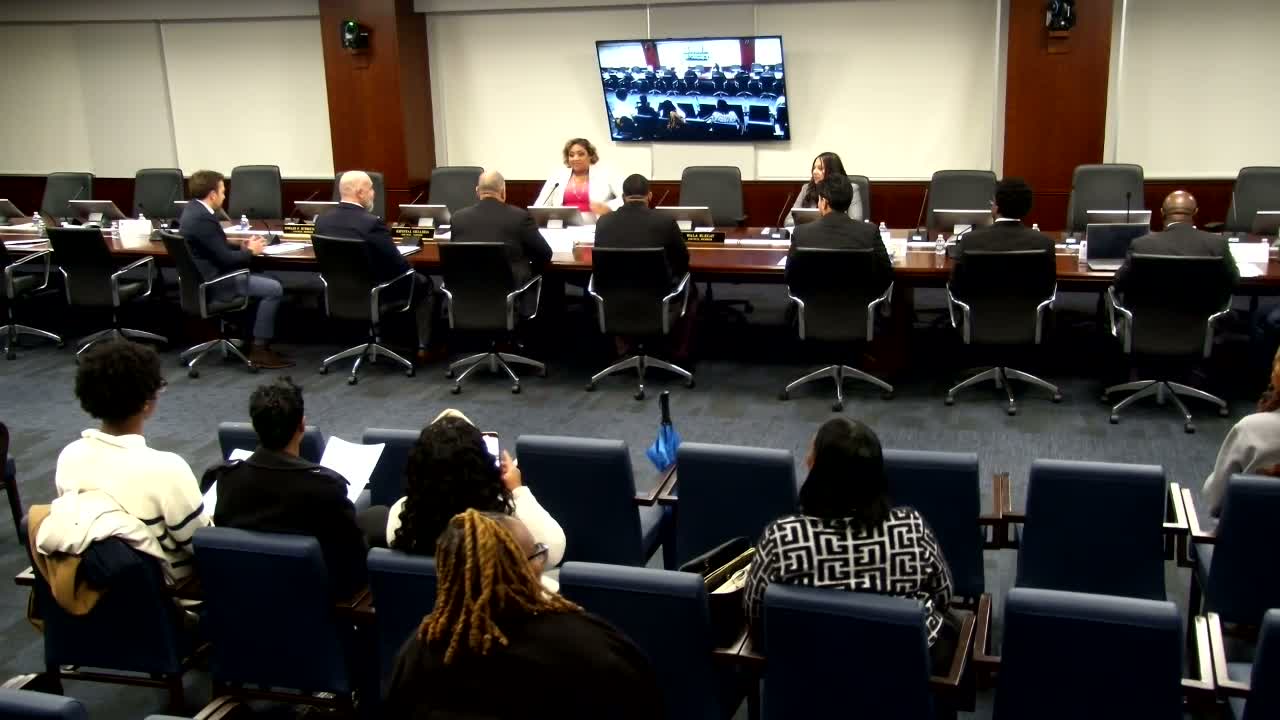
Prince George's County retailers urge dedicated commercial-crimes prosecutor to bolster prosecutions and protect shopping centers
Loading...
Summary
DLC Management and private security firms told the County Council committee that repeated retail crime and violent incidents have driven closures at county shopping centers and urged creation of a dedicated commercial-crimes prosecutor (public‑private funded) to coordinate witnesses and improve prosecution rates.
DLC Management and a private security contractor urged the Prince George's County Council Health & Human Services/Public Safety Committee to support a dedicated commercial‑crimes prosecutor to ensure consistent prosecutions of theft, assaults and repeat disruptive behavior in retail centers. Presenters said law enforcement responses and private security investments have not stopped repeated offenders from returning and that better prosecutorial coordination is needed to produce convictions and deter further crime.
Michael Stroud, a partner at the Ice Miller law firm representing DLC, framed the proposal as a public‑private partnership to "create a greater... law enforcement and accountability, standard" and said private businesses were prepared to help fund the role to restore confidence in commercial corridors. Blay Bradley, senior vice president of property management and construction for DLC, told the committee DLC manages six assets totaling more than 1,200,000 square feet and more than 150 tenants and said safety—not sales—was driving store closures. He reported, "Since 2019, there have been 6 fatal shootings, 1 fatal stabbing, 10 nonfatal shootings and 2 aggravated armed robberies" in or around DLC shopping centers.
Mark Bradshaw, DLC vice president of property management, described investments already made—CCTV with live access for police (FUSIS), improved lighting, a Project Sparkle maintenance program and armed private guards—and said those measures help but are insufficient when cases end without prosecution. "Our guards are the front line of defense to combat these issues," Bradshaw said, arguing a dedicated prosecutor could coordinate multiple shop-owner witnesses and scheduling to avoid dismissals when defendants demand trial.
Committee members pressed presenters on existing coordination with the Prince George's County Police Department; Bradshaw said DLC has close working relationships with District 4 and District 7 commanders and shares camera feeds. Presenters acknowledged the prosecutor role is one of several potential remedies and warned that recent reclassification of commercial retail theft to a felony means such cases may move to circuit court with greater time and cost demands, increasing the need for witness coordination.
No formal action was taken on the proposal during the committee meeting; presenters asked the committee to consider a budget line item or other mechanism during the state's attorney's office budget process to delineate resources for commercial cases.
The committee did not adopt a recommendation at this session; members asked staff to explore funding options and legal mechanisms for potential private contributions and to coordinate further with the state's attorney's office and police.