
Hospitals tell county committee radiology, respiratory and allied specialties hardest to fill
Get AI-powered insights, summaries, and transcripts
Subscribe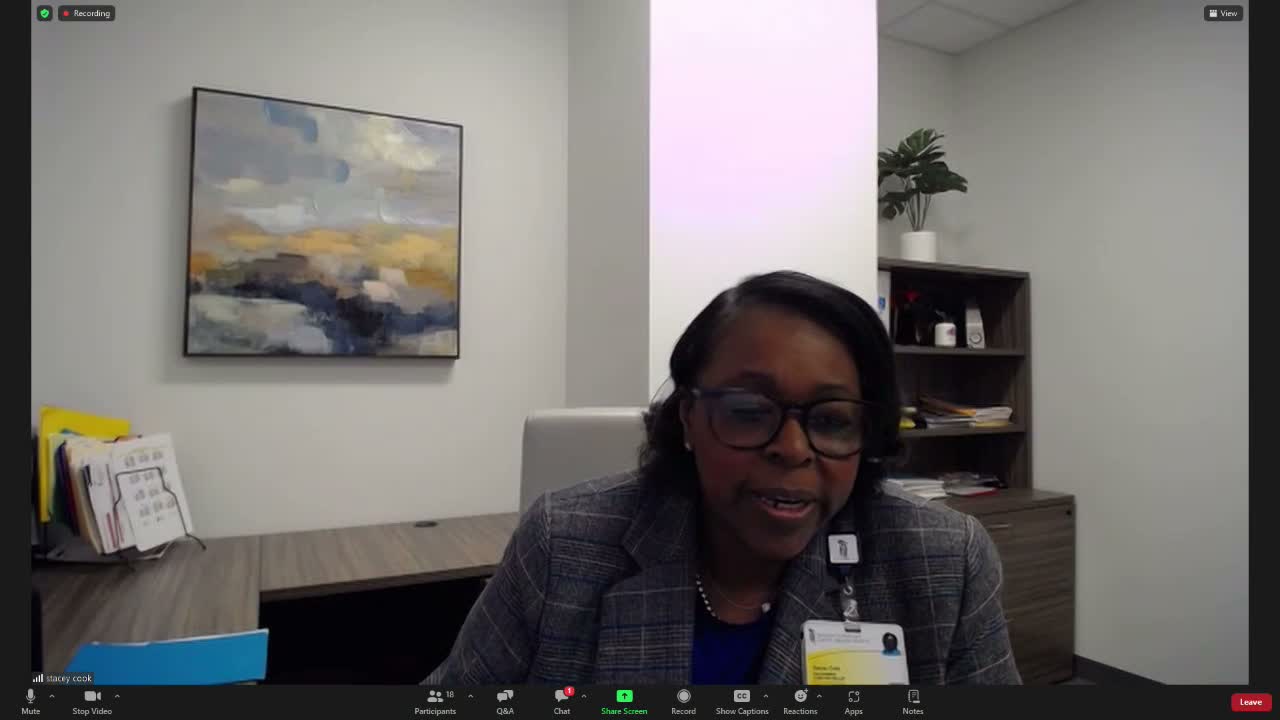
Summary
University of Maryland Capital Region Health and MedStar Southern Maryland told the committee they face persistent shortages in imaging, respiratory therapy and specialized cardiovascular technician roles; both stressed aligning community college and high-school pathways with employer credential requirements.
Representatives from University of Maryland Capital Region Health and MedStar Southern Maryland Hospital Center briefed the Education Workforce Development Committee on Feb. 23 about continuing clinical and support staffing shortages and on employer-led training pathways.
Stacy Cook, vice president of human resources at University of Maryland Capital Region Health, said the hospital employs more than 3,000 people and that roughly 80% of those employees are Prince George’s County residents. Cook listed urgent hiring needs across licensed clinical roles — nursing, respiratory therapy and imaging — and in support trades such as plant management and facilities. She said local colleges and training providers are critical partners but that many specialized programs produce limited numbers of graduates and therefore cannot meet demand quickly.
Katie Lively, director of talent acquisition at MedStar Southern Maryland, told the committee that allied-health jobs (radiology technologists, respiratory therapists and cardiovascular invasive technicians) are among the hardest to fill. Lively noted MedStar’s internal career-path programs, including a surgical-tech program in partnership with Prince George’s Community College and Howard Community College launched about two years ago, and said MedStar plans a certified nursing assistant and patient-care technician program this summer to expand its entry-level pipeline. She emphasized that more awareness of career pathways beyond physicians and nurses is needed in high schools.
Council members asked for clarity on whether Prince George's Community College offers certain specialty certificates; Lively said PGCC offers a radiology technologist program that prepares students for ARRT examination but does not offer a specialized registered cardiovascular invasive specialist (RCIS) program, which is available at only a few Maryland community colleges. Committee members encouraged expanding dual-enrollment and CTE pathways that flow directly into high-demand allied-health programs.
Both hospital representatives highlighted the role of soft skills, career ladders and employer-partnered cohorts. The committee requested program-enrollment and outcome data so members could better evaluate how county-supported training and scholarship dollars are translating into hires; staff agreed to provide the requested numbers.