
Committee debates whether bill would put small firewood producers under Act 250 permitting
Get AI-powered insights, summaries, and transcripts
Subscribe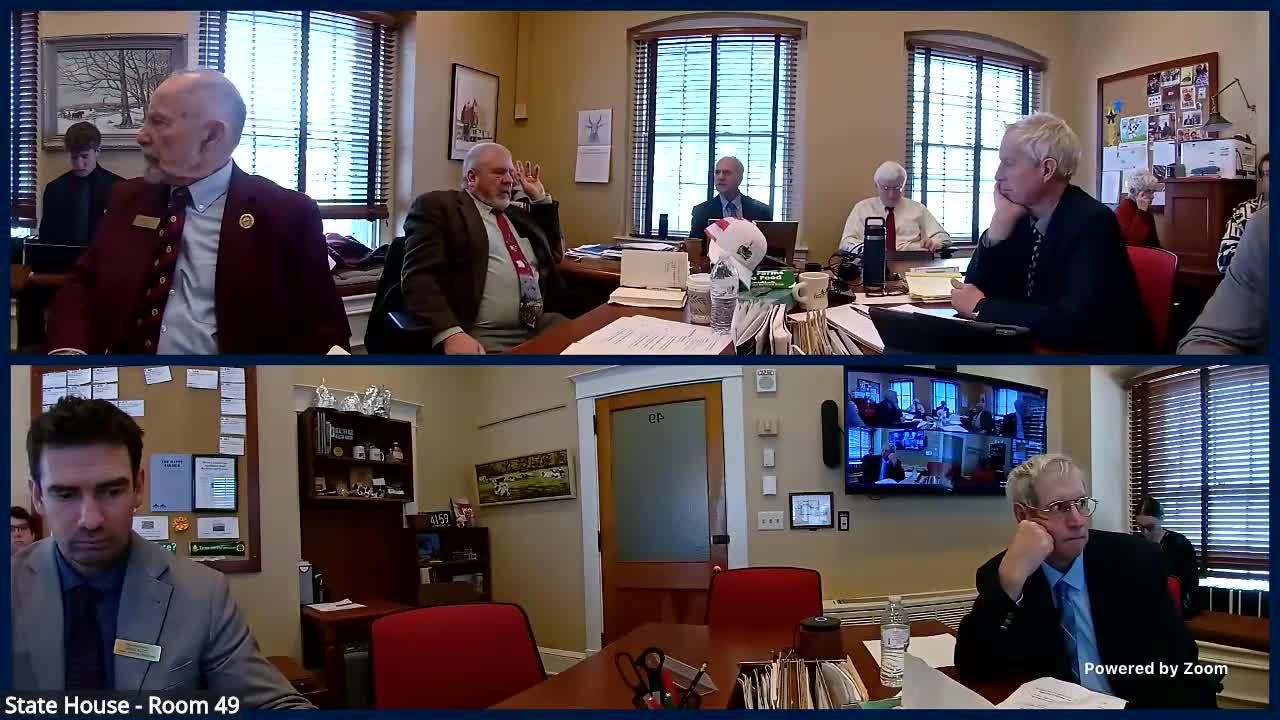
Summary
Members discussed draft language that could subject firewood manufacturers and small wood-product businesses to Act 250 permitting, raised concerns about parcel-level effects and stormwater engineering requirements, and agreed to loop in the environment committee for further review; no formal vote was taken.
Members of the Agriculture, Food Resiliency, & Forestry committee spent their session reviewing draft bill language and probing how Act 250 permitting would apply to sawmills, firewood manufacturers and log yards.
Speaker 4, a committee member, pressed for clarity about where small firewood-manufacturing businesses would fall in the bill’s tiering, saying such operations “should be out in tier 3 or tier 2” rather than located in industrial parks. Speaker 1 responded that, under the draft language, firewood manufacturers are treated as wood products and “would be treated like sawed melt wood essentially,” and emphasized the bill is not intended to change local controls such as hours of operation.
The exchange flagged two practical issues: how Act 250 jurisdiction is determined when only a portion of a parcel is developed, and the technical requirements that mills can trigger. Speaker 6 posed a hypothetical — a 100-acre parcel with 10 acres of forest and 90 acres of field — asking whether placing a sawmill on the forested portion would cause the entire parcel to be regulated under Act 250. Several members said an Act 250 permit can cover an entire parcel and noted that the permit review is often routed sequentially through other agencies, including ANR and water regulators, which can lengthen review times and require extensions if those agencies miss deadlines.
Members also recalled past attempts to carve exemptions for small sawmills and wood processors; Speaker 5 said a prior exemption effort did not advance. On technical compliance, Speaker 3 and others observed that sawmill proposals commonly raise stormwater and engineering-scoping issues that require outside technical review.
Procedurally, Speaker 5 asked that the environmental committee review the language the Ag and Forestry group had been working on and requested that reviewers avoid extensive redlines to the agreed draft. The session did not include a formal vote; Speaker 5 reported an informal straw poll “7-0-1,” while Speaker 1 disputed that exact characterization. Staff were directed to follow up, attempt to bring Ellen into a future slot for further discussion, and ensure the environment committee and LERB see the current draft.
The committee’s next steps are to record these concerns in follow-up materials, have staff seek the additional participants requested and let the environment committee review the draft language before any motion or formal committee vote.