Get Full Government Meeting Transcripts, Videos, & Alerts Forever!
Get email alerts on the Eeoc Policy Shift topic
No spam. Unsubscribe anytime.
Acting EEOC chair says agency will prioritize religious-liberty claims, push back on DEI and unwind parts of SOGI guidance
Summary
Acting EEOC Chair Andrea Lucas told the Daily Caller News Foundation the commission will emphasize religious-liberty enforcement, challenge race-based DEI practices in employment, and seek to rescind portions of its sexual-orientation and gender-identity (SOGI) harassment guidance after a federal court vacated it, pending a quorum vote.
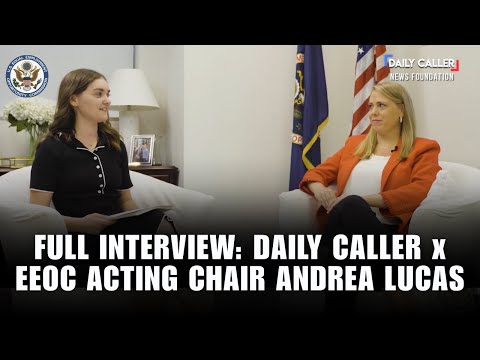
Acting Equal Employment Opportunity Commission Chair Andrea Lucas said in an interview with the Daily Caller News Foundation that the agency will prioritize religious-liberty claims and take a harder line against workplace programs she characterized as race-based DEI.
"This isn't about protecting only businesses or protecting only workers," Lucas said, framing the EEOC's role as enforcing the founding statutes and equal opportunity principles. She added that modern identity-based approaches to DEI have "warped" civil-rights aims and that the EEOC will stamp out race discrimination in employment practices that consider race as a factor.
The shift, Lucas said, follows recent leadership changes at the commission and a move to "regain the majority" so the agency can act more decisively. She criticized earlier agency choices for not using the "bully pulpit" to address perceived harms from DEI programs and said the current approach includes technical assistance and settlement strategies aimed at changing practices at law firms, universities and corporations.
On the EEOC's harassment guidance covering sexual orientation and gender identity (SOGI), Lucas said a federal court "struck it down and vacated it" and that the agency has marked the vacated portions on its website. She said the commission cannot fully remove or replace that guidance until it has a quorum and a majority vote.
Lucas also described a change in litigation posture: the agency closed seven gender-identity lawsuits filed near the end of the prior administration and offered affected individuals the opportunity to proceed on their own. "I directed that those, all be closed," she said, adding that the EEOC will not pursue those suits on behalf of the United States going forward.
Why it matters: The EEOC's interpretive guidance and which cases it chooses to litigate shape employers' compliance practices nationwide. If the commission follows through, employers may face greater enforcement of religious-accommodation claims and renewed scrutiny of DEI programs that treat race as a factor.
Lucas said the agency's priorities include defending women in the workplace and protecting U.S. workers against national-origin preferences that disadvantage Americans. She urged workers who believe they have been harmed to file charges so the EEOC can pursue remedies.
The EEOC is in a transitional period, Lucas said, and a formal unwind of guidance or a change in agency rules will depend on achieving a quorum and a majority vote by commissioners.