Get Full Government Meeting Transcripts, Videos, & Alerts Forever!
Get email alerts on the Behavioral Health topic
No spam. Unsubscribe anytime.
Community Bridges outlines Horizon Behavioral Health Center plan for Curry County
Summary
Community Bridges presented plans for a Horizon Behavioral Health Center with 12 crisis stabilization 'chairs' and 16 residential beds, voluntary law‑enforcement drop‑off capability and plans for licensure, TRICARE/Medicaid contracts and workforce recruitment; commissioners pressed for clarity on youth services, detention transfers and overflow capacity.
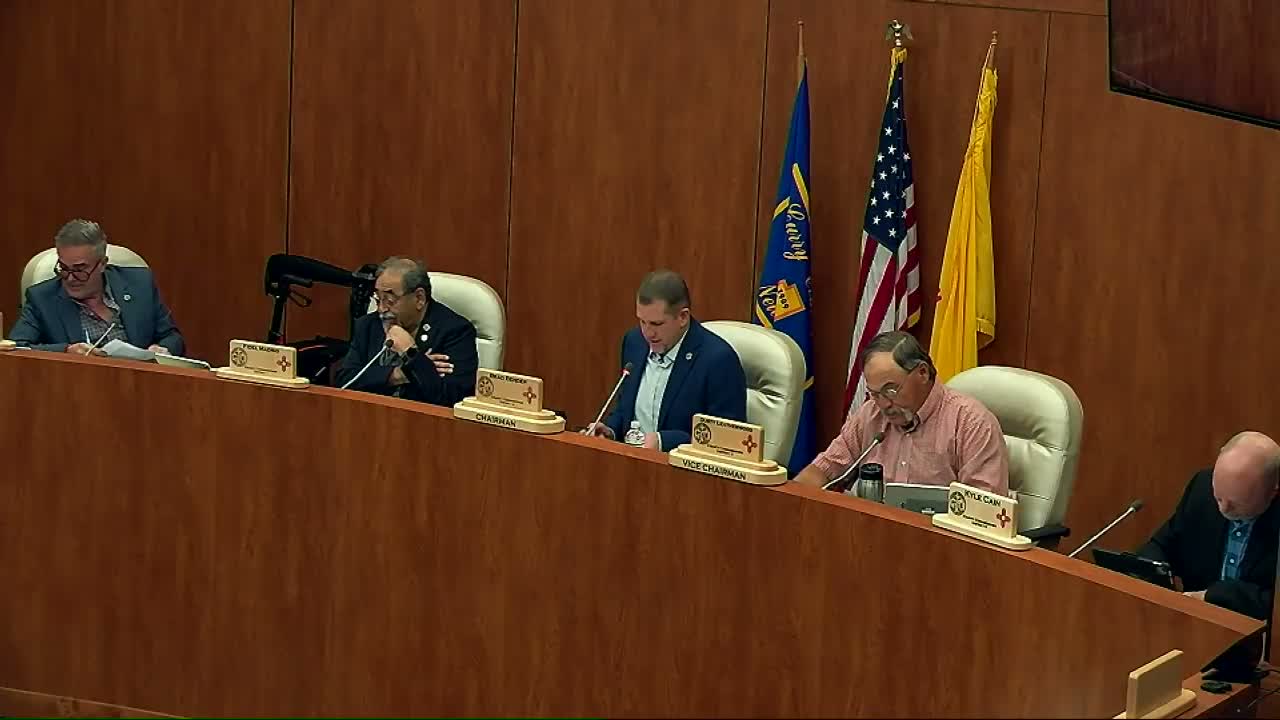
Community Bridges representatives told the Curry County Commission on Aug. 19 that a planned Horizon Behavioral Health Center will open in phases starting with 12 crisis stabilization 'chairs' for short‑term (up to 24‑hour) crisis care and 16 residential beds for longer stays.
Scott Hatland, who said he works with Community Bridges, said the Phase 1 program will provide voluntary services and accept law‑enforcement drop‑offs so officers can take people in crisis to treatment instead of jail. "We don't turn anyone away," Hatland said, describing a model that aims to triage, stabilize and refer patients into residential, outpatient or housing services as needed. Rob Neely, also with Community Bridges, described ongoing local gap analyses and partner meetings to coordinate aftercare with hospitals, first responders, colleges and Cannon Air Force Base.
Why it matters: Commissioners pressed presenters on concrete issues that will affect local operations — including whether child care and youth beds are included in Phase 1, how the program will coordinate with the adult detention center, and what overflow protocols will look like if the facility reaches capacity. Hatland said the project team hopes to have child beds and childcare available by the end of next summer but cautioned that many funding and operational details remain unsettled.
Commissioners asked how detainees who need care would be handled and whether services could be provided inside the detention center. Hatland described models used elsewhere in which Community Bridges places staff inside detention to perform telehealth evaluations and referrals, and said some transport‑avoidance options may be funded through grants or other streams rather than charging the county directly. He also acknowledged uncertainty about bed demand and said regional coordination will be needed if many surrounding counties refer patients.
What's next: Presenters said construction is slated for completion in 2026, after which the agency will pursue state licensure, accreditation, insurance contracts and Medicaid/TRICARE enrollment. Staffing ramps will begin about six months before opening. Commissioners asked staff to return with more detailed cost and funding plans and with clarified protocols for intake and for serving youth versus adults.
Sources: Presentation and Q&A with Scott Hatland and Rob Neely of Community Bridges, Curry County Commission meeting, Aug. 19, 2025.