Get Full Government Meeting Transcripts, Videos, & Alerts Forever!
Get email alerts on the Project Mover topic
No spam. Unsubscribe anytime.
Dobbs Ferry trustees weigh continuing Project Mover e-bike pilot as costs, data gaps remain
Summary
At a Jan. 2026 workshop, the Dobbs Ferry Board of Trustees discussed continuing the Project Mover docked e-bike pilot after limited winterized data and new cost estimates (an annual consortium range of $30,000–$60,000 were discussed; a short-term allocation of ~$8,000–$15,000 was flagged for the village’s upcoming fiscal year).
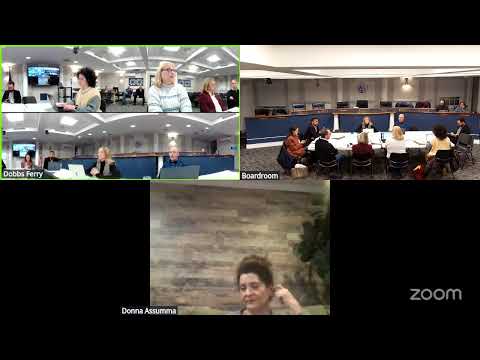
Dobbs Ferry trustees spent a large portion of their Jan. workshop weighing whether to continue Project Moverthe docked e-bike program that operated in summer and was removed for winter storageas uncertainty over costs and limited usage data left the village with questions about value and administrative burden.
A board member who summarized a recent multi-stakeholder call said stations were installed and made operational in early July and removed in December, leaving roughly three months of usable data. "Usage of them sort of went down once it got chilly in October," the speaker said, and reported that nearly 1,000 trips in the brief deployment window included as much as 70% of trips between Gould Park and the train station during commute periods.
Why it matters: that pattern suggests the pilot primarily served short commuter trips rather than broad neighborhood adoption, complicating assessments of whether the program reduces traffic or parking pressure villagewide. The same presenter noted the pilot aligns with the village's climate action and multimodal transportation policy goals and advised caution about abandoning the program on the basis of one winter's limited data.
Cost and funding: board members discussed two cost paradigms being negotiated for the consortium: (1) an even split of program costs among participating villages regardless of station count, or (2) apportioning costs by number of bikes or docking stations in each place. The presenter said the range under discussion for the participating municipalities is between $30,000 and $60,000 annually and that, because the program deploys in April and the village fiscal year begins June 1, Dobbs Ferry may need to budget roughly $8,000 to $15,000 as a partial-year allocation if state funding does not continue. The presenter added that NYSERDA had supported the initial deployment but said its future support was uncertain given federal funding conditions.
Administration and vendor responsibilities were a separate, recurring concern. Multiple board members asked for clarity on what the vendor (referred to in the meeting as DropMobility/Drop Mobile/Drop mobility) would continue to provide and what obligations would fall to the municipalities. One trustee said municipalities had been asked to submit time sheets and worried that local staff or a designated lead would become the de facto administrator if central coordination ended. "If they can't actually provide this, if they need somebody here to say, 'hey, there's a lot of bikes at the library,' that's a failure on their part," a board member said.
Regional participation and program design: trustees and commenters agreed the program's utility increases if neighboring towns join. Speakers said Irvington, Hastings and others have varying levels of interest; the board acknowledged that most Dobbs Ferry trips remained internal because adjacent towns were not part of the pilot. Trustees asked the Traffic Committee to identify potential residential hub locations (Beacon Hill, Ogden Avenue, near Danforth) the village could request be included to test neighborhood uptake.
Board direction and next steps: rather than taking final action, the board asked staff and the Traffic Committee to produce a decision matrix and a list of specific questions for Project Mover and the vendor, including (a) the precise cost numbers under each consortium paradigm, (b) what Project Mover/DropMobility will hand over to the villages operationally, (c) sponsorship options, and (d) a clear staffing/administration plan. The board discussed the option of creating a "friends of" nonprofit to help solicit sponsorships so village staff would not carry that burden.
What comes next: trustees said they will ask Project Mover to provide clearer cost scenarios and additional station deployments in 2026 to produce more usable data before the 2027 budget decision point. The Traffic Committee was asked to return with a short memo and a matrix of deal-breakers and acceptable subsidy levels to inform budget-season deliberations.