Get Full Government Meeting Transcripts, Videos, & Alerts Forever!
Get email alerts on the Opportunity Zones topic
No spam. Unsubscribe anytime.
HUD panel urges use of Opportunity Zones to spur housing investment and job creation after bill makes program permanent
Summary
Panelists at HUD's Innovative Housing Showcase said the recently passed "1 Big Beautiful Bill" made Opportunity Zones permanent and outlined steps for local governments and investors to position communities for new federal certification and long-term private investment.
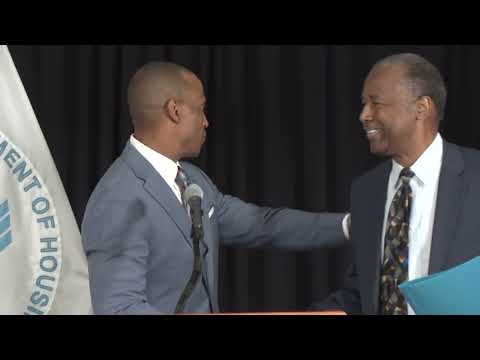
At a panel hosted by the U.S. Department of Housing and Urban Development on the National Mall, Secretary Turner convened policy practitioners and investors to discuss how Opportunity Zones can be used to deliver housing, jobs and infrastructure in distressed communities.
"We're enhancing Opportunity Zones so that private capital can flow into distressed communities and create more homes, more jobs, and more opportunities," Secretary Turner said while introducing the panel. Panelists described how the tax incentive has been paired with local tools and federal program priorities to attract long-term, patient capital.
Dr. Ben Carson, former secretary of HUD, framed Opportunity Zones as a vehicle to marshal private-sector ingenuity: "We have, solutions for all of them right here today," he said, pointing to the program's early fundraising performance and public-private projects that have used Qualified Opportunity Fund capital.
Alfonso Acosta Jr., chief operating officer of the Falcone Group, cited specific projects as examples of the program's impact: the Baltimore Penn Station redevelopment, which combined private investment with Amtrak and city support, and Centennial Yards in downtown Atlanta, a mixed-use master plan that included set-asides for affordable and workforce units. He also noted HUD's online resources such as opportunityzones.gov and the Cityscape case studies produced by HUD's policy research office.
Panelists described changes tied to legislation identified in the session as the "1 Big Beautiful Bill," which they said was signed on 07/04/2025 and, according to them, made Opportunity Zones permanent and adjusted eligibility and investor benefits. Alfonso Acosta Jr. summarized the panel's explanation of the new parameters: the existing program previously covered 8,764 designated census tracts; governors will have an opportunity to submit additional tracts to the U.S. Treasury beginning in 2026; newly certified tracts would be effective 01/01/2027; and investors could receive stepped-up basis incentives for holding investments (panelists described a 5-year hold yielding a 10% step-up and a 10-year hold yielding full (100%) step-up on appreciation).
Jill Homan, deputy director for Economy and Trade at the America First Policy Institute, discussed capital-stack strategies to lower the cost of development in high-cost markets, recommending pairing Opportunity Zone equity with other incentives such as New Markets Tax Credit and Low Income Housing Tax Credit, first-loss structures with local governments, preferred equity and off-site construction to shorten timelines.
Jeron Smith, who worked on the White House Opportunity and Revitalization Council in the prior administration and is now a partner at CGCN Group, emphasized local preparation: "You gotta have a game plan. What's your prospectus?" He urged cities and states to coordinate across agencies and local stakeholders to make zones competitively attractive to funds.
Panelists highlighted federal and local implementation steps that can shape outcomes: HUD actions cited in the session included lowering application fees for multifamily mortgage insurance programs, prioritizing notices of funding opportunity (NOFOs) for designated tracts, assigning senior underwriters to process applications, and using local tools such as tax incremental financing or property tax exemptions to preserve affordable units within mixed-income projects.
On rural Opportunity Zones, Jill Homan said the legislation included additional incentives intended to recognize different cost structures in nonmetro areas; she described provisions that reduce the substantial-improvement threshold for rural tracts and increase investor tax benefits for those projects.
Panelists framed these policy changes as a call to action for local leaders. "What are we doing about the Opportunity Zones that we've been designated thus far? And how can we prepare over the course of the next 8 to 9 months leading up to mid-2026 to encourage the different nonprofit organizations and municipal agencies and program offices to prepare in anticipation of submitting the newly designated census tracts to your respective governors' offices before they're certified to the Department of the Treasury?" Alfonso Acosta Jr. said.
The session closed with attendees directed to HUD's resources (opportunityzones.gov and HUD Cityscape case studies produced by the Office of Policy Development and Research) and with a reminder that governors and local officials need to develop prospectuses and coordinate strategies ahead of the next certification window.
Next steps: panelists urged communities to craft local prospectuses, pursue partnerships that combine federal, state and local incentives, and consult HUD resources as governors prepare submit new tract nominations to Treasury in 2026.