Lifetime Citizen Portal Access — AI Briefings, Alerts & Unlimited Follows
HRSA outlines OPTN modernization, welcomes new independent board and plans fee transition
Loading...
Summary
HRSA briefed stakeholders on OPTN modernization efforts, recapped a special election that produced a new independent board, and said HHS will move to collect transplant registration fees directly to increase transparency and contractor options.
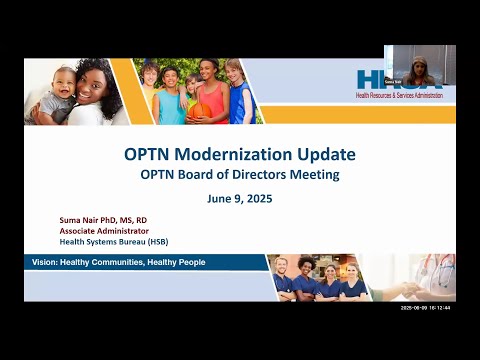
Unidentified Speaker (S1), an HRSA presenter, provided an update on HHS and Health Resources and Services Administration oversight of Organ Procurement and Transplantation Network (OPTN) modernization and recapped a special election that produced a new, independent OPTN board.
HRSA said the new operating model strengthens federal oversight, separates the board from OPTN contractors, and brings multiple supporting organizations and vendors into the system to provide specialized functions and a program management office to coordinate modernization work. "HRSA has been regularly providing updates on OPTN modernization on our website," S1 said, urging stakeholders to sign up for the HRSA listserv for ongoing materials and announcements.
The presentation said the special election used an independent transitional nominating committee that widely solicited candidates and ran a condensed review and approval process. The newly elected board begins its official term July 1 and is already undergoing onboarding; HRSA also announced officer elections and runoffs were scheduled for the week of June 20 to resolve two tied seats.
Why it matters: HRSA described the structural changes as intended to mitigate conflicts of interest, centralize oversight, and align policy, operations and system oversight around patient needs. The move to multiple vendors and clearer HHS oversight aims to provide more transparency about operations and funding.
What HRSA said about fees and next steps: Under HRSA's reading of recent appropriations language, HHS will assume direct responsibility for collecting registration fees that transplant hospitals pay when adding candidates to the national waiting list. HRSA said it plans to collect those fees through the federal pay.gov mechanism later this year and will coordinate a transition timeline and technical details with UNOS (the legacy OPTN contractor), other vendors and transplant hospitals.
HRSA also described current budget context: it had delayed approving recent registration-fee increases while OPTN operating reserves covered certain priorities, but those reserves have declined and the agency said fee increases may be needed in the future to sustain critical policy and safety work. HRSA said finance committees and the board will prioritize projects and reduce or pare back nonessential initiatives to manage costs for fiscal year 2025.
The session closed with S1 inviting questions during open session and a reminder that a separate closed session would follow.
Next steps: HRSA said it will post additional materials, including a special-elections web page and transition details, and continue stakeholder outreach as the new board assumes its role.