
FCPS committee refines nondiscrimination and bullying policies, asks staff to clarify cyberbullying and reporting
Get AI-powered insights, summaries, and transcripts
Sign Up Free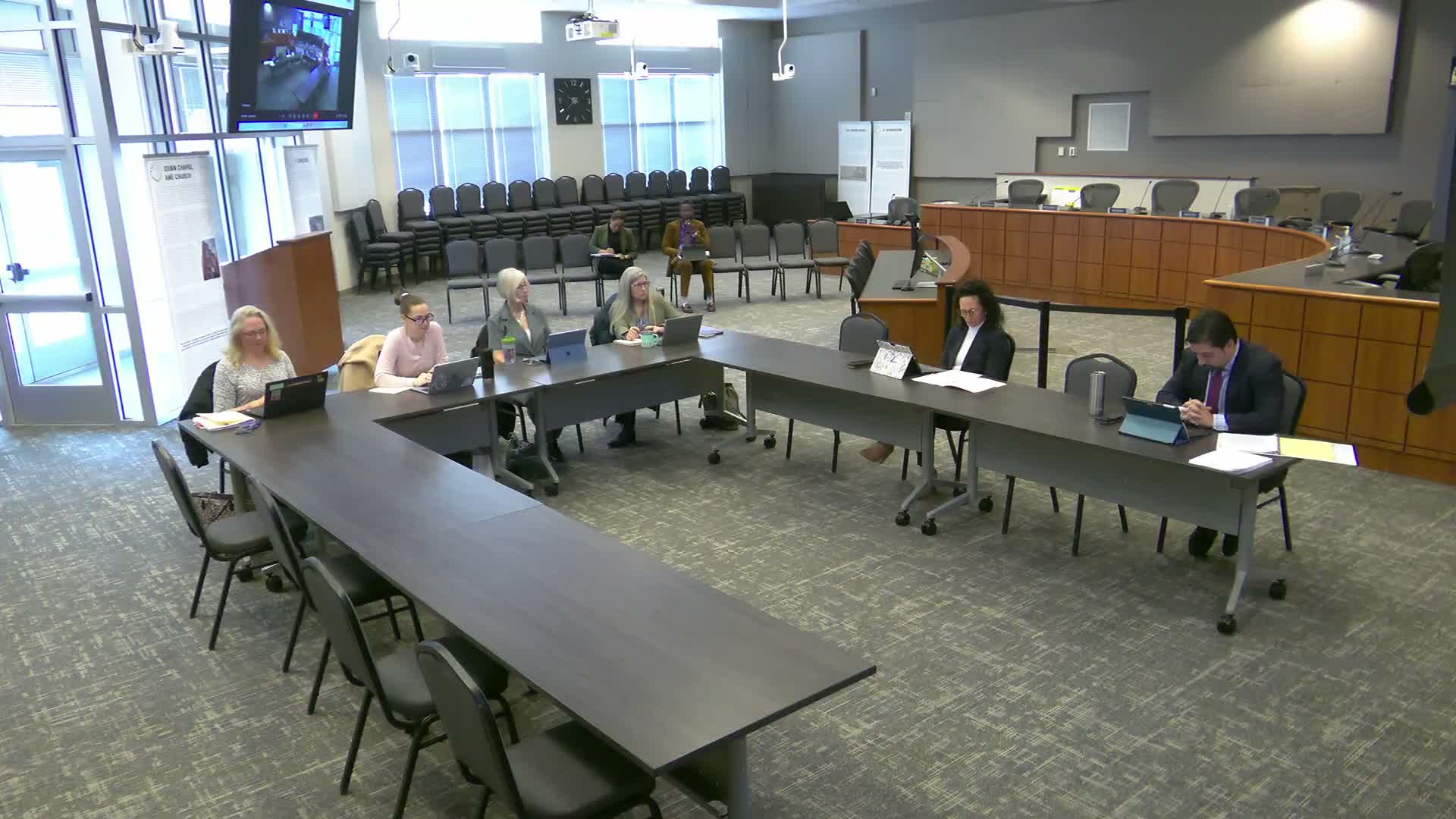
Summary
Committee members reviewed edits to the district’s nondiscrimination and bullying policies to align with the Maryland model policy, debated definitions for electronic conduct and no‑trespass language for disruptive community members, and asked staff to return revised drafts to the board with implementation details and privacy safeguards.
Frederick County Public Schools staff presented proposed revisions to the district’s nondiscrimination policy (former Policy 309, proposed renumbering to 1.20) and to Policy 4.37 (bullying, harassment and intimidation) at the policy committee meeting on Feb. 11.
Staff said the edits retitle and reorganize the nondiscrimination policy, rewrite definitions to align with other policies, and add clarifying language on enrollment, employment practices and prohibited conduct. The bullying policy changes mirror elements of the Maryland model policy, adding definitions for bullying, cyberbullying and intimidation, including 'age' as a protected class, and adding implementation language such as schoolwide evidence‑based programs and annual training for staff, students and volunteers.
Committee members raised several substantive points. One member asked that the mutual‑respect sentence avoid implying that community members must 'accept' each other’s beliefs; staff agreed to replace that phrasing with language that expects mutual respect. Members also requested that the policy explicitly cover electronic or digital conduct; staff noted the substantive section already prohibits cyberbullying on school property, but agreed to ensure language is clear and to remove redundant or confusing definitions.
On oversight and reporting, committee members discussed whether complaint and incident data should be presented publicly to the board on a regular schedule. Staff cautioned that small counts sometimes require suppression for student privacy and suggested beginning with an agenda request to test board appetite for a fuller presentation from student services that would describe reporting mechanisms, supports and investigative processes rather than releasing raw incident counts.
The committee discussed a no‑trespass consequence for community members who engage in discriminatory conduct that impacts educational function. Staff said principals may issue no‑trespass orders and that systemic no‑trespass (systemwide bans) would be rare, but the board would need to weigh removal decisions during meetings against First Amendment protections for political speech. Members acknowledged this will generate public discussion and left the substantive threshold for future board debate.
The committee voted to advance both revised policies to the full board for first reading with the committee’s discussed edits and directed staff to upload corrected packet documents to the public record.
What staff will provide next Staff will incorporate the committee’s wording changes, clarify the role of electronic/cyberbullying language, and provide implementation/regulatory references. They will also prepare corrected packet files and upload them to Granicus before the full board review.