
Committee hears bill to expand allowable uses of local affordable-housing tax revenues
Get AI-powered insights, summaries, and transcripts
Subscribe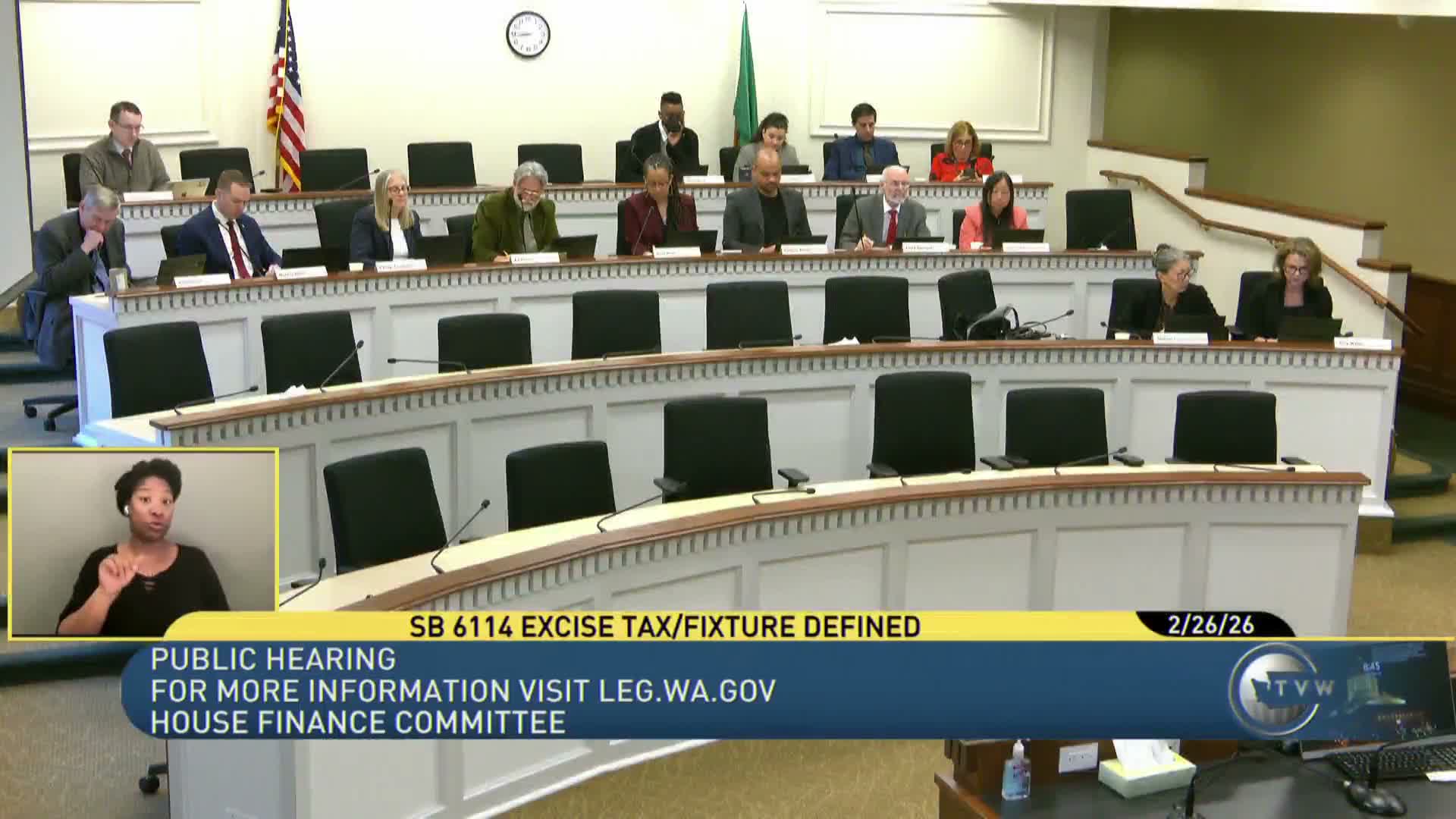
Summary
Senate Bill 6027 would expand permissible uses of certain local sales-and-use tax revenue and state-shared local tax funds to include rehabilitation, operations and maintenance of existing affordable housing, rental assistance in specified counties, and broader grant-eligible expenses; housing providers and local officials endorsed the bill citing federal funding uncertainty.
Senate Bill 6027 was presented to the House Finance Committee on Feb. 26 as a measure to broaden allowable uses of local option sales-and-use tax revenues and related state-shared taxes for affordable and supportive housing.
Committee staff summarized the bill’s key changes: adding rehabilitation of existing affordable housing (including emergency, transitional and supportive housing) to allowable uses; permitting operations and maintenance of existing affordable-housing units; allowing rental assistance in qualifying counties west of the Cascade crest within defined population ranges; clarifying a broader definition of 'emergency housing' (removing a strict 60-day cap and focusing on temporary indoor accommodations serving basic needs); and expanding eligible uses and administrative flexibilities for the 'affordable housing for all' account administered by Commerce.
Local government and housing-advocacy witnesses urged passage. Joe McDermott, State Relations Director for King County Executive, said the bill would help counties address urgent operating shortfalls that threaten permanent supportive housing projects. Megan Dunn (Snohomish County Council) said federal changes to HUD’s Continuum of Care program could jeopardize hundreds of households locally without state flexibility. The governor’s housing policy advisor and representatives from the Washington Low Income Housing Alliance and Plymouth Housing described the bill as necessary to preserve existing projects, protect residents, and reduce administrative burdens.
Staff said Commerce would see implementation costs in an initial fiscal year but that the bill overall would not increase state taxes. The committee closed public testimony after several supportive witnesses.