Lifetime Citizen Portal Access — AI Briefings, Alerts & Unlimited Follows
HUD: Most Wyoming housing complaints allege disability discrimination; 86 jurisdictional cases in last decade
Loading...
Summary
HUD Region 8 told the Wyoming Advisory Committee that 203 housing inquiries originated in Wyoming over the past decade and 86 were jurisdictional Fair Housing Act complaints, with disability claims making up about 72% of those cases. The agency emphasized conciliation and noted limited in‑state HUD staffing.
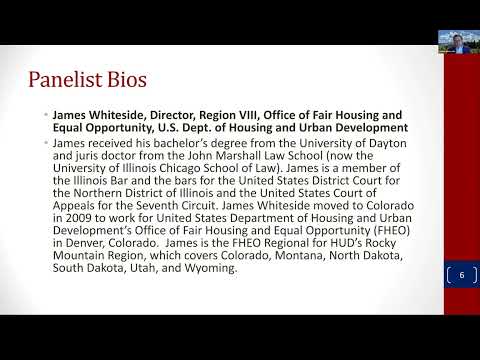
James Whiteside, director of Region 8 for the Office of Fair Housing and Equal Opportunity at the U.S. Department of Housing and Urban Development, told the Wyoming Advisory Committee on March 24 that HUD received 203 housing inquiries from Wyoming over the past 10 years and determined 86 of those to be jurisdictional Fair Housing Act complaints. "We have only received 203 inquiries that are coming from Wyoming alleging a violation or discrimination," Whiteside said, and later added that "86 of those... were jurisdictional Fair Housing Act complaints."
Why it matters: The percentages and case outcomes show where enforcement resources have been focused and which protected classes are most often implicated in complaints. The committee will use these figures as background for further briefings and its draft report to the U.S. Commission on Civil Rights.
Whiteside said disability‑related allegations dominate Wyoming's jurisdictional caseload, accounting for about 72% of cases he reviewed; many were reasonable‑accommodation claims. He reported smaller shares for familial‑status (about 14%), race (about 12%) and national‑origin claims (about 3%). "The highest number... a percentage of 72 percent are disability claims," Whiteside said.
HUD's typical process, he explained, emphasizes early resolution: the agency uses conciliation — its form of alternative dispute resolution — and investigates jurisdictional complaints before making any formal findings. Whiteside reported that HUD issued three charges of discrimination from Wyoming cases since 2018, including a 2018 familial‑status matter that settled for $6,500 and a 2020 assistance‑animal denial case that proceeded to federal court and settled for $7,000. Overall, he said 50 completed cases were settled through conciliation for total monetary relief of $71,017.
Whiteside also described program‑compliance work: HUD's Region 8 performed Section 504 compliance reviews in 2018 of the City of Casper, City of Cheyenne and the State of Wyoming; each review resulted in a voluntary compliance agreement, often addressing disability‑related policies and reporting. He said HUD requires affirmative fair‑housing marketing plans for FHA‑insured and project‑based Section 8 properties and that marketing should reach populations least likely to apply, sometimes across expanded market areas.
Geography and capacity: Whiteside told the committee most jurisdictional complaints came from the state's larger counties — Laramie, Albany and Natrona — which together accounted for 49 of the 86 jurisdictional complaints, 37 of which alleged disability discrimination. He also noted HUD's regional field presence is Denver‑centric and that Region 8 does not have a permanent FHEO staff member in Casper, which can limit local visibility.
What the committee asked: Members raised how individuals file complaints, the distinction between habitability concerns and discrimination, and whether fear of landlord retaliation suppresses reporting. Whiteside said the office accepts online filings, calls and email, and that habitability issues (for example, running water or mold) become jurisdictional only if the complainant ties the treatment to a protected characteristic such as race, disability or familial status.
Next steps: Committee members said the data will inform future panels and the advisory committee's report to the U.S. Commission on Civil Rights. Whiteside offered HUD's continued outreach and education assistance.
Ending: The committee moved on to the next panel after the exchange and scheduled further briefings to gather additional testimony and local perspectives.