Lifetime Citizen Portal Access — AI Briefings, Alerts & Unlimited Follows
NC advisory committee hears experts and residents on Ryland’s Law implementation and racial disparities in child welfare
Loading...
Summary
At a July 12 public briefing, researchers, advocates and family members gave testimony on implementation of Ryland’s Law (H.B. 630), debating whether the law’s visitation defaults and county practices hinder reunification and disproportionately affect Black, Indigenous and Latino families; public commenters urged greater transparency and investment in families.
The North Carolina Advisory Committee to the U.S. Commission on Civil Rights heard four panelists on July 12 about the implementation of Ryland’s Law (H.B. 630) and its civil-rights effects on the state’s child welfare system.
Olga Morgan Wright, chair of the advisory committee, opened the session and said the committee will prepare a report to the U.S. Commission on Civil Rights and accept written comments through Sept. 23, 2024.
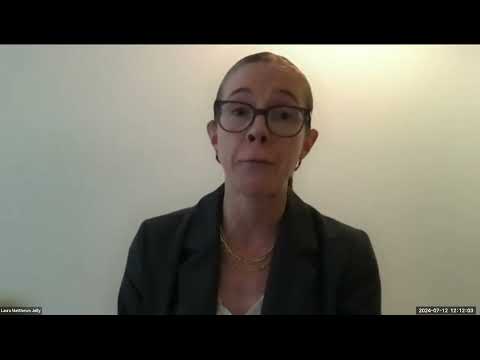
Professor Laura Matthews Jolley of North Carolina Central University School of Law told the committee that, in practice, North Carolina’s default visitation norm under Ryland’s Law has been “one visit per week for one hour, supervised by DSS,” which she said amounts to “roughly 52 hours” together in a year. Jolley said the law requires two observed visits, seven days apart within 30 days, before DSS may recommend unsupervised visits, and she argued staffing shortages and county practices often delay unsupervised contact for six to eight months. Using a court case out of Alamance County (pseudonym “Tim”), Jolley said the court reduced a child’s visitation from weekly to every other week despite testimony that visits were safe and engaged. “Parents face this perpetual catch-22 where the system demands performance of the ability to parent yet denies parents the opportunity to perform,” she said.
Emily Putnam Hornstein, a professor at the University of North Carolina at Chapel Hill, reviewed state and federal data and told the committee that the number of children investigated for maltreatment in North Carolina fell from about 68,000 in 2011 to 54,000 in 2022–23 (a 26% decline) and that investigations declined 16% since Ryland’s Law. She said the share of substantiated victims has also declined and that repeat investigations have risen about 20% over two decades. Putnam Hornstein pointed to a decline in nonfamily congregate placements and an increase in placement moves, and said, “we place a larger number of white child victims in foster care than Black or Hispanic victims,” adding she could not say whether that reflected overplacement of white children or underplacement of children of color.
Naomi Schaefer Riley of the American Enterprise Institute emphasized recent child fatalities and racial disparities, citing multiple cases and national statistics showing Black children are disproportionately affected by fatal maltreatment. “Black children in this country are three times more likely to die from abuse or neglect than white children,” she said, and she urged agencies to use available information to protect children while warning against interpreting investigations of Black children solely as evidence of bias.
Miriam Mack, identifying herself as policy director of the Family Defense Practice at Bronx Defenders, framed the system as a “family policing” regime that inflicts surveillance and harm on families. She opened with the “baby C” case from New York to illustrate harms from removal and prolonged scrutiny, said data show race and class shape who is investigated, and recommended investments in direct cash assistance, housing and interdisciplinary holistic parent defense. “Giving families money is a child-maltreatment prevention intervention,” she said.
During the committee question-and-answer session, members asked whether Ryland’s Law increased social-worker contact time; panelists said they found no clear statewide evidence of increased contact time that would facilitate reunifications. Several panelists and committee members focused on data and transparency: panelists noted North Carolina’s long-delayed child welfare information system (CCWIS) implementation and said the lack of a statewide, accessible data system hinders oversight and accountability. Panelists offered policy recommendations including greater transparency, ensuring adherence to federal permanency laws (Adoption and Safe Families Act; Multiethnic Placement Act), presuming maximum parent–child contact in visitation plans, investing existing funds directly in families (for example, redirecting some TANF usage), and expanding holistic parent-defense services.
Public comment included multiple firsthand accounts alleging harmful or improper actions by county DSS/CPS offices, requests for clearer complaint and oversight channels, and calls for accountability. Speakers described specific case experiences—reports of children removed, contested medical or investigative findings, and difficulty obtaining redress at the county or judicial level. Richard Wexler of the National Coalition for Child Protection Reform urged rethinking the system and reducing unnecessary removals, while other commenters urged transparency, stronger investigative oversight and more direct supports for families.
The committee closed the session by reminding participants of the written-comment deadline and announcing the next panel, focused on advocates and community organizations, on July 24. The meeting adjourned at 2:30 p.m. Eastern.
Why it matters: Witnesses on both sides agreed that North Carolina’s child-welfare system faces trade-offs between protecting children and preserving family integrity. Panelists differed on the net effects of recent reforms and emphasized gaps in statewide data and county-level variations; public commenters described harms they say require both oversight and policy change.
What’s next: The advisory committee will collect written testimony through Sept. 23, 2024, use the briefs and oral testimony to draft findings and recommendations for the U.S. Commission on Civil Rights, and hold a follow-up panel on July 24 focusing on advocate and community perspectives.