
Maine bill would use state funds to blunt federal health coverage cuts, sponsors say
Get AI-powered insights, summaries, and transcripts
Subscribe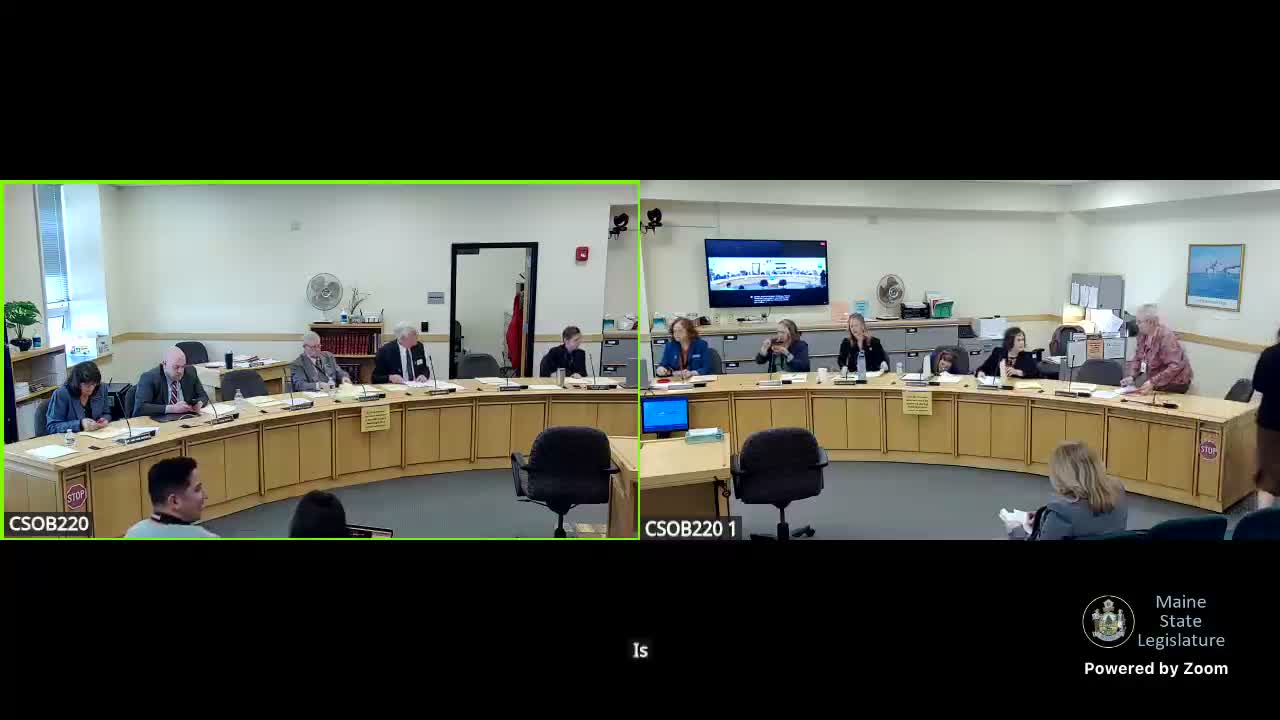
Summary
House Speaker Ryan Fecteau’s LD 2208 would create a $50 million rural health stabilization fund, a state premium subsidy mirroring ARPA-era enhanced tax credits and a MaineCare federal response fund; testimony from hospitals, insurers and advocates urged passage while insurers warned about one-time funding volatility.
House Speaker Ryan Fecteau introduced LD 2208 on behalf of himself and co-sponsors as a targeted state response to recent federal policy changes that sponsors say will increase premiums and remove coverage for thousands of Mainers.
Fecteau told the Joint Standing Committee on Health Coverage, Insurance, and Financial Services that LD 2208 includes three main elements: a $50 million rural health stabilization fund to support rural providers, a health care premium stabilization fund intended to replace the expired enhanced premium tax credits for eligible marketplace enrollees, and a MaineCare federal response fund to preserve existing MaineCare benefits if federal matching funds are reduced. "This will establish a state subsidy that is intended to replace the enhanced premium tax credits," Fecteau said, adding that eligibility would mirror provisions used under the American Rescue Plan Act and the Inflation Reduction Act up to 400% of the federal poverty level and allow subsidies when premiums exceed 8.5% of income.
Why it matters: Testimony emphasized the bill’s potential to reduce coverage loss, stabilize hospitals and blunt premium spikes after the expiration of enhanced federal subsidies. Northern Light Health’s Lisa Harvey McPherson said the system already faces severe financial strain: "We ended FY 2025 with a financial loss of $14,900,000 compared to a loss of $156,300,000 in 2024," and estimated a $27,300,000 reduction in MaineCare revenue for her system if disenrollments occur as projected. Multiple speakers cited state Department of Health and Human Services projections that thousands could lose coverage in coming years.
Supporters’ case: Representatives of community behavioral health organizations, MaineHealth, the Maine Hospital Association, Community Health Options, the Maine Primary Care Association, the Maine Council on Aging and advocates including the Maine People’s Alliance and the Maine Center for Economic Policy urged the committee to advance the proposal. Betsy Sweet of the Behavioral Health Community Collaborative said the funds "are lifelines" for people whose treatment continuity depends on stable coverage. Proponents argued state premium subsidies paired with reinsurance funding would attract middle-income enrollees, enlarge the risk pool and lower premiums.
Insurers’ cautions and market concerns: Trade representatives and insurers signaled qualified support for some components but warned about one-time funding. Dan Demeritt of the Maine Association of Health Plans and Christine Ossenfort of Anthem both said they support ongoing general fund support for the state reinsurance program but cautioned that a one-time $80 million payment could produce volatility: "If the legislature appropriates $80,000,000 to Maguera for 2027 and then nothing for 2028 ... you'll see a significant reduction in premiums next year, followed by a significant increase in premiums the following year," Ossenfort said.
Open questions and committee work: Committee members pressed the sponsor and witnesses on technical issues including whether state subsidies would be treated as taxable income at the federal level, the timing of any state subsidies (whether they would apply to the 2026 or 2027 plan year), and the scope of the rural stabilization fund (whether to include medically underserved non‑rural areas). Fecteau said the state can choose to exempt the subsidy from state income tax but federal tax treatment would require federal action and recommended consulting the federal delegation. He also said the committee staff consulted NCSL and CSG and that several other states are considering analogous measures.
Next steps: The public hearing closed with committee staff noting language review and fiscal notes for related items; the bill will proceed to work session discussion and potential amendments. The committee did not take a final vote on LD 2208 during this hearing.
Sources: Testimony and exchanges at the joint committee public hearing on LD 2208, including direct testimony from House Speaker Ryan Fecteau, Lisa Harvey McPherson (Northern Light Health), Betsy Sweet (Behavioral Health Community Collaborative), Kim Cook (Community Health Options), Kate Endy (Consumers for Affordable Healthcare), Jeff Austin (Maine Hospital Association), Sarah Calder (MaineHealth), Megan Stewart (MPCA), Anne Sedlock (Maine Medical Association), James Mile (MECEP), Jordan Slager (Maine People’s Alliance), Kristen Kinchla (Maine Children’s Alliance), Dan Demeritt (MAHP) and Christine Ossenfort (Anthem).