Get Full Government Meeting Transcripts, Videos, & Alerts Forever!
Get email alerts on the School Facilities Referendum topic
No spam. Unsubscribe anytime.
Park Ridge CCSD 64 outlines $89.1 million facilities bond to fix aging schools
Summary
Superintendent Ben Collins presented a proposed $89.1 million bond referendum focused on health, safety, mechanical and classroom upgrades across Park Ridge CCSD 64 schools, explained projected tax impacts and answered resident questions about timeline and alternatives if the measure fails.
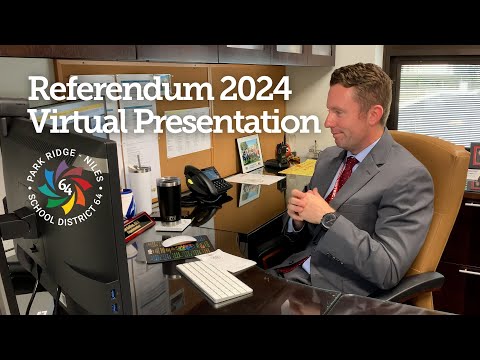
Park Ridge CCSD 64 Superintendent Ben Collins on a virtual community forum presented a proposed $89.1 million bond referendum aimed at repairing aging school buildings, upgrading safety systems and modernizing classrooms.
Collins said the district serves just over 4,500 students in eight schools and that many buildings are old — “our school's average age is 75,” he said — leaving the district with recurring, costly maintenance needs. He described the referendum as narrowly focused on capital work: “It is a bond referendum for building projects,” Collins said, and “proceeds would not go towards salaries.”
The district’s plan divides work into four categories: health, safety and security; mechanical and infrastructure; classroom improvements; and small building additions. Collins said the first two categories make up the bulk of the request and cited recent failures that illustrate the need, including multiple condensing-coil failures at Roosevelt during a heat event and recurring fire-alarm malfunctions at Emerson.
Collins described three physical additions the referendum would fund, including a first-floor cafeteria at Lincoln to replace an unsafe basement dining space, and small additions at Field and Franklin elementary schools to move classes out of hallways. He said the district reduced an initial “vision” plan from about $145 million to the current $89.1 million by trimming nonessential items while preserving safety and infrastructure work.
Using an example property value, Collins outlined homeowner tax impacts and directed residents to an online tax-calculator the district posted in the chat. He said a sample $500,000 assessed value with the homeowner exemption would translate to roughly $34 per month under the district’s estimate, and emphasized that the referendum amount is the maximum the district could borrow: the district need not issue all the bonds if construction bids come in lower.
During a question-and-answer period, residents asked what would happen if the referendum failed. Collins said the district would have two main options: find money within the regular budget — likely requiring significant cuts to programs or salaries — or return to voters with another referendum later. “We're gonna have to find that out of our regular budget. And the only way to do that is going to be looking at salaries and programs,” he said, and he warned that delays increase costs.
When asked about construction timing and classroom disruption, Collins said sequencing currently calls for about two years of work (half in one school year and half in the next) and that contractors experienced with school projects would schedule noisy work after hours where feasible to limit learning interruptions.
Collins also outlined capital-funding goals for long‑term maintenance, saying an annual $4 million allocation would permit a 30‑year replacement cycle for major systems, compared with the district’s current roughly $2 million per year.
The presentation closed with officials taking additional questions and offering follow-up information via the district website and chat materials.