Get Full Government Meeting Transcripts, Videos, & Alerts Forever!
Get email alerts on the Bond Financing And Improvements topic
No spam. Unsubscribe anytime.
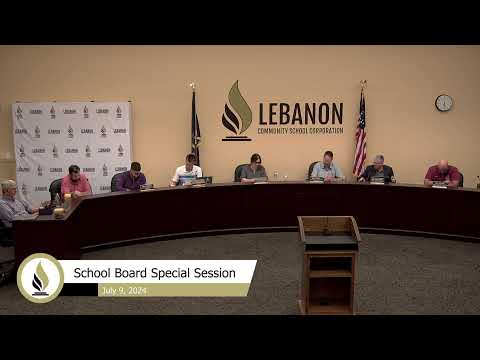
Lebanon board holds public hearing on $65 million project package; parent warns against iPad plan
Summary
The Lebanon Community School Corp held a public hearing on a not-to-exceed $65,000,000 authorization for 2025 improvement projects covering Lebanon High School and the existing Central Elementary; district staff described phased financing and no anticipated tax-rate increase, while a parent urged investment in laptops over iPads for older students.
Lebanon Community School Corp trustees held a public hearing to discuss proposed 2025 improvement projects and a not-to-exceed $65,000,000 authorization, district staff said, and invited public comment before any resolutions are considered at the next regular meeting.
Mister Dennis, a district presenter, told the board the package covers renovations at Lebanon High School and reuse of the existing Central Elementary, purchases of buses and equipment, site repairs and the construction of a student activity center. "We have to name our high watermark this evening, which is $65,000,000," Dennis said, describing a phased issuance plan that might start with an $8 million to $10 million series and add financings after bids arrive.
Dennis described specific school projects: expanding the high school cafeteria to accommodate a projected shift to four lunch periods; renovating the media center to support collaborative learning; renovating administrative offices and relocating the school resource officer's entrance to the front vestibule; freshening locker rooms; and building a student activity center with three courts intended to support band, color guard and other extracurriculars. He said the existing Central Elementary would be refitted so roughly 65% remains educational space for a developmental preschool while approximately 35% converts to district administrative offices and an 85-person meeting room with video conferencing.
On transportation and equipment, Dennis said school buses now exceed $150,000 each and the district typically replaces five buses per year; the bond authorization would fund five buses for 2025. He described a rolling replacement approach for maintenance vehicles and noted some building envelope maintenance but no roof projects planned for 2025.
Dennis said the financing strategy is intended to limit issuance to actual need rather than issuing the full authorization at once. "This gives us the ability to get our bids in and make sure that we only issue the amount that we truly need," he said, and added the plan anticipates no change to the overall tax rate compared with budget year 2024. The presentation referenced financing spread over multi‑year repayment; Dennis described a structure that could extend up to 22 years with annual payments capped in the presentation, though a subsequent board comment referenced 20‑year series terms (see below).
During public comment, Melissa Gerard, who identified herself as a parent and taxpayer, urged the board to place higher priority on long‑term technology investments rather than equipment or repairs to a building the district plans to reuse. She said the district appears to be moving to issue iPads instead of laptops for middle and high school students and criticized that choice for older students and for certain coursework. "I don't think that an iPad is appropriate both for long term vision on the tiny screen, but also for typing on the keyboard," Gerard said, adding that her son will be in AP Computer Science and she doubts the iPad will meet course needs. She recommended either reallocating bond dollars to provide laptops or adopting a bring‑your‑own‑device policy so families who choose to can supply more capable devices.
Gerard also reported surveying nearby districts and said most issue laptops or Chromebooks rather than iPads, and she cited anecdotal examples (named technology directors at neighboring districts) who reverted from iPads to laptops. She said she will continue to raise the issue at future board meetings.
The board offered a clarification: Dennis repeated that the existing Central Elementary is intended to be refitted for preschool and district offices. In a Q&A about repayment terms, one board member said "the maximum payment term of any series is 20 years," while Dennis's presentation referenced financing over "a maximum of 22 years" and an annual payment cap; the hearing did not resolve that discrepancy. No formal action on the authorization occurred at this hearing; the board will consider resolutions at its next regular meeting.
The hearing record included other project details (parking reconfiguration at Central from about 52 spaces to roughly 80–82, equipment and site work, and meeting and conferencing space) and background notes in the board packet for members. The public hearing closed and the board proceeded to regular meeting business.