Get Full Government Meeting Transcripts, Videos, & Alerts Forever!
Get email alerts on the K12 Mental Health topic
No spam. Unsubscribe anytime.
Iowa advisory committee hears school staff on K–12 mental‑health access, plans anonymized student poll
Summary
Two Des Moines Public Schools staff told the Iowa Advisory Committee to the U.S. Commission on Civil Rights that students face growing behavioral‑health needs, racial disparities in discipline, long community wait lists and practical barriers (transportation, housing, language). The committee agreed to pursue a short, fully anonymized student poll to inform its report.
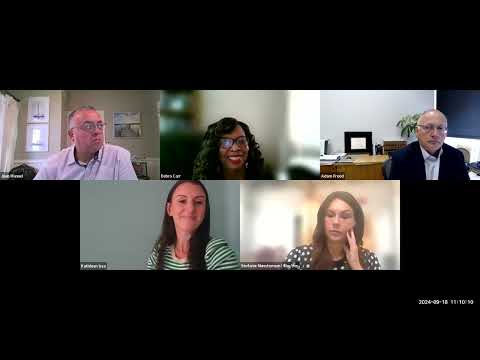
DES MOINES, Iowa — The Iowa Advisory Committee to the U.S. Commission on Civil Rights heard testimony on Sept. 18 from two Des Moines Public Schools staff who outlined widening mental and behavioral health needs among K–12 students and persistent obstacles to access.
Deborah Carr, a licensed master social worker who identified herself as the district’s student services coordinator but said she was speaking in a personal capacity, told the committee that about “1 in 5 children” now experience some type of mental‑health problem during their school years and that disparities affect discipline and referrals. Citing a 2019 Iowa Department of Education report, Carr said Black students made up about 6% of enrollment but represented 24% of suspensions in the state, and she stressed the need for culturally competent providers and more staff training.
Katie Issa, a licensed clinical social worker and the district’s behavioral health services coordinator, described operational barriers that limit access even when services exist. She said the district contracts with community providers and runs a student assistance program that offers five free counseling sessions, but community therapy wait lists can be long — “6 to 8 weeks,” she said — leaving schools to serve as triage while families wait for follow‑up care. Issa also pointed to transportation, unstable housing, language barriers and a limited, mostly white counseling workforce as ongoing challenges.
Why it matters: Committee members said the testimony underscored both supply problems (insufficient intermediate‑level community services, long wait lists) and problems of matching and coordination, especially for students facing multiple stressors such as housing instability or dual diagnoses. Members asked for practical, cost‑effective approaches for districts with thin staffing or rural providers, and speakers emphasized regional partnerships, shared social‑work roles and multi‑tiered systems of support.
During questioning, panelists discussed strategies districts are using. Carr highlighted restorative‑justice practices, data review to identify disproportionality, and affinity groups and family engagement to build trust. Issa described partnerships that bring therapists into schools, the district’s student assistance program, efforts to expand telehealth access and the role of bilingual family liaisons in connecting families to services.
On telehealth, both speakers said the modality can expand access but raised implementation limits: broadband inequities in rural areas, the need for a supervised confidential space and staff to initiate sessions under current legislation and guidance, and questions about whether remote providers can reflect community culture. Both speakers noted national conversations — including work by the National Association of Social Workers to enable cross‑state telehealth — but said staffing and fidelity remain constraints.
The committee also discussed follow‑up work. Staff proposed a short, fully anonymized student poll (two to three questions, voluntary demographic checkboxes) to gather student perspectives for the committee’s report. Members raised parental‑consent and school administrative limitations for surveying minors and suggested partner organizations and school lists as possible distribution channels. Committee staff said they would draft questions, share them with members and incorporate any student responses into the report drafting timeline scheduled for the fall and legal review in winter/early spring.
What the committee will do next: Staff will circulate the transcript and slides, draft anonymized poll questions for member review, and work with members to finalize the report schedule. The committee emphasized that any student outreach should protect anonymity and comply with parental‑consent rules where applicable.
The web briefing produced no public commenters; the committee adjourned the public portion and continued with internal business.